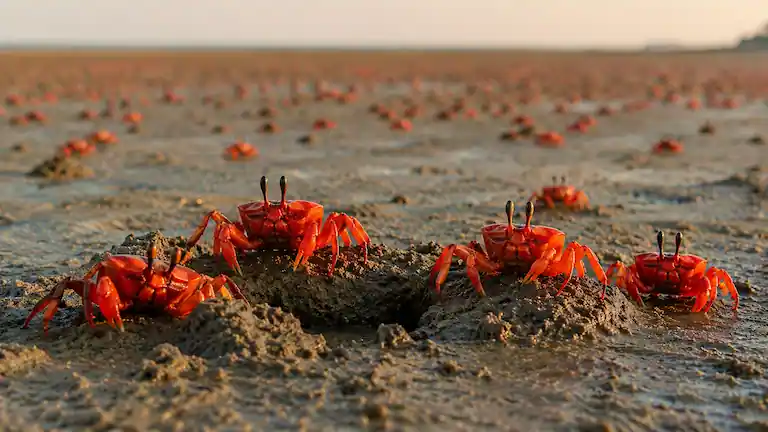
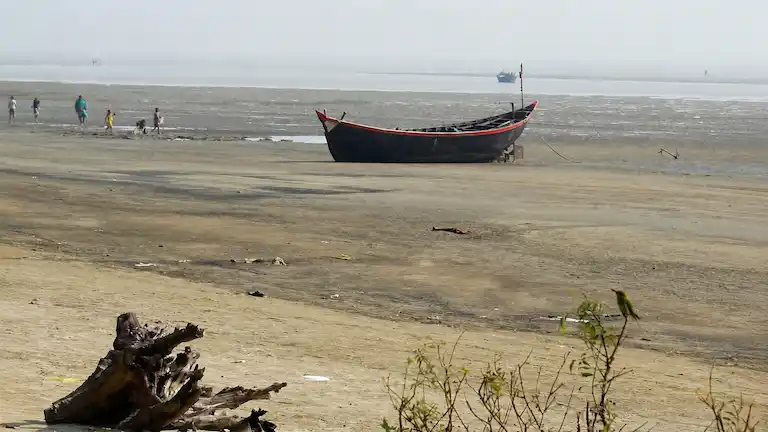
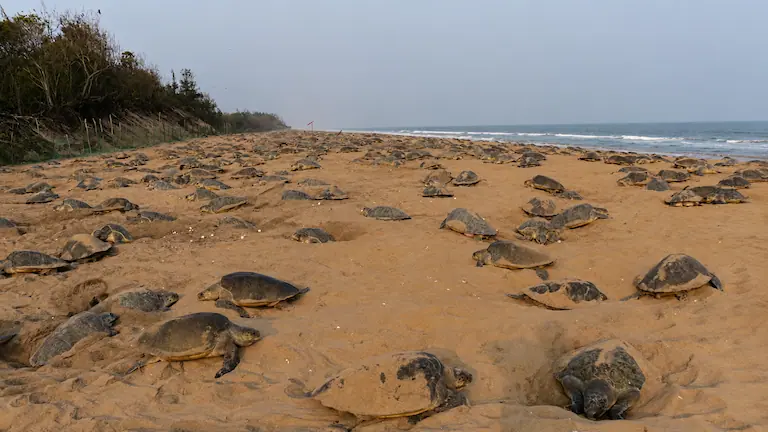
Bankiput Sea Beach is a quiet and hidden spot near Junput in East Midnapore, West Bengal. While Digha is like a busy market and Mandarmani is a loud party, Bankiput is a “silent paradise.” It is famous for its thick Jhau forests and millions of red crabs. The beach has a special tide that pulls the water very far away, leaving a peaceful and empty view.
Many travel guides claim there is ‘no water’ at Bankiput, leading to a common misconception about the beach. In reality, the sea hasn’t disappeared—most visitors simply don’t understand the secret tide times. This guide is your “Missing Manual” for Bankiput. It shows you exactly how to find the sea, the latest travel costs, and the best time to see the waves meet the famous “Red Carpet” of crabs.
Where is Bankiput Sea Beach? (The Reality of the Location)
Let’s skip the map-talk for a second. To find Bankiput Sea Beach, you have to head into the heart of East Midnapore. While Digha is basically a crowded city market by the ocean, and Mandarmani is one big resort party, Bankiput is the “silent paradise” everyone says they want but few people actually find.
It’s tucked away near Junput, roughly 160 km from Kolkata. The reason it stays so quiet? It’s not on the main highway. You have to want to find it. It’s a place of massive Jhau forests and a tide that pulls back so far you’ll feel like you’re standing on another planet.
Bankiput At A Glance
- Where: East Midnapore (Purba Medinipur), West Bengal.
- Nearest Gateway: Kanthi (Contai) — 18 km away.
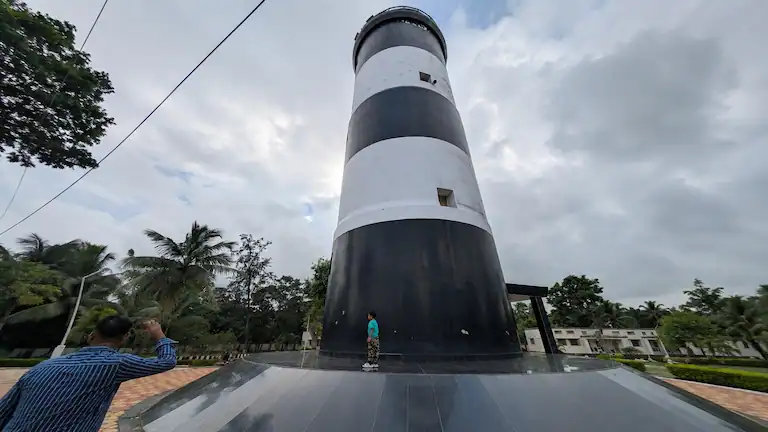
- The Vibe: Millions of red crabs, total silence, and the salt-white Dariapur Lighthouse nearby.
| Feature | Accurate Details |
| State & District | West Bengal, East Midnapore (Purba Medinipur) |
| Nearest Railway Station | Kanthi (Contai) — 18 km away |
| Distance from Kolkata | ~160 km (Approx. 4.5 hours via NH116B) |
| Distance from Digha | ~50 km (Approx. 1.5 hours via coastal road) |
| Nearest Town | Kanthi (Contai) — This is your main entry point |
| Top Landmarks | Dariapur Lighthouse (7 km) & Petuaghat Fishing Harbour |
| Best Way to Travel | Train to Kanthi, then a private Toto or local van |
How to Reach Bankiput Sea Beach
Most travel blogs just copy-paste directions. If you follow them, you’ll likely end up stuck in Digha’s traffic or lost in a salt pan. If you want to reach Bankiput Sea Beach without the headache, here is how you really do it.
1. Taking the Train (Save your time)
Don’t make the rookie mistake of booking a ticket to Digha. You’ll just waste two hours sitting on a bus coming back toward Kanthi.
- The Train: Grab the Tamralipta Express if you can wake up early, or catch the Kandari Express from Howrah.
- The Stop: Just make sure you get off at Kanthi (Contai)—don’t miss the stop, because that’s as close as the train is going to get you to the beach.
- The Ride: Walk past the big expensive taxis. Look for a Toto or a Bhatbhati (the local motorized vans).
- The Deal: The ride is about 14 km through some scenic local villages. Expect to shell out around ₹300 to ₹400 for the full Toto—it takes about 40 minutes, but with the breeze in your face, you won’t even notice the time.
2. Driving from Kolkata (The Road Trip)
It’s a 160 km drive. The road is great until the very last bit.
- The Route: Follow the path toward Kolaghat—and you’re missing out on the best part of the trip if you don’t pull over at Sher-e-Punjab for their chai and parathas. Once you’re fueled up, keep heading toward Nandakumar.
- The Turn: When you hit Kanthi town, ignore the big signs pointing to Digha. Look for the Junput Road instead.
- The GPS Trick: Google Maps loves to send cars through “shortcuts” that are actually broken mud paths through salt farms. To avoid this, set your GPS to Junput first. Once you arrive there, then change it to Bankiput.
A Note for Car Lovers: The last 3 km are very narrow. The Jhau (Casuarina) trees grow right over the road. If you’re driving a big SUV, go slow. Those low branches are like sandpaper and will definitely scratch your shiny paint if you rush.
Is Bankiput Sea Beach Actually for You?
If you’re expecting luxury pools, fast Wi-Fi, or guys hawking shell jewelry every two minutes, you’re better off staying home. Bankiput Sea Beach just isn’t that kind of place—this place may feel too quiet for your preference within an hour.
Bankiput is for the “Detox” Traveler:
- Photographers: Who want the “Red Wave” shot without tourists in the frame.
- Solitude Seekers: Who want to sit under a Jhau tree with a book for six hours.
- Birdwatchers: Who want to see migratory species in the nearby Junput wetlands.
If you value silence over service and nature over nightlife, keep reading. However, if you’ve decided the coast isn’t for you and prefer the mist of the mountains instead, check out our guide to Mirik Tourism for a completely different kind of escape.
Best Time to Visit Bankiput Sea Beach
Timing is everything at Bankiput. Choose the right month, and it feels like a private island; choose wrong, and you’ll be stuck in a humid room. (If your dates don’t align, explore our other West Bengal Tourism guides for seasonal alternatives).
The Winter “Golden Window” (November – February)
This is the only time I’d tell a friend to go without hesitation. The weather usually sits between 15°C and 25°C, so you can actually walk the shoreline for hours without feeling like you’re melting. Since the homestays are pretty “rustic,” that cool winter breeze is your best friend.
Quick Tip: Aim for February. The haze clears up and the sky turns a deep blue—it’s easily the best time for drone shots or sunset photos.
The Red Crab Monsoon (July – September)
You visit now for one reason: the “Red Carpet.” Millions of red crabs take over the sand, and it’s a wild sight. But be warned—the “real” Bankiput comes out in the rain. The dirt roads turn into a muddy soup and the local Totos get stuck constantly. Go for the “digital detox” vibe, but expect to get your shoes ruined.
The Summer Warning (March – June)
Skip this unless you’re on a super tight budget. The heat is just brutal—we’re talking 39°C and zero shade. From 11:00 AM to 4:00 PM, the beach isn’t even a beach; it’s a frying pan.
The only real “win” is the price. Since Bankiput becomes a ghost town, you can grab rooms for next to nothing. But let’s be real: you’ll spend the whole day staring at the ceiling fan, just waiting for the sun to go down. If you’re okay with that to save some cash, go for it. Otherwise? Do yourself a favor and wait for winter.
The “Tide Truth” about Bankiput Sea Beach
If you check Google reviews for Bankiput Sea Beach, you’ll see the same angry comment over and over: “The sea is a lie! It’s just a massive mudfield.”
Here is the reality that most “top 10” travel sites ignore: Bankiput is an estuary with a beach so flat it’s like a pancake. Because of this, the water pulls back further here than almost anywhere else in West Bengal. If you time it wrong, you won’t even see the ocean; you’ll just see miles of wet sand.
The Ocean only “Visits” at Certain Times
At Bankiput, the sea doesn’t stay put. It works on a lunar cycle that shifts by approximately 50 minutes every single day.
- The High Tide Window: If you want to see the waves actually hitting the Jhau trees, you usually need to be there between 8:00 AM and 1:00 PM. This changes every day with the moon, but that’s your best bet for a “beach” vibe.
- The Low Tide Trap: If you rock up at 4:00 PM expecting to swim, you’re going to be disappointed. You’ll be looking at a vast, empty desert. The water will be so far away it’ll look like a thin silver line on the horizon.
The “Local Hack” for your Trip
Don’t guess. The moment you check into your lodge, ask the manager: “Dada, joar kokhon?” (Brother, when is the high tide?). They know the local chart by heart.
The “Live Chart” Shortcut: Check the Haldia Tide Chart. Haldia is the closest reliable station. Just subtract 20 minutes from the Haldia high-tide time to know exactly when the waves will reach the Bankiput shoreline.
My Advice:
- Go at Low Tide to see the “Red Carpet” of crabs. They only emerge when the water is gone.
- Go at High Tide if you actually want to get your feet wet.
If you don’t check the clock, you’re just going for a very long walk on a very big sandcastle.
Bankiput Sea Beach: Secrets of the Red Carpet
Most people visit Bankiput Sea Beach and leave angry because they didn’t see a single crab. They stand right where the road ends, make a huge racket, and wonder why the beach looks like plain mud. If you want to see the sand actually turn red, you have to play by the “Local Rules.”
The 1.5 KM Rule
Crabs don’t care about your face, but they’ll feel your footsteps from a mile away. Most people stay right near the main entrance by the hotels, and all that foot traffic keeps the crabs hiding underground all day. If you want the real show, you need to walk at least 1.5 km North toward Junput. Keep going until the plastic bottles and footprints disappear. Once the beach actually feels “wild,” you’re in the right spot.
The “Statue” Trick
You can’t chase a red crab—they’re way faster than you. Instead, you have to outsmart them. Just find a piece of driftwood or a dry patch of sand and—this is the hard part—stay dead still for 10 minutes. No talking, no checking your phone. Eventually, the sand will literally start “shivering.” Thousands of tiny red eyes will pop up until the beach turns a deep crimson right under your feet. It’s honestly a bit eerie, but it’s the best photo you’ll ever take in West Bengal.
The 9 AM Deadline
You have to beat the heat. Crabs aren’t clueless—as soon as the sand starts baking (usually by 9:00 AM), they head deep underground to stay cool. If you aren’t out there by 6:30 AM, you’ve basically missed the show. Plus, the morning light does all the work for your photos anyway; by noon, everything just looks washed out and sweaty.
Where to Stay: Sagar Niralay or Jhinuk Residency?
Forget about pools or fancy lobbies—you won’t find them here. Bankiput hotels are basic because the area is protected. If you find a place that looks like a modern hotel, it’s likely a long walk from the beach. For staying near the water, you really only have two choices.
Sagar Niralay is the famous one. It’s a rustic lodge tucked right inside the Jhau forest. It’s perfect for photographers or solo travelers who want to disappear, but be warned: it’s “roughing it.” You’ll pay around 1,800 to 2,500 to hear the wind howling through the trees in total darkness. It’s a bit spooky, but that’s the draw.
If you’re with kids or older family members, just book Jhinuk Residency. It’s a newer building just behind the tree line. The bathrooms actually feel modern and you won’t deal with that damp, salty smell on the walls. It’s definitely the “safer” pick for families.
Crucial tip: Stop trying to book these bankiput hotels online. The local managers rarely check the apps. I’ve seen people show up with a “confirmed” booking only to find the place is full. Get the manager’s number and call them directly at least two weeks early. If you don’t, you’ll be driving 45 minutes back to the highway just to find a bed.
3 Hidden Gems Near Bankiput Sea Beach
Seriously, don’t just sit on the beach all weekend. It’s a waste. Grab a Toto and tell the guy to head for the Dariapur Lighthouse first—but avoid this common mistake and go before 3:00 PM like I did. The gates are locked tight until then and there’s absolutely no shade, so you’ll just bake in the sun. Also, leave the flip-flops at the hotel. Those stairs are a narrow, slippery nightmare. You need actual shoes if you don’t want to wipe out.
If you want a break from the heat, the Kapalkundala Temple is a cool little side trip. It’s basically a ruin in a quiet village (Dakshin Darua), but it’s got a really eerie, old-school vibe. It’s actually where Bankim Chandra got the idea for his novel. No crowds, no noise, just a very spooky, still atmosphere.
The one thing you actually must do, even though waking up at 5:30 AM sucks, is hit the Petuaghat fishing harbour. It’s total chaos and the smell of fish is everywhere, but watching those massive trawlers unload tons of Hilsa is something else. Pro move: buy a fresh Pomfret right off the boat for dirt cheap. Take it back to your lodge, give the cook a bit extra to fry it up, and you’ve got the best lunch you’ll ever have in East Midnapore.
Digha vs. Mandarmani vs. Bankiput: The Reality Check
| Feature | Digha | Mandarmani | Bankiput |
| Noise Level | Very Crowded & Loud | Medium (Resort Music) | Total Silence |
| Beach Type | Hard Sand & Concrete | Flat Drive-on Sand | Soft Sand & Jhau Forest |
| Main Vibe | Busy City Market | Luxury Resort Party | Hidden Nature Retreat |
| Red Crabs | Rare / None | Hidden | Millions (Abundant) |
| Buildings | Budget Hotels & Malls | Private Luxury Resorts | Basic Village Lodges |
| Best For | Shopping & Street Food | Families & Luxury | Peace & Photography |
3 Smart Business Gaps in the Bankiput Economy
Since Bankiput Sea Beach is a protected area, the big resort chains aren’t allowed to move in. Most investors see those rules and run away, but that’s exactly why it’s a goldmine for you. Without the big competition, you can own the market just by fixing the simple things that frustrate travelers.
1. The “Work-from-Beach” Fix
Tons of people from Kolkata are dying to work from the coast, but let’s be real—the internet here is a disaster and the power cuts out constantly. You can’t even join a Zoom call. If you set up a small spot with Starlink or satellite internet and a solid solar backup, you’ll dominate. People will happily pay a premium just to have Wi-Fi that actually stays connected.
2. Premium “Green” Homestays
Let’s be honest: a lot of the lodges here feel a bit “tired” and smell like damp sea salt. There is a huge opening for someone to build clean, modern rooms that actually feel fresh. Use solar—it’s common sense anyway since the salty air ruins regular power lines. If you can offer a modern bathroom and a room that doesn’t feel humid, you’ll easily out-earn all the old hotels nearby.
If you have the vision to fix these small local frustrations, you can own the market in Bankiput. For more inspiration on building a local venture, check out our full guide on the best business ideas in West Bengal for beginners.
3. Selling an “Experience” (Not just a bed)
The real money in Bankiput isn’t in hosting 100 budget travelers; it’s in having 10 guests who want to spend more for a better time. Stop trying to just sell a bed. Sell an experience—like a private seafood dinner on the sand or a guided photo tour of the red crabs. If you fix the Wi-Fi and the power, you aren’t just running a hotel anymore; you’re owning the most exclusive “office space” on the coast.
Final Verdict: Is Bankiput Worth Your Time?
Look, Bankiput Sea Beach isn’t for everyone. If you’re looking for fancy resorts or high-end dining, just stay in Digha. This place may not match your expectations. But if you actually want to hear the ocean and not a thousand people screaming, it’s a total winner. It’s wild, a bit muddy, and completely silent. If you time the tides right and see the red crabs taking over the beach, it’s honestly one of the best views in Bengal.
The best part? Your money actually stays in the village instead of going to some big hotel chain. It’s the perfect spot to see the coast exactly as it used to be. And if you’ve got a Toto for the day, don’t stop at Bankiput—hit Baguran Jalpai and Lal Kakra Beach too. Those three together are the best-kept secrets on the coast, at least for now.
Frequently Asked Questions
Bankiput Sea Beach is where you go when you’re sick of the Digha crowds. Located 160 km from Kolkata, this Purba Medinipur hideout is famous for two things: thick Jhau forests and millions of red crabs. It’s an estuary, so the water retreats for kilometers, leaving a massive, eerie horizon.
Calls and texts on Jio and Airtel are usually fine. However, the thick forest makes the internet very slow. If you need to join a Zoom call or upload files, walk out to the main village road or the lighthouse for a much better signal.
No. Unlike Mandarmani, driving on the sand is strictly banned. It destroys the red crab colonies and the mud is very soft, so your car will likely get stuck. Park at your lodge and walk.
Avoid March to June. During these months, temperatures can easily hit 39°C. There is no shade on the beach, making the sand painfully hot. The best time is November to February when the weather is cool and dry.
No. Bankiput is a remote village. You must go 14 km back to Kanthi (Contai) for cash or medicine. Carry plenty of physical cash, as the slow internet often makes UPI payments (like GPay) fail.