Physical Address
Bankura, West Bengal 722142
Physical Address
Bankura, West Bengal 722142

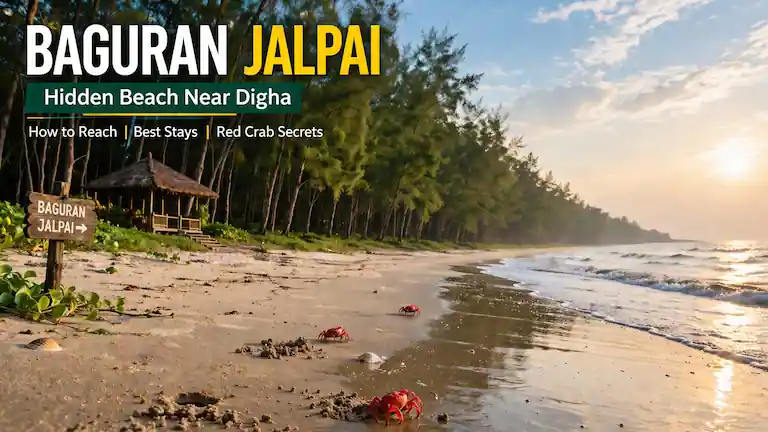
Digha is just too noisy these days, and Mandarmani costs too much for what you get. I recently spent a weekend at Baguran Jalpai. I went there to see if the online stories about “red crabs” are true, or just made up. Does the sand really look red, or are people lying?
I found a thick line of green Jhau trees and a beach that was actually quiet. But because it is so hidden, many people make big mistakes when planning their trip.
Big travel websites miss the small details that matter. I am writing this guide to share the real facts from my own trip. You will find the exact Toto (e-rickshaw) prices from Kanthi station, which hotel actually lets you see the ocean, the secret walking spot to find the crabs, and exactly what you need to pack to survive here.
Let’s be honest. If you want a beach where you can buy street food every few steps or walk on a paved road, just stay in Digha. You will have more fun there. Baguran is not for everyone.
But if you are like me and hate the noise of big towns, Baguran Jalpai is perfect. There are no concrete roads here. To get to the water, you walk through a thick forest of Jhau trees. The best part? The forest blocks all the noise. One second you are in a dusty village, and the next, it is totally quiet. It is just you and the ocean. The water here is very clean, and the gentle slope makes it safe for swimming. It is one of the last places in Bengal where the beach still feels wild.
Before you pack your bags, you need to know about the weather. During the monsoon season (rainy season), the sea tides here become very strong and dangerous. Because there are no big tourist setups and no lifeguards on the beach, you must stay away from the deep water when it rains. Sudden storms are also very common. Always carry an umbrella, a strong flashlight, and a fully charged power bank, because strong winds often cause long power cuts in the village.
Most travel blogs say every beach in Bengal is full of red crabs. That is not true. In places like Mandarmani, the crabs hide because cars and people are always moving on the sand. At Baguran Jalpai, the crabs own the beach because it is a protected eco-zone. The West Bengal Forest Department works hard to keep this area safe for them.
Many travelers search for “Red Crab Beach Resort” online, thinking it is a hotel located right in Baguran Jalpai. This is a big mistake. The famous “Red Crab Beach Resort” is actually located in Dadanpatrabar, Mandarmani. If you book that hotel, you will not be in Baguran Jalpai! Baguran Jalpai is a wild beach where actual red crabs live, not the name of a fancy resort.
When the sea water pulls back, the sand changes color as the crabs come out. From far away, it looks like moving red waves. But you must go at the right time. Do not go at noon and expect to see them. The crabs come out during low tide, usually between 7 AM and 9 AM.
Pro Tip: These crabs feel the ground shaking. If you want a good photo, sit on a piece of wood and stay totally still for five minutes. They will come right up to your feet. Remember, there are no lights on this beach. If you stay to watch the sunset, bring a flashlight or a charged power bank.
The biggest reason Baguran Jalpai is still a “hidden gem” is because there is no train station at the beach. But do not worry—getting here is easy if you avoid the Digha crowds.
A big mistake people make is taking the train all the way to Digha station. Avoid this, or you will waste a lot of time and money traveling back.
Which train? Book a train from Howrah on the IRCTC portal. Get off at Kanthi (Contai) Station.
| Train Name & Number | Departure (Howrah) | Arrival (Kanthi) | Duration | Approx. Fare |
| Tamralipta Express (12857) | 06:45 AM | 09:16 AM | 2h 31m | ₹105 (2S) / ₹260 (CC) |
| Kandari Express (22897) | 03:00 PM | 05:32 PM | 2h 32m | ₹105 (2S) / ₹260 (CC) |
The final trip: Walk outside the Kanthi station. You will see many Totos waiting. Tell them you want to go near the “Baguran Jalpai Cyclone Shelter” — this is a big local landmark everyone knows.
The Price & Transport Secret: A private Toto costs about ₹300 to ₹350. It is a 14 km ride through a village called Dakshin Purushottompur. It takes 45 minutes, and the village views are beautiful.
Crucial Return Tip: Totos are very hard to find at the beach when you want to go home. Always save your drop-off driver’s phone number so you can call them to pick you up on your last day.
If you cannot get a train ticket, the bus is a great option.
The drive from Kolkata is about 165 km. It takes 4 to 4.5 hours. Be careful—traffic at the Kolaghat bridge can be very bad on Saturday mornings.
If you want a 5-star hotel with a swimming pool, do not come here. The West Bengal Forest Department has strict eco-rules here. This means big companies cannot build huge concrete resorts on the sand. Everything is simple, basic, and very quiet.
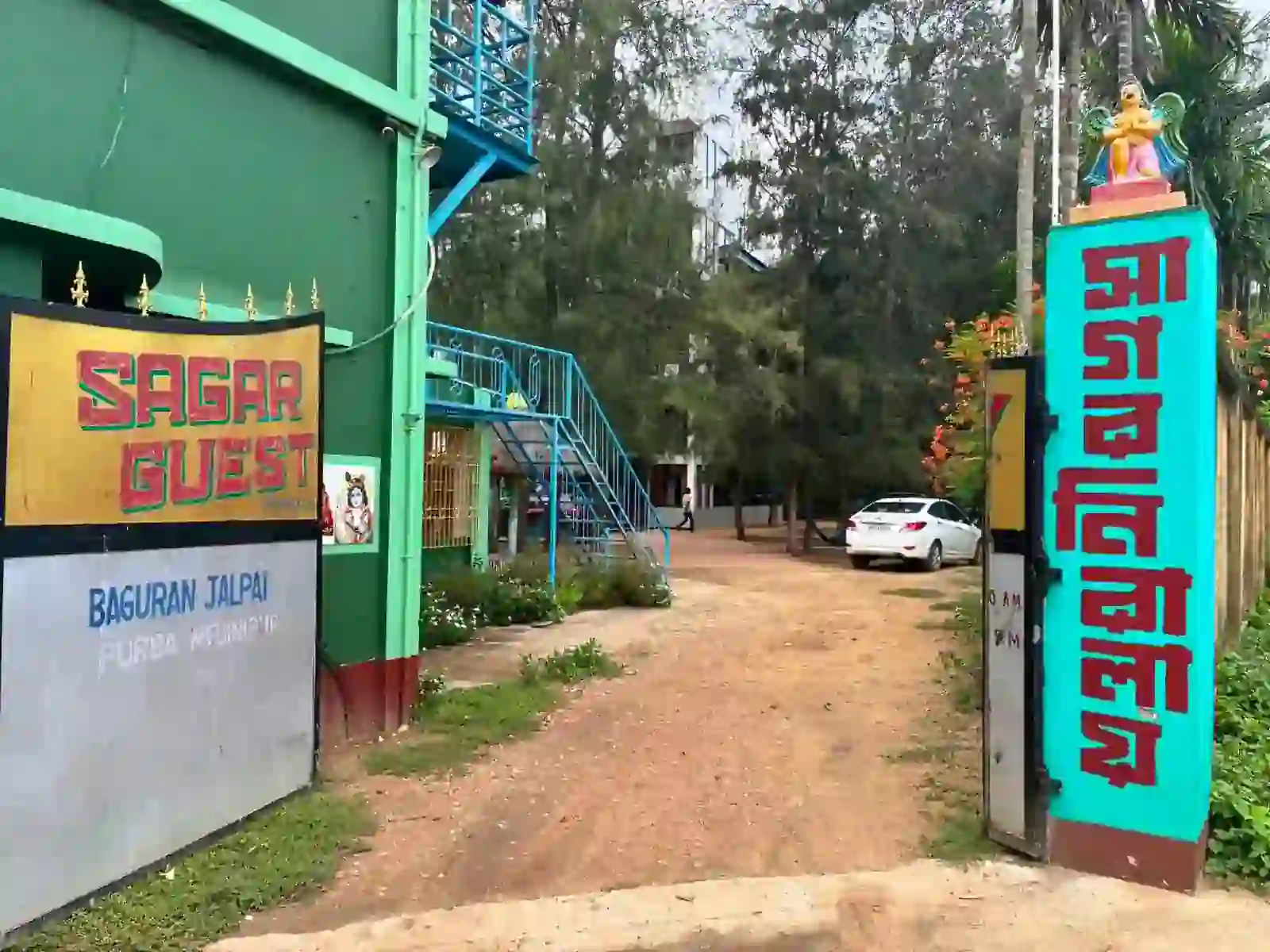
Most people stay at Sagar Niralay. It is the most famous place because it is right next to the sand. It is not a fancy hotel; it is a simple lodge hidden in the trees.
There are very few hotels here. They fill up fast from October to February. If you cannot get a room at Sagar Niralay, do this:
A quick warning: This is a remote village. Power cuts happen. The lodge has a generator, but bring a good power bank just in case the power is out for a long time.
Most people visit Baguran Jalpai, see a few crabs, and feel sad. If you want to see the real “Red Wave,” you need a plan.
The area where the forest path meets the beach is too noisy. The crabs hate the sound of footsteps. Walk North for about 20 minutes (around 1.5 km). Once the crowds are gone, the crabs come out. You will see thousands of tiny sandballs around their holes.
Crabs do not care what time it is on your watch. They only care about the sea tide. Usually, they come out between 6 AM and 9 AM to eat tiny pieces of food left by the water. Ask your hotel manager about the tide timings the night before. If you go during high tide, the beach will be empty.
You cannot chase red crabs. They run very fast. The trick is to find a piece of wood, sit down, and wait. It takes 10 minutes of sitting completely still before they trust you. Once they do, they pop out everywhere.
If you pick the wrong beach, your trip will be bad. Even though these three places are close to each other, they are very different. Here is a simple guide to help you choose:
| Feature | Digha | Mandarmani | Baguran Jalpai |
| Crowds | Very crowded | Many people | Almost empty |
| Vibe | Busy market | Party & resort vibe | Quiet & natural |
| The Beach | Hard sand, concrete paths | Cars drive on the sand | Soft sand + thick forest |
| Best For | Cheap shopping, family trips | Pools, parties, comfort | Peace, photos, swimming |
| Food | Street snacks | Resort dining | Fresh local fish |
If you stay for a few days, do not just sit on the beach! You can easily visit these spots:
This is 5 km away. This is where the local fishing business happens.
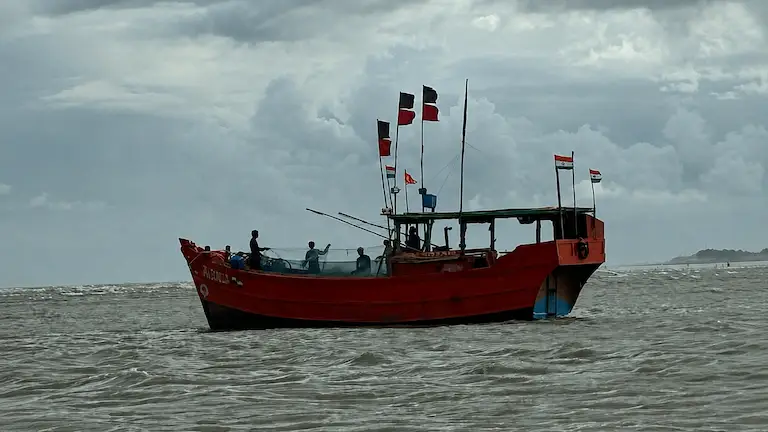
Pro Tip: You must be there by 6:00 AM. This is when the boats come back with fresh Hilsa and Pomfret fish. It is loud and smells like the ocean, but it is great for photos. Buy fresh prawns directly from the fishermen and ask your hotel to cook them for dinner!
Just 4–5 km away is another red crab spot. Baguran is totally silent, but Lal Kakra has a few local campsites. Go here in the morning to compare the two beaches.
Bankiput is about 12 km away from Baguran Jalpai. It is famous because the river meets the sea here (this is called an estuary).
Important Reality Check: Bankiput is an estuary, not a standard sandy beach. During low tide, the water pulls back almost 3 kilometers. This leaves a huge space of muddy sand. Reaching the actual water requires a long, muddy walk, so wear the right shoes! It is very quiet and beautiful, but be prepared for the mud.
For those who love Bengali history, visit this quiet old ruin in Dakshin Darua village. It inspired the famous writer Bankim Chandra. It takes only 10 minutes to see, but it is very peaceful.
This is 7 km away. It is a tall red and white tower.
The Catch: It does not open until 3:00 PM. Do not go at noon, or the gate will be locked and there is no shade to stand under. Entry is ₹10. Wear good shoes because the stairs are steep. From the top, you can see the whole ocean coast!
Baguran Jalpai is not about rushing from one tourist spot to another; it is about slowing down. If you are planning a standard 1-Night, 2-Day weekend trip, here is the most relaxing way to plan your time:
If you want to buy plastic toys, eat from 20 different food stalls, or go to a loud party, you will hate it here. You will get bored very fast.
But if you just need the world to be quiet for a few days, this is the best wild beach in Bengal. It is for people who want to read a book under a tree and watch the sunset without crowds. By visiting this village, you help keep it natural. For more hidden gems and travel ideas, explore our full guide to West Bengal tourism.
A: You will see them all year, but Winter (October to February) is best because the weather is cool. The real secret is the sea tide. If it is high tide, they hide underwater. You must go during Low Tide, usually between 6:00 AM and 9:00 AM.
A: Yes, it is very safe. It is a sleepy, quiet village. But remember: there are zero street lights on the beach path. It gets totally dark under the forest trees, so walk back to your room before the sun fully sets.
A: This area is a protected Biodiversity Heritage Site. The Forest Department protects the trees and the crabs. This makes it illegal to build big concrete hotels on the beach. This is actually good news, because it keeps the area quiet and wild.
A: Yes, but it takes 90 minutes to drive there. If you only go in the afternoon, you will miss the morning crabs. It is much better to stay for one night, or do a day trip early in the morning from Mandarmani.
A: Normal phone calls work fine. But mobile internet is very weak near the forest. Jio usually gives the best speed here, while Airtel drops completely in some spots. If you need to work on your laptop, call your hotel first to ask if their Wi-Fi is actually working.
About the Author: Bijoy Pal, founder of buzbusiness.com, is a West Bengal travel expert. He relies on firsthand, boots-on-the-ground exploration to deliver honest, hyper-accurate, and authenti