Physical Address
Bankura, West Bengal 722142
Physical Address
Bankura, West Bengal 722142

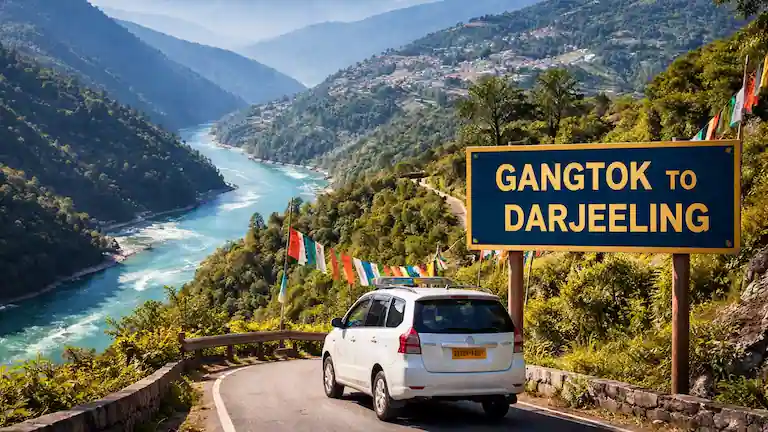
Planning a trip and searching for the Gangtok to Darjeeling distance? The total distance is 98 km (61 miles) on National Highway 10 (NH10). Because of steep mountain roads, the drive takes 4.5 to 5.5 hours. There are no direct flights or trains between the two towns.
Between the permit updates, roadwork, and changing taxi rates, you need a solid plan. This guide is built on real on-the-ground facts from local travel experts to help you. Here is the real deal on the distance, the exact current costs, and the best places to stop.
| Feature | Details |
| Distance | 98 km (Approx. 61 miles) |
| Travel Time | 4.5 to 5.5 hours |
| Starting Fare | ₹3,000 (Private) / ₹400 (Shared) |
| Best Time to Leave | 8:30 AM (Avoids school traffic) |
| Required IDs | Government Photo ID (e.g., Voter ID, Aadhaar, Passport) |
If you are planning this trip, you are likely landing in Siliguri or coming from another hill station. In the mountains, we do not measure distance in kilometers; we measure it in travel time. Here is the ground reality:
| Starting From | To Gangtok | To Darjeeling | Best Travel Option |
| Bagdogra Airport (IXB) | 125 km (4.5 hrs) | 70 km (3 hrs) | Prepaid private taxi |
| New Jalpaiguri (NJP) | 120 km (4.5 hrs) | 75 km (3 hrs) | Shared jeeps on Main Road |
| Siliguri Town | 114 km (4 hrs) | 65 km (2.5 hrs) | SNT Bus Terminus |
| Kalimpong | 75 km (3 hrs) | 51 km (2 hrs) | Small car (Swift/Alto) |
| Pelling | 113 km (4.5 hrs) | 72 km (3.5 hrs) | SUV for bad roads |
Looking at the map, 98 km seems like a quick trip. But in the mountains, you need to plan for at least 5 hours. Why? You start in Gangtok at an altitude of 5,410 feet, drive all the way down to the Teesta River valley at 700 feet, and then climb very steeply back up to Darjeeling at 6,700 feet.
The Altitude Rollercoaster:
This visual breakdown explains exactly why a 98 km drive takes 5 hours:
- Start: Gangtok (Altitude: 5,410 ft) — Cool weather and a steep descent.
- Midpoint: Teesta River Valley (Altitude: ~700 ft) — Your ears will pop as you go down. The weather here gets surprisingly hot and humid.
- Finish: Darjeeling (Altitude: 6,700 ft) — A sharp, dizzying climb up Peshok Road.
The drive is beautiful because you follow the river for a long time. Just remember, you must stop at the Rangpo border to cross from Sikkim into West Bengal. Keep your ID in your pocket or glove box, not buried in your bags. If you have it ready, the check is fast.
Do not just look at the distance and expect a cheap ride. Local taxi unions set the rates. While apps might show lower prices, local taxi stands charge based on the car type and the current tourist season.
Here is what you will likely pay for the trip:
| Vehicle Type | Estimated Fare | Best For |
| Hatchback (Alto/WagonR) | ₹3,000 – ₹3,500 | Solo travelers or couples (Max 2 bags) |
| Sedan (Dzire/Etios) | ₹3,500 – ₹4,500 | Small families needing more legroom |
| SUV (Innova/Xylo) | ₹5,500 – ₹7,000 | Groups of 4-6, best for motion sickness |
Note: Prices often go up by 20% to 30% during busy tourist seasons like May and October.
When you book a cab, always ask what is included to avoid surprises:
Shared vehicles (like Mahindra Boleros or Tata Sumos) pack 10 passengers inside. Because they often lack roof racks or tarp covers, there is zero space for large, hard-shell suitcases. If you bring a large suitcase, the driver will often force you to buy an “extra seat” (an additional ₹400) just to make room for your luggage.
The distance is not the main issue; the roads are. Depending on your route, it can be a fast drive or a full sightseeing tour.
This is the standard 98 km route via Rangpo and Melli. Most drivers use this because it is the fastest. You get great views of the Teesta River. A great halfway pitstop is Teesta Bazaar or Triveni for a bathroom break and good food. Also, stop at the Lovers Meet Viewpoint in Peshok for a quick photo where the two rivers join.
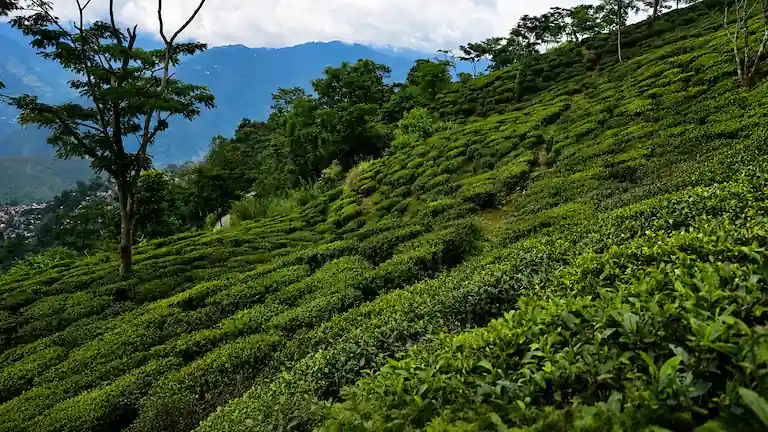
This route is longer (about 115 km). Only choose this if you want to stop in Kalimpong for lunch or to see the Pine View Nursery. The big benefit is that you avoid the heavy truck traffic on the lower NH10 highway.
This is about 110 km. Do not take this route unless you really want to visit the famous Chardham statues in Namchi. It adds extra travel time, but it is a good way to see more places before reaching Darjeeling.
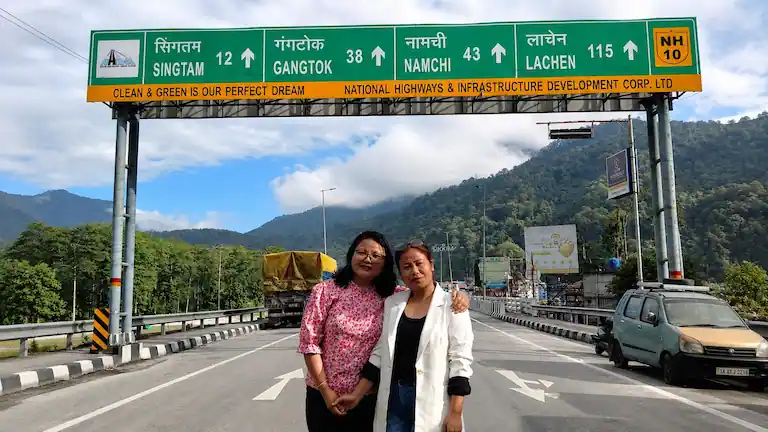
National Highway 10 (NH10) often gets blocked by landslides during the rainy monsoon season. Heavy rains can block the Rangpo-Siliguri stretch in multiple places. In winter (December and January), heavy fog in the valleys can slow the drive down by an extra hour, making an early morning start even more critical.
Instead of just searching the internet generally, check the exact official accounts for the most accurate and fresh updates. Before you depart, you should check the official Sikkim Police Facebook Page or the Darjeeling District Administration X (Twitter) handle.
Emergency & Live Road Status Box
The NH10 route frequently suffers from massive landslides, especially at dangerous choke points like Chitrey and Selfie Dara. Always keep these lifeline numbers on speed dial before you travel:
- Border Roads Organisation (BRO) Helpline: 0353-2550303
- Darjeeling District Control Room: 0354-2255749
Sikkim uses a modern permit system. Even though the drive is short, you can waste time at the border if your papers are wrong. Here is what you need to know:
You do not need a permit to enter Gangtok or drive this route. The border check at Rangpo is just a standard ID verification. You can show any valid government photo ID, including a Voter ID, Passport, Driving License, or Aadhaar card. Just keep the original handy. (Note: If you plan to visit highly restricted protected areas like Nathula Pass or North Sikkim later in your trip, the Tourism Department requires a Voter ID or Passport to issue those specific passes.)
You must get a Restricted Area Permit (RAP). This can be processed through the official Indian government e-FRRO website at https://indianfrro.gov.in/efrro/home or upon arrival.
The Rangpo checkpost and the deep valley gorges along the NH10 river stretch are notorious for total mobile network blackouts. Signals for major networks like Jio and Airtel drop out entirely as you drive. The biggest mistake travelers make is attempting to download or open their digital permit on their phones at the border, which often results in being turned back or delayed for hours. You must take screenshots or print physical copies of your documents before leaving your hotel Wi-Fi in Gangtok. Additionally, always download your route on offline Google Maps before you leave, so you can track your trip progress even when the signal dies.
The “Rangpo Border Wait Time” Chart
Border anxiety is a massive pain point for tourists. Here is a realistic timeline of what to expect based on the time of day:
- Early Morning (7 AM – 9 AM): 5 to 10 minutes. Smooth sailing.
- Late Morning Rush (10 AM – 12 PM): 25 to 45 minutes. (This is when all the tourist checkout traffic hits the border simultaneously).
- Evening (After 5 PM): 10 minutes, but driving NH10 in the dark is highly discouraged.
The biggest challenges are traffic and winding roads. You must leave Gangtok by 8:30 AM. If you leave later, you will hit the school rush hour in Darjeeling. The streets are very narrow, and you can get stuck in traffic for two hours just trying to reach your hotel.
The steep climb up Peshok Road into Darjeeling has many sharp, winding turns. If you feel sick easily, you must prepare:
If you are traveling with children or older parents, clean bathrooms are a necessity. The best and most hygienic restrooms on this route are found at the Melli Checkpost cafeteria, the Triveni Tourist Lodge, and specific dhabas just past the Coronation Bridge junction (if you take the longer route) or the major dhabas located at Teesta Bazaar. However, mountain public facilities are basic. You should always carry your own toilet paper, wet wipes, and hand sanitizer. Also, keep some ₹10 or ₹20 coins ready, as most of these public restrooms charge a pay-per-use fee.
Most tourists assume their taxi from Gangtok will drop them right at the door of their Darjeeling hotel. However, the core tourist area (Chowrasta and Mall Road) is a strictly pedestrian-only zone. Taxis from Gangtok cannot drive there. They will drop you at the lower Motor Stand, Chowk Bazaar, or Gandhi Road taxi stands. From there, you will need to hire a local porter to carry your bags up the steep hill to your hotel. Porters usually charge ₹100 to ₹200 per bag, so keep some cash handy.
Many people ask this, but there is no direct train between Gangtok and Darjeeling. The steep mountains make it impossible right now.
To catch a main train, you must go to New Jalpaiguri (NJP). From Gangtok, NJP is 120 km (4.5 hours) away. From Darjeeling, it is 3 hours away. Taking a train between the two towns will double your travel time.
The famous UNESCO Toy Train runs from NJP to Darjeeling. It is beautiful, but it takes 7 to 8 hours. It is great for taking pictures, but it is not a helpful way to travel.
You might hear about the ongoing Sevoke-Rangpo railway project. Government reports confirm the project is over 85% complete, with most of the tunnels and bridges already built. The official target for completion is December 2027. Once it opens, you will be able to take a train to the Sikkim border at Rangpo. For now, you must travel by road.
There are no flights between Gangtok and Darjeeling. They are only about 50 km apart in a straight line, but no planes fly this route.
Taking a helicopter does not save time. The helicopter only goes to Bagdogra, which is down in the flat plains. You will land in the heat and still have to take a 3-hour taxi ride up the mountain to Darjeeling. Pakyong Airport near Gangtok is also often closed due to fog and does not fly to Darjeeling. Just hire a taxi. It is cheaper and much easier.
Buses are only good if you are on a very tight budget. The trip takes 5 or 6 hours because big buses drive very slowly on mountain curves. At the Rangpo border, they check every person’s ID, which takes a long time.
Tickets are cheap (₹150 to ₹250), but the ride is uncomfortable. There is no AC and very little legroom. If you get motion sickness, do not take the bus. The heavy swaying on the turns will make you feel sick. A shared or private taxi is a much better choice.
The Gangtok to Darjeeling distance looks short on a map, but the mountain drive takes time. Whether you take the fast NH10 route or the scenic Kalimpong route, make sure your IDs and digital permits are printed or downloaded.
If you want a shared taxi, go to the Deorali Taxi Stand in Gangtok early in the morning (between 7:00 AM and 8:00 AM). A shared seat costs around ₹400 to ₹500. For private cabs, negotiate the fare directly at the stand before putting your bags in the car. It is best to use a trusted travel partner to avoid surprise costs. If you are planning more stops across the region, explore our other travel guides to plan your next adventure.
No. There are no flights or direct helicopter services between the two towns.
Prices range from ₹3,000 to ₹7,000 depending on the car type and tourist season. Small cars are cheaper, but SUVs offer a much smoother ride.
No. The closest major railway station is NJP, which is a 4.5-hour drive away.
It takes about 4.5 to 5.5 hours. Do not believe anyone who says it takes 3 hours. Border checks and mountain roads will slow you down.
Indian citizens need a valid government photo ID (like a Voter ID, Passport, or Aadhaar) for the standard border check. Foreigners need a printed copy of their Restricted Area Permit (RAP) from the e-FRRO website.
The classic route via Melli (NH10) is the fastest and most popular.
If you are on a budget and do not mind a crowded ride, a shared jeep from the Deorali Taxi Stand works well. If you have luggage or want comfort, book a private taxi.
Leave by 8:30 AM to avoid the heavy school traffic in Darjeeling.
About the Author: This guide is curated by a team of travel researchers and local drivers who navigate the Gangtok to Darjeeling route regularly. We built this guide with real on-the-ground facts (and plenty of motion sickness lessons!) to help you skip the tourist traps and travel the Himalayas safely.