
What is Laaster?
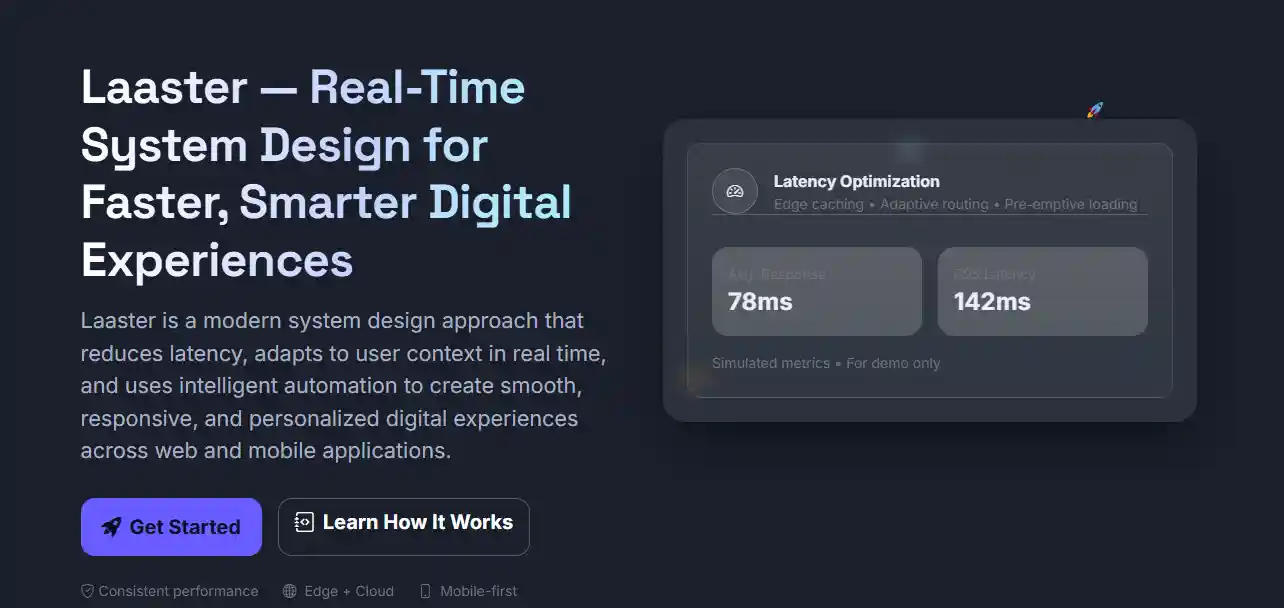
Laaster is often described as a high-speed system design tool, but in reality, it is a “ghost” website. While the site looks professional, its buttons don’t work and there is no real service to join. It is likely an SEO experiment meant to capture search traffic rather than a real business.
If you are looking for real speed and engagement tools, skip the “Laaster” mystery and use trusted, working platforms like Cloudflare or HubSpot.
The Reality Check
| Feature | The “Ghost” Promise | The Reality (What I Found) |
| Website Speed | Claims “Ultra-Fast” performance. | Data is labeled as “Simulated Metrics.” |
| User Service | High-speed system design tool. | Broken buttons; no real service exists. |
| Content Quality | Professional software interface. | Random blog posts about dentists & CPAs. |
| Trust & Safety | Professional design looks real. | No real physical address or support team. |
| Pricing | Looks like an Enterprise tool. | No pricing; just meant to get Ad clicks. |
Is Laaster a Real Service?
While the homepage of Laaster looks like a professional software tool, it is actually an informational blog site. The buttons to buy or join the service are not clickable because there is no real app to download. Instead, the site is used to share articles on different topics like business, finance, and technology.
Why the Buttons Don’t Work
The site uses a “demo” style to mimic what a real tech company looks like. However, it does not offer any actual services or support. If you are looking for a real tool to make your website faster, you should stick to trusted companies like Cloudflare or Google PageSpeed. Currently, Laaster functions more like a blog for ad revenue rather than a legitimate technical tool.
How to Spot “Ghost” Websites Like Laaster
It’s easy to get fooled by a fancy design. If you’re not sure if a site like Laaster is real, look for these “red flags”:
- Broken Buttons: If you click “Buy” or “Sign Up” and nothing happens, walk away. Real businesses never make it hard to give them money.
- Random Blogs: Why is a “speed tool” website writing about dentists? If the blog topics are all over the place, it’s just a site built to get clicks, not to sell a service. For more expert fact-checks and investigations into internet trends, visit our Business and Tech News Homepage.
- Fake Numbers: Look closely at the charts. If you see the words “demo” or “simulated,” those fast speeds aren’t real—they are just for show.
Better Tools to Use Instead of Laaster
If you want a website that actually works fast, don’t waste time on broken sites. These are the best tools that real experts use:
For Speed (Cloudflare): This is the biggest name in the world for speed. It has servers everywhere so your site loads fast for everyone. It is free to start.
For Easy Optimization (NitroPack): If you don’t know how to code, this tool does everything for you. It fixes your images and makes your pages “lightweight” so they fly.
For Talking to Customers (HubSpot): Instead of a “ghost” engagement tool, use HubSpot. It lets you chat with visitors and keep track of your customers in one place.
For Real Data (Google PageSpeed Insights): Don’t trust “simulated” numbers. Google gives you a free report that shows exactly how fast your site is on phones and computers.
Why do sites like Laaster exist?
You might wonder why someone would make a fancy website if you can’t actually buy anything. Usually, it’s for these simple reasons:
- To Get Clicks (SEO): People make these sites to show up on Google. They use “smart” words to attract visitors. Once you are on the site, they hope you will click on their blog posts.
- To Make Money from Ads: Every time someone visits their blog and sees an ad (like an ad for a dentist or a bank), the owner of the site gets a small amount of money.
- To Test Ideas: Sometimes, people build “fake” storefronts just to see if people want to buy that service before they actually build the real software.
The Simple Truth
If a website looks like a store but has no price and the buttons don’t work, it’s not a real service. It is just a “digital sign” meant to catch your eye. Always trust your gut—if you can’t click it, you can’t buy it!
Why You Should Avoid “Simulated” Tools
On the Laaster homepage, you might see some impressive numbers, like speeds of 78ms. But if you look really closely, the site admits these are “Simulated metrics.” In plain English? That means the numbers are made up for a demo. A real tech company will show you real data from actual people who use their tool. If a site can’t show you real proof that it works, it’s probably because the product doesn’t even exist yet.
If you already visited the site, don’t panic!
Since the “Get Started” and “Buy” buttons don’t actually work, you haven’t spent any money or shared your private info. You are safe. But, this is a good lesson for the future! Before you trust a new website, always check three things:
- The “Legal” Stuff: Does it have a real Privacy Policy?
- The “Map” Test: Can you find a real office address for the company?
- The “Real Person” Test: Look on YouTube or Reddit. If no one is talking about using the tool, it probably doesn’t exist.
The Final Word
Don’t let a pretty website fool you. Before you spend your time or money on a new tool, always check if the buttons actually work and if the blog posts make sense. It’s much safer to stick with trusted, famous services so you don’t run into any trouble. Your business is too important to waste on a “ghost” site!
FAQs:
Honestly, it doesn’t look like it. I tried to sign up and click the “Get Started” buttons, but absolutely nothing happens—they aren’t even clickable links. There’s no office address, no real team listed, and no way to actually use the service.
Don’t let the fancy charts fool you. If you squint at the bottom of those graphs, they actually admit the metrics are “Simulated for demo purposes.” In plain English? Those numbers are made up. They aren’t real results from real users; they’re just there to look impressive.
I wouldn’t call it a traditional “scam” because they aren’t stealing your credit card—mostly because the “Buy” button doesn’t even work! It’s more of an SEO experiment. They built a site that looks like a tech tool to get people like us to visit, hoping we’ll click on their random blog posts about dentists or life insurance so they can make a few cents from ads.
You’re safe to browse. Since you can’t actually sign up or give them any info, your data is secure. Just don’t bother trying to download anything or “join” their waitlist. It’s a dead end.