Physical Address
Bankura, West Bengal 722142
Physical Address
Bankura, West Bengal 722142

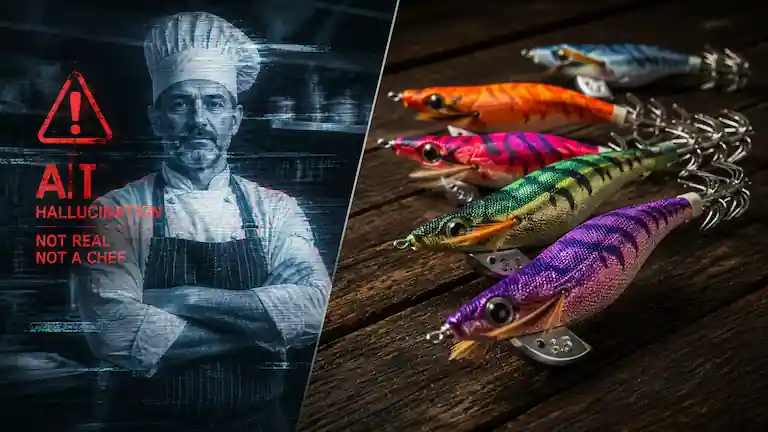
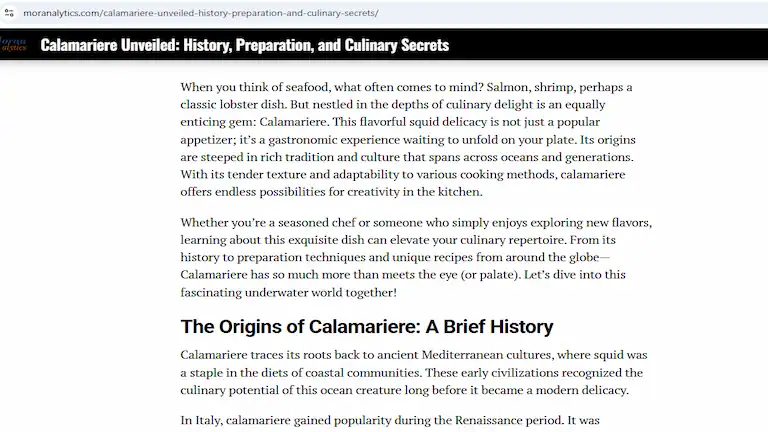
To understand The “Calamariere” Chef Myth: How AI Fooled the Internet and why so many websites are lying about this word, we need to look at how modern search engines work. Right now, there is a big trend of “ghost websites.” These are blogs run entirely by computer programs and AI bots, not by real human writers. When a new keyword starts getting popular, these bots automatically publish fake articles. They do this to get search traffic and earn ad money.
Because AI bots cannot test facts in the real world, they simply guess what words mean. In this case, an AI program made a very simple language mistake.
To spot the mistake, you only need to look at basic Italian word patterns:
Words ending in -iere describe a job:
Words ending in -iera describe a tool or object:
The physical fishing tool is grammatically female. One single squid lure is called a Calamariera. If you have a box filled with multiple lures, the plural word is Calamariere.
The AI program did not understand plural Italian grammar. It saw the word Calamariere ending in -iere. It mistakenly thought it was a single male job title, just like Pasticciere.
From that one simple grammar mistake, the bot invented a completely fake history about an Italian squid chef and published it all over the web.
Now that we know the chef is fake, let us look at the real definition. A Calamariera (singular) or Calamariere (plural) is a special fishing jig or artificial lure used specifically to catch squid and cuttlefish.
This tool is a massive part of Mediterranean fishing culture. If you walk into any fishing tackle shop in an Italian seaside town, you will not find a chef. You will find walls and aisles filled with these colorful lures.
Fishermen do not always use big nets to catch squid, especially when they want the freshest catch for the market. Instead, they use these special lures to catch them one by one. The plural term, calamariere, is the exact word Italian fishers and e-commerce websites use for this fishing gear. You will often see top European and Mediterranean brands like DTD and JLC producing these high-quality lures for local fishermen.
A squid lure is not like a normal fishing hook. Because squid are completely different from normal fish, the tool used to catch them has to be designed in a very specific way. If you use a normal fishing hook, you will not catch anything.
Here is a breakdown of the anatomy of a real calamariera and exactly how it works:
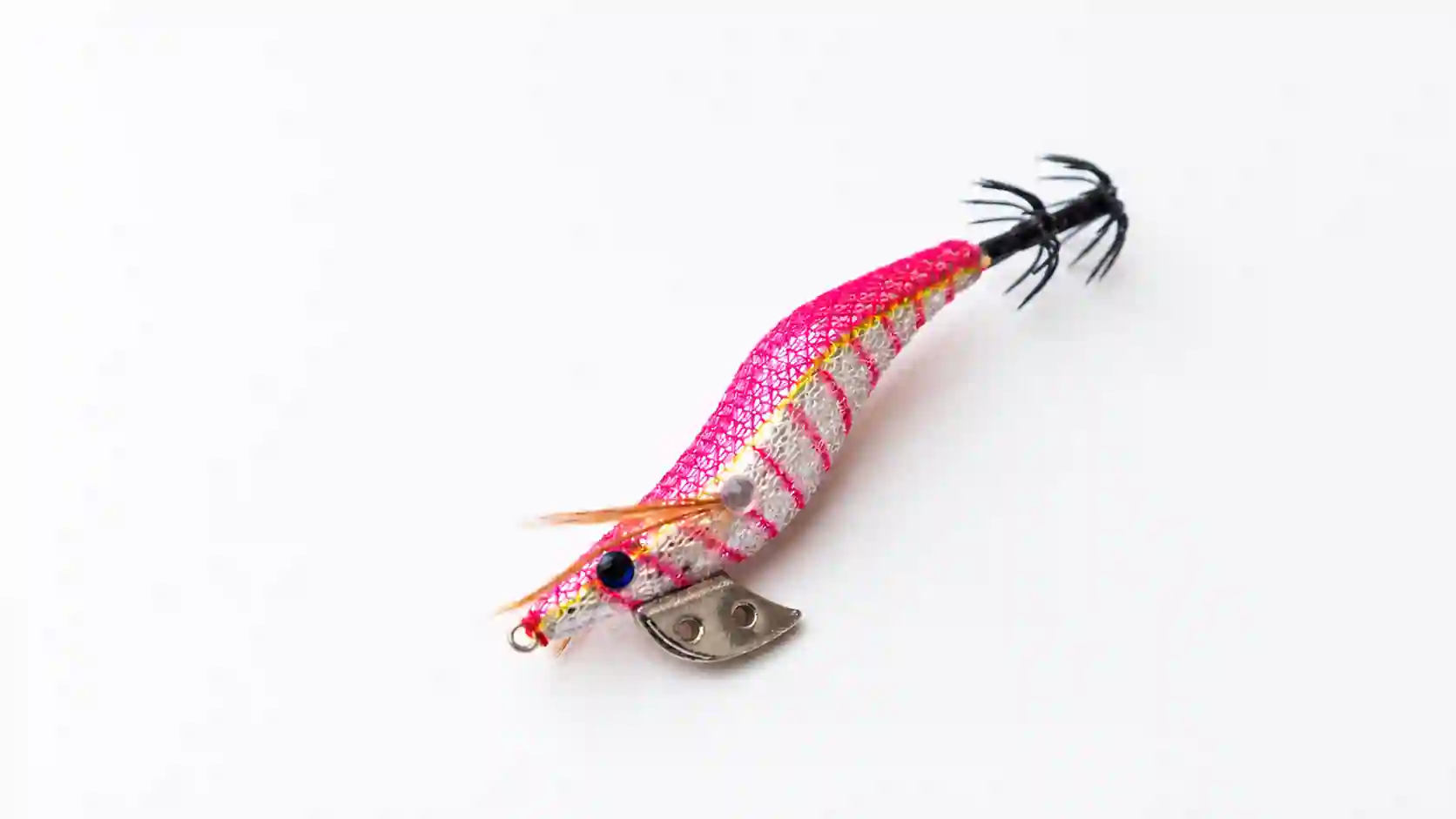
Look at the very back or bottom of the lure. You will not see a single, curved hook. Instead, you will see a large circle or crown of many small, sharp metal spikes. In Italian fishing terms, this is called the “cestello” (which translates to basket) or an umbrella hook.
Unlike normal fish hooks, these tiny spikes do not have barbs. Barbs are the little backward-facing points that keep a fish locked on. Squid tentacles are very soft. If the hooks had barbs, they would rip right through the soft tentacles, and the squid would escape. Instead, the cestello is designed so that when the squid wraps its arms around the lure, the many smooth spikes hold it gently but firmly. The fisherman must keep a tight line and pull smoothly, or the squid will just let go.
Under the “chin” of the artificial shrimp, you will see a piece of metal hanging down. This is a lead weight shaped like a boat’s keel. This weight is very carefully balanced. It forces the lure to sink into the water at a very specific angle—usually exactly 45 degrees. When it sinks at this angle, it looks exactly like a real, live prawn swimming down to the bottom of the sea to feed. This movement tricks the squid into attacking.
Squid are visual hunters. This means they use their giant eyes to find food, mostly at night or in very deep, dark water. Because of this, modern calamariere are wrapped in special cloth. This fabric is usually brightly colored and often features UV-reflective materials or glow-in-the-dark (luminescent) paint. Before throwing the lure into the dark ocean, a fisherman will often shine a bright flashlight on it to “charge” the glowing paint so the squid can see it from far away.
There is no single way to catch a squid, so there are different styles of these lures depending on how the fisherman wants to work.
The modern style of fishing for squid from the beach or the rocks is highly influenced by the Japanese method known as “Egi” (which translates to squid jig). These lures are very lightweight. Top Japanese Egi brands like Yamashita, Yo-Zuri / Duel, and Daiwa make some of the best lures in the world for this style.
The fisherman casts the lure far out into the water and then violently jerks the fishing rod upward. This makes the artificial shrimp dart and jump through the water, looking exactly like a panicked prawn trying to run away. When the fisherman pauses, the lure slowly sinks at that perfect 45-degree angle, and that is usually when the squid grabs it.
In Italy, many fishermen prefer a more traditional method using much heavier calamariere. Instead of standing on the shore, they take boats out as the sun goes down (dusk is the best time for squid). They drop heavy lures straight down to the bottom of the sea. Sometimes they use massive jigs that weigh up to 250 grams, such as the famous JLC brand, especially the JLC Calamar. They either slowly bounce these heavy lures on the sea floor (vertical bottom fishing) or drag them slowly behind a moving boat (trolling).
The internet is changing rapidly, and we must be careful about what we read. When computer programs write articles without human supervision, they create things that sound very real but are completely false.
The story of the Calamariere is the perfect example of this problem. A simple grammar mix-up turned a plastic and metal fishing tool into a legendary Mediterranean chef.
If you are planning a trip to Italy or just want to enjoy a good meal, do not go to a restaurant and ask for a Calamariere. The waiters will be very confused, and they might think you want to eat a fishing lure! If you are hungry, you should order Calamari Fritti (fried squid) or grilled squid.
Save the word Calamariere for when you walk into a tackle shop near the docks and want to buy the right tools to catch your own fresh dinner.
No, it is an AI hallucination. There is no dish, recipe, or secret chef called by this name. Food blogs claiming otherwise are using automated software to generate fake articles for search traffic.
It is the plural form of the word calamariera, which is a specialized squid fishing lure or squid jig used by anglers and commercial fishermen to catch fresh squid in the ocean.
Author Bio: This article was researched and written by the investigative team at buzbusiness.com. We specialize in fact-checking digital trends, exposing AI-generated ghost websites, and providing deep, factual information to make the internet a more trustworthy place. We verify every claim so you do not have to fall for SEO traps.