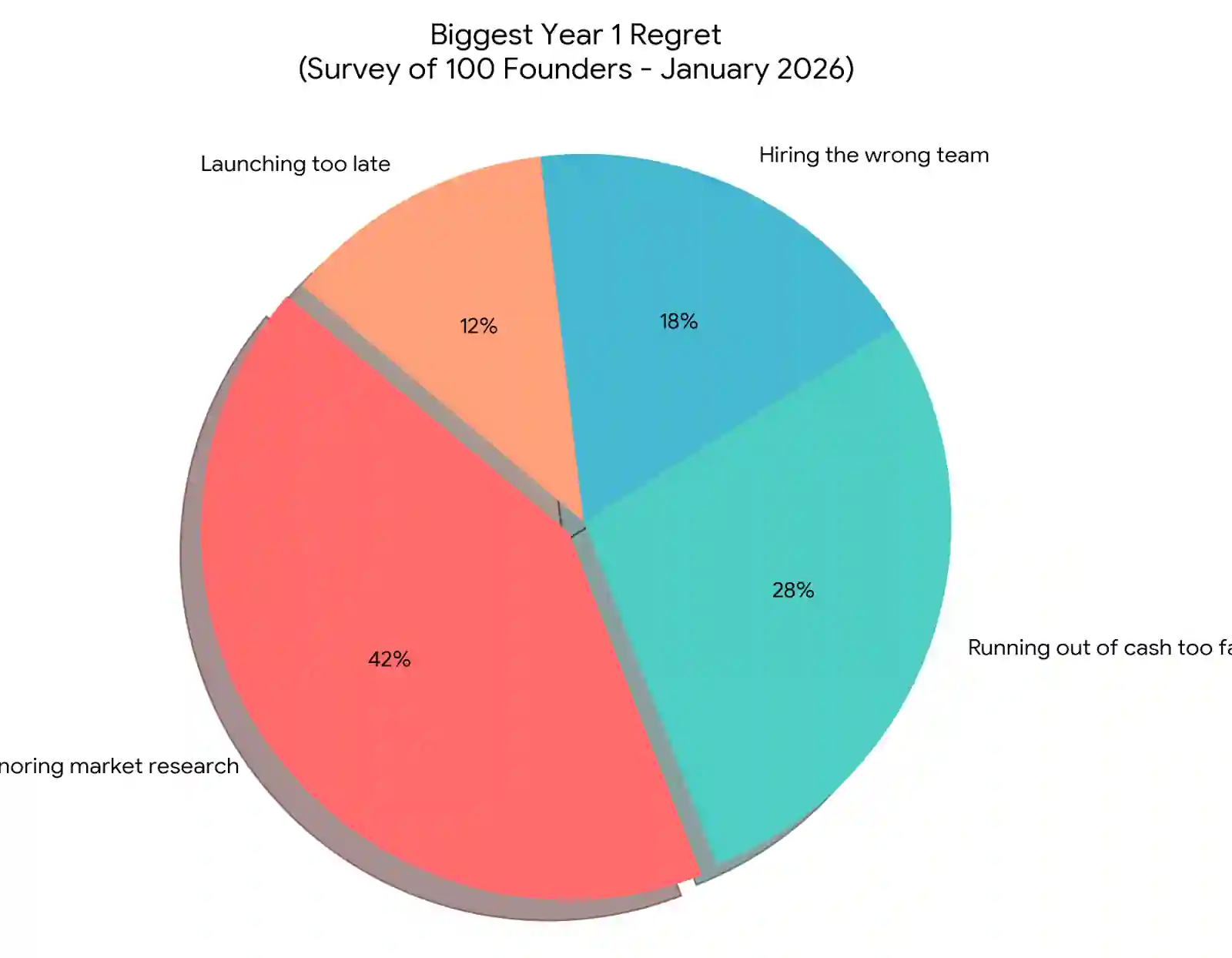
Starting a business is exciting, but many startups fail — not because the idea is wrong, but because founders make simple mistakes that can be avoided. This complete guide will help you understand the 30 most common startup mistakes to avoid so you can build a stronger and more successful business. Everything is written in clear, easy English with practical tips you can start using right away.
1. Starting Without a Clear Purpose or Problem
Many people start a business just because they want to “do something of their own.” But this is a common mistake. A successful startup is built on a clear purpose — it solves a real problem for real people. If you don’t know why you are starting or what problem you are trying to solve, you will quickly feel lost. This lack of clarity can lead to confusion, low confidence, and loss of motivation as your business grows.
Before you begin, take a moment to think deeply. Ask yourself a few simple but powerful questions:
What exact problem am I solving?
Who is struggling with this problem?
Why would they pick my solution instead of others?
When you can answer these questions clearly, your business direction becomes strong and focused. You understand your purpose, your customers, and the value you bring to them. This clarity helps you make better decisions, build better products, and stay motivated during challenges.
A clear purpose is like a roadmap — it guides you, keeps you on track, and helps your startup grow with confidence. So before starting, make sure your foundation is strong by knowing exactly why your business should exist.
2. Ignoring Market Research
Skipping market research is one of the biggest startup mistakes to avoid. Many new entrepreneurs create a product or service based only on their own ideas. They never stop to check if people actually want it. Because of this, they spend time, money, and energy building something that has no real demand — which often leads to frustration and failure.
Market research helps you understand the real world, not just your imagination. It shows you what customers like, what they don’t like, how much they are willing to pay, and what problems they face every day. It also helps you see who your competitors are, how they sell their products, and what you can do differently to stand out.
The good news is that market research does not have to be complicated. Even simple steps can give you powerful insights, such as:
Talking to potential customers
Doing small surveys on social media
Interviewing people who face the problem you want to solve
Reading competitor reviews to understand what customers complain about
Checking demand through Google Trends or keyword research
These small efforts can protect your startup from big losses. When you know your market well, you build a product people truly want — which increases your chances of success by a huge margin.
Market research is not just important… it is essential. It gives your startup direction, clarity, and confidence.
3. Building a Product Nobody Wants
Many startups make the mistake of falling in love with their own idea instead of focusing on what the customer actually needs. They create something that looks “cool,” has fancy features, or feels exciting to build — but in reality, no one wants it or no one is willing to pay for it. This is one of the main reasons many startups fail very early.
A successful business is built around solving a real problem, not around a founder’s imagination. That’s why it’s important to test your idea before spending too much time or money on it.
Instead of trying to build a perfect product from day one, start with a Minimum Viable Product (MVP). An MVP is a small, simple version of your idea that includes only the most important features. It helps you understand whether people like your idea, whether they need it, and what improvements they want.
With an MVP, you can:
Launch quickly
Collect real customer feedback
Save money by avoiding unnecessary features
Improve the product step-by-step
Build something based on real demand, not assumptions
This approach helps you create a product that people genuinely want and are willing to use or buy. When you listen to customers and build based on their needs, your chances of success increase dramatically.
Before building your startup, check what the market already loves. Explore these profitable small business ideas in India to understand what people are actively paying for.
4. Starting With Too Many Features
Many new founders believe that adding more features will make their product more attractive. But this is a common mistake. More features usually mean more cost, more development time, more bugs, and more confusion for customers. Instead of making your product better, it can actually make it harder to use.
Customers don’t want a complicated product with 20 different features. They want something simple that solves their main problem quickly and easily. When you give people too many options, they often feel overwhelmed and don’t know where to start.
This is why the best approach is to begin with one strong, useful feature — the feature that solves the biggest problem your customer faces. Build it well, make it easy to use, and launch it early.
Once people start liking your product and using it actively, you can slowly add more features based on real feedback. This way, every new update actually improves the user experience instead of making it confusing.
Starting small keeps your product clean, focused, and valuable — and it saves your startup from wasting time and money on features nobody needs.
5. Not Understanding Your Target Audience
Many new startups believe that “everyone is my customer.” But this is one of the biggest mistakes. When you try to sell to everyone, you actually end up reaching no one. Every successful business knows exactly who their ideal customer is.
Understanding your target audience helps you create better products, better marketing, and better results. It becomes easier to decide your pricing, your ads, your content, and even your branding when you know who you are trying to help.
Take time to clearly define your audience. Think about simple but important details like:
Age: Are they teenagers, young adults, or working professionals?
Location: Are they from your city, your country, or global?
Income level: Can they afford your product or service?
Interests: What do they like, follow, or talk about?
Pain points: What problems are they facing that you can solve?
When you truly understand who you are selling to, your marketing becomes more focused, your message becomes stronger, and your chances of success increase a lot. Instead of trying to reach everyone, focus on reaching the right people — the ones who actually need and value what you offer.
6. Choosing the Wrong Business Model
A great product can still fail if the business model is weak. Many new founders focus only on building something amazing, but they never think clearly about how they will earn money from it. Without a proper earning method, even the best ideas cannot survive for long.
Your business model is basically your plan for making money. It decides how you will sell, who will pay you, how often they will pay, and whether your income can grow in the future. When this plan is unclear, your startup may struggle with cash flow, unstable income, or pricing confusion.
A strong business model should clearly answer a few important questions:
How will you make money? (sales, subscriptions, services, ads, etc.)
How often will you earn? (one-time purchase or monthly income?)
Is your model scalable? (can you grow without huge extra costs?)
Will people actually pay for this? (is the value strong enough?)
Different audiences prefer different pricing and payment methods, so make sure your model matches what your customers are comfortable with. Also think about your long-term goals — do you want steady monthly income, big one-time sales, or a mix of both?
Choosing the right business model gives your startup stability, clarity, and long-term growth. It helps you avoid financial stress and build a business that can survive and expand confidently.
7. Not Calculating Real Costs
Many new founders make a big mistake: they only think about the obvious expenses and ignore the hidden ones. They plan for product development but forget about marketing, tools, hosting, subscriptions, software updates, office needs, salaries, and even taxes. Because of this, the money runs out much faster than expected, and the startup struggles or shuts down.
To avoid this, track every single cost, even the small ones that look unimportant. Small expenses add up very quickly. You don’t need expensive software — a simple Google Sheet is enough. Make categories like marketing, tools, operations, and salaries. Update it every week.
When you clearly understand how much you spend and how much you need, you make smarter business decisions, avoid financial stress, and keep your startup healthy for the long run.
If you want to explore business ideas that are easy to start, check this guide on low investment business ideas in India.
8. Hiring Too Fast or Too Slow
Many new founders struggle with hiring. Some hire too many people in the beginning, just to look like a “big company.” This increases costs without bringing real results. Others wait too long to hire, and because of this, the work becomes slow, quality drops, and customers get frustrated.
The key is balance.
Start small and keep your team lean. Only hire when it truly makes sense. A new hire is helpful when:
The workload is affecting quality
You’re losing time on tasks someone else can handle
Sales are growing and you need support
You can comfortably pay their salary for the next 6–12 months
Hiring the right person at the right time can completely transform your business. It brings new skills, saves your time, and helps your startup grow faster without wasting money.
9. Choosing Co-Founders Without Compatibility
Choosing the wrong co-founder is one of the biggest startup mistakes many founders make. A lot of people start a business with friends just because they get along well. But friendship alone is not enough to build a successful company.
You need a co-founder who truly fits with you — someone who has different skills, similar values, and a shared vision for the business. If both co-founders think the same way or want the same responsibilities, problems will start very quickly.
Before starting the company together, talk openly about:
What role each person will handle
Who will make final decisions
How profits will be shared
What the long-term goals are
How you’ll handle disagreements
Putting everything in writing (like a founder agreement) is very important. This protects the business and keeps the relationship healthy. When you choose the right co-founder, the journey becomes smoother, faster, and
10. Poor Financial Management
Poor financial management is one of the biggest reasons why startups fail. Many new founders get excited in the beginning and start spending money on things they don’t actually need — like fancy office spaces, costly advertising, premium tools, or expensive branding. But without steady income, these expenses can quickly drain your budget.
To run a healthy startup, you must understand and track your money carefully. Focus on:
Cash flow – how much money comes in and goes out
Profit margins – how much you actually earn after costs
Burn rate – how fast you are using your available money
ROI (Return on Investment) – whether your spending brings real results
Good financial decisions must be based on numbers, not emotions. Always ask yourself:
“Is this expense necessary right now?”
“Will this help my business grow?”
When you manage your money smartly, your startup becomes stronger, more stable, and ready for long-term success.
11. Ignoring Marketing or Starting Too Late
Many founders believe that if their product is good, people will automatically find it. But in reality, even the best product in the world won’t sell if nobody knows it exists. This is one of the most common and dangerous startup mistakes to avoid.
Marketing is not optional — it is necessary for awareness, trust, and sales. If you start marketing only after launching your product, you are already behind your competitors.
Begin building your audience early. Even simple steps can make a huge difference:
Share updates on social media
Write helpful blogs for SEO
Collect emails before launch
Collaborate with influencers or small creators
Join online communities and answer questions
Offer early access or pre-launch deals
The goal is to create excitement before your product or service goes live. When people are already waiting for your launch, your first day becomes much stronger.
12. Depending Only on One Channel
Many startups make the mistake of relying on just one source of customers. Maybe they depend only on Instagram, only on paid ads, or only on recommendations from friends. This is extremely risky. If that single channel stops working — your reach drops, your ads become expensive, or your account gets restricted — your startup suddenly loses all customers.
That’s why one of the most important startup mistakes to avoid is depending on just one marketing channel.
To grow safely, diversify your customer sources. Use multiple channels so your business stays stable even if one platform changes its rules.
Some effective channels include:
SEO: Brings long-term, free traffic
Social media: Helps build brand awareness
Email marketing: Keeps customers returning
Referral programs: Encourages people to share your brand
Paid ads: Gives quick visibility when needed
WhatsApp or SMS marketing: Helps with direct communication
When you use a mix of channels, you’re not dependent on any single platform. This creates stable, predictable growth and makes your startup stronger.
13. Setting Unrealistic Goals
Many new founders expect quick success — 100 customers in a week, huge profits in a month, or viral growth overnight. But real business does not work like that. When goals are too high or unrealistic, you feel disappointed, stressed, and demotivated when you fail to reach them.
This is one of the major startup mistakes to avoid, because unrealistic expectations can kill your motivation early.
Instead, set SMART goals, which means:
Specific: Clear and focused
Measurable: You can track the progress
Achievable: Realistic with your current resources
Relevant: Matches your startup’s direction
Time-bound: Has a deadline
For example, instead of saying “I want thousands of customers,” say:
“I want 50 new customers in the next 30 days using social media campaigns.”
Small wins create big confidence. When you achieve small goals regularly, you build momentum and keep moving forward.
14. Fear of Taking Feedback
Many founders avoid feedback because they feel their idea is already perfect. They worry that negative comments will hurt their confidence or force them to make changes. But this mindset is dangerous. The truth is simple:
Customers always know what they want better than you do.
One of the most important startup mistakes to avoid is ignoring feedback. If you don’t listen, you may end up building a product that you like — but nobody else needs.
Feedback is not criticism. It is information that helps you grow faster.
Ask for feedback regularly from:
Early users
Friends and family
Online communities
Industry experts
Existing customers
Listen carefully, note the patterns, and improve quickly. Even small changes can make your product much better. When customers see that you value their opinions, they trust you more and become loyal supporters.
15. Doing Everything Yourself
Many founders try to do every single task on their own — marketing, sales, customer support, finances, operations, content, and product development. In the beginning, this may seem possible, but soon it becomes overwhelming. You get tired, stressed, and lose focus on what truly matters.
This is one of the most common startup mistakes to avoid because doing everything yourself leads to burnout and slow growth.
You don’t need to be a one-person army.
Start delegating smartly. You can:
Hire freelancers for design, content, or tech work
Use automation tools for emails, scheduling, and billing
Bring part-time support for customer service
Focus your energy on high-impact tasks
As a founder, your main job is to guide the business, not to handle every small task. When you delegate, you free up your time to think, plan, innovate, and grow the startup.
16. Ignoring Competitors Completely
Some founders believe their idea is so special or so unique that they don’t need to check what competitors are doing. But this mindset can be very dangerous. Ignoring competition is one of the biggest startup mistakes to avoid because it leaves you blind to what’s happening in your own market.
Competitors are not always your enemies — they can be your best teachers. They show you:
What customers already like
What customers complain about
What pricing works
What gaps still exist
What marketing strategies perform best
By studying them, you can improve your product, avoid their mistakes, and build a stronger business strategy.
Competition does not mean you should copy others. It simply means you should be aware. When you understand the landscape, you make smarter decisions and create a product that truly stands out.
17. Poor Customer Support
You might have an amazing product, but if your customer support is weak, people will stop trusting your startup. Today’s customers expect fast replies, clear communication, and real solutions to their problems. If they feel ignored or misunderstood, they will quickly move to your competitor — and they may never come back.
This is one of the most damaging startup mistakes to avoid, because poor support doesn’t just lose customers; it hurts your brand reputation.
Good customer support does not have to be complicated. Start with a simple system that makes people feel heard and valued. You can use:
Email support for detailed help
WhatsApp Business for quick replies
Auto-reply chatbots for common questions
A helpful FAQ page to reduce repeated queries
A clear refund or return policy to build trust
When customers feel you care about them, they become loyal supporters. Happy customers also bring free word-of-mouth marketing, which is more powerful than any advertisement.
18. Overpricing or Underpricing Products
Pricing your product is one of the toughest decisions for any new founder. If your price is too high, customers may hesitate or choose a cheaper competitor. But if your price is too low, you may get sales but no profit — and your business won’t survive long. Many startups make this mistake because they guess prices instead of doing proper research.
This is a major startup mistake to avoid because your pricing directly affects sales, trust, growth, and sustainability.
Instead of guessing, take a smart approach. Check:
Competitor pricing: What are others charging for similar products?
Customer willingness to pay: What value do they expect for that price?
Your total expenses: Raw materials, tools, marketing, delivery, support
Your profit margin: How much do you need to stay stable and grow?
A balanced pricing strategy helps customers feel confident about buying from you. It shows that your product has real value — not too cheap, not too expensive — just right for the market.
19. Poor Branding and Positioning
Many founders think branding is only about a logo or a fancy design. But real branding is much deeper. It is the feeling people get when they hear your name, visit your website, or see your product. Good branding builds trust, attracts loyal customers, and makes your startup look professional — even if you are just starting out.
One of the common startup mistakes to avoid is ignoring branding in the early stage. When your message is unclear or your design looks inconsistent, customers get confused and lose interest.
To build strong branding, focus on a few simple but powerful elements:
Clear message: Explain who you are and what problem you solve
Unique identity: A style that separates you from competitors
Consistent design: Same colors, fonts, tone, and style everywhere
Strong storytelling: Share your “why,” your mission, and your journey
Good branding shows people that you take your business seriously. It helps customers trust you faster and choose you over similar options.
20. Not Testing or Validating Your Idea
One of the biggest startup mistakes to avoid is launching a full business without checking if people actually want your idea. Many founders fall in love with their own concept and assume customers will love it too. But real customers may have different needs, different expectations, or may not be ready to pay for the solution.
That’s why validation is important. Testing your idea early saves you from wasting months of work and a lot of money.
You don’t need a perfect product to test demand. You can validate your idea in simple, low-cost ways such as:
Surveys: Ask people what they need, what problems they face, and what they would pay for
MVP (Minimum Viable Product): Launch a basic version to check interest
Pilot projects: Test with a small group before scaling
Pre-orders: See if people are willing to pay even before full launch
Landing pages: Share your idea and measure sign-ups or inquiries
Validation gives you real information — not guesses. It helps you understand what customers truly want, what features matter most, and what changes you need to make before going big.
21. Weak Online Presence
In today’s digital world, people search online before they buy anything. If your startup is not visible on the internet, customers may think your business is not real or not trustworthy. This is one of the major startup mistakes to avoid, especially when your competitors are active online.
A strong online presence helps people discover your brand, understand what you offer, and trust your business even before they talk to you. Without it, you miss out on a huge number of potential customers.
Make sure you build a simple but effective online foundation:
A professional website: Even a basic website builds trust
Google My Business listing: Helps people find you locally
Active social media profiles: Shows your brand is alive and active
SEO-friendly content: Brings long-term, free traffic to your website
When people can see your business online, they feel more confident buying from you. A good online presence works 24/7 — attracting customers even while you sleep.
22. Not Tracking Performance or Data
Many founders run their startup based on guesswork instead of real information. They don’t check which marketing channel is bringing customers, which product sells the most, or why people are not completing their purchase. When you don’t track your data, you are basically running your business with your eyes closed — and this is one of the biggest startup mistakes to avoid.
Data is not complicated. It simply shows what is working and what is not. When you understand your numbers, you can make smarter decisions, save money, and grow faster.
Some important things to track include:
Website analytics: Which pages people visit, where they come from
Conversion rates: How many visitors actually become customers
Customer lifetime value: How much a customer spends over time
Sales performance: Which products or services are doing best
Marketing ROI: Which campaigns are giving the highest returns
When you regularly track and analyze these numbers, you won’t have to guess anymore. You will know exactly where to improve, where to invest more, and what to stop doing.
23. Being Too Slow to Make Decisions
Startups grow only when they move fast. But many founders delay decisions because they keep waiting for “the perfect moment.” The truth is — perfect timing does not exist. When you move too slowly, opportunities disappear, trends change, and competitors move ahead.
This is one of the most harmful startup mistakes to avoid, because slow decision-making kills momentum and stops growth.
You don’t need endless meetings or overthinking. Instead, make decisions using simple inputs:
Data: What are the numbers telling you?
Feedback: What are customers saying?
Gut instinct (sometimes): Your intuition also matters
Short tests: Try small experiments before going big
A startup’s biggest advantage is speed. Large companies take months to change. You can decide in minutes or hours. Use that power.
When you take decisions quickly, you learn faster, fix mistakes sooner, and grow stronger.
24. Lack of Focus and Trying Too Many Ideas
Many new entrepreneurs get excited and try to work on multiple ideas at the same time. One day they start an app, the next day an online store, and then another side project. But when you divide your attention, nothing grows properly. This leads to stress, confusion, and almost zero progress.
This is one of the most common startup mistakes to avoid, because success needs patience and focus.
A startup takes time to build. It needs planning, testing, improving, and consistent effort. If you keep switching ideas, you never give your business the chance to grow.
Stay focused on one idea at a time. Follow a simple path:
Build the first version
Test it with real users
Improve based on feedback
Grow it step by step
Once your main idea becomes stable and starts earning consistently, then you can explore new opportunities.
25. Not Building a Strong Team Culture
A startup is not built by one person — it grows through the people who work together every day. But many founders forget this and focus only on product or sales. When the team culture is weak, misunderstandings happen, motivation drops, and people stop giving their best. Over time, this affects the whole startup.
This is one of the major startup mistakes to avoid, because a negative or confusing work environment can destroy even the best ideas.
Team culture simply means how your team behaves, communicates, and works together. A positive culture makes people feel valued, supported, and excited to contribute. When your team is happy, productivity increases, creativity improves, and problems get solved faster.
To build a strong culture, create clarity in these areas:
Roles: Everyone should know what they are responsible for
Responsibilities: No confusion about who handles what
Values: What your startup stands for — honesty, speed, learning, teamwork
Communication rules: How you discuss ideas, solve conflicts, and share updates
A strong culture doesn’t require big budgets. It requires respect, transparency, trust, and teamwork.
26. Poor Time Management
Many startup founders stay busy all day but still feel like nothing meaningful gets done. This happens because they spend too much time on small, low-value tasks instead of focusing on the important work that actually grows the business. Poor time management slows progress, increases stress, and makes you feel stuck.
This is a very common startup mistake to avoid, especially in the early stages when there are hundreds of things to handle.
The good news is — you don’t need complicated systems to manage your time better. Simple habits can make a big difference. Use tools and techniques like:
To-do lists: Write down what needs to be done each day
Time blocking: Allocate fixed hours for important tasks
Priority tasks: Finish the top 2–3 important tasks first
Delegation: Give smaller tasks to freelancers or team members
As a founder, your time is your most valuable resource. How you use it will decide how fast your startup grows. When you manage your time wisely, you stay focused, calm, and productive.
27. Depending Too Much on One Client or One Product
Many new businesses make a big mistake — they rely on just one major client or one main product. It may feel safe in the beginning because you’re getting regular money, but in reality, it’s very risky.
If one client gives you 70–80% of your income, your entire business depends on them. The moment they stop working with you, delay payment, or face their own problems, your startup can fall into trouble instantly. The same danger exists when you build your whole business around only one product. If that product stops selling or competitors launch something better, your growth will slow down.
To protect your business and make it strong for the future, start diversifying.
Build multiple income streams:
Get more clients instead of depending on just one
Create 2–3 products or services, not only one
Explore new markets or customer groups
Add small additional services that bring extra income
When your revenue comes from different sources, your startup becomes more stable, more confident, and safer during tough times. A diversified business survives longer and grows faster.
28. Avoiding Legal and Compliance Requirements
Many new founders ignore legal work in the beginning because they think it is expensive, confusing, or “not important right now.” But this is one of the biggest mistakes. Skipping legal requirements may save money today, but it can create serious problems later — including penalties, customer disputes, or even getting your business shut down.
Legal clarity is not just paperwork. It protects your business, your money, your brand, and your relationships with clients.
Here are the important things every startup should focus on:
Business Registration – Registering your company gives it identity, trust, and protection.
GST Registration – Required when you cross the threshold or deal with certain clients.
Contracts & Agreements – Written contracts avoid misunderstandings and protect you if disputes arise.
Trademark – Protects your logo, brand name, and identity from being copied.
Privacy Policy & Terms – Essential if you have a website, collect user data, or sell online.
Founders often delay these steps thinking they’ll handle it “later.” But later usually becomes too late. Legal issues can stop your growth, damage your reputation, and cost much more than doing it correctly from the start.
Take legal work seriously. Get proper documents, follow rules, and stay compliant. It gives your startup a strong, safe foundation for the future.
29. Not Planning for Scaling
Many startups perform well in the beginning, but when the business starts growing, they struggle to handle the extra work. Why does this happen? Because they never planned for scaling. Growth brings new challenges, and if you are not ready for them, your business may slow down or even break.
Scaling requires strong systems, clear processes, and the right team. Without these, you may fail to deliver on time, lose customers, or feel overwhelmed.
Think ahead and prepare for:
Inventory Management – Make sure you can handle more orders without running out of stock.
Customer Support – More customers means more queries; plan support systems or tools in advance.
Technology – Your website, software, or tools must be able to handle higher traffic and workload.
Logistics – Smooth delivery, packaging, and operations become even more important as you grow.
Hiring – You’ll need trained people who can handle bigger responsibilities.
When your systems are ready before the growth happens, scaling becomes smooth, predictable, and stress-free. Planning early helps your startup grow faster without losing quality, reputation, or customers.
30. Giving Up Too Early
One of the biggest mistakes many new entrepreneurs make is quitting too soon. Running a startup is not a quick-win game. It takes patience, time, and consistent effort. Most businesses don’t become successful overnight — they usually need 6 to 18 months to show real results.
But many founders expect fast growth. When things move slowly or challenges appear, they feel discouraged and give up. What they don’t realize is that success might be just a few steps away.
Building a business is like building a habit — you improve little by little.
To avoid giving up:
Stay focused on your long-term goals.
Keep learning from mistakes and failures.
Adapt quickly when something is not working.
Celebrate small wins, because progress happens in stages.
Believe in your idea, even when things move slowly.
Summary
Starting a business is not easy, but knowing the 30 startup mistakes to avoid can help you stay confident and make better decisions. When you understand what not to do, you protect your business from risks and failures.
Use this guide as a simple roadmap to build a strong, stable, and profitable startup. Follow the tips, learn from the mistakes, and keep improving — your chances of success will naturally grow.
FAQs:
1. Why do most startups fail?
Startups fail because they ignore market needs, lack planning, manage money poorly, or execute ideas too quickly without testing.
2. What are the most important startup mistakes to avoid?
The biggest mistakes are no market research, poor financial management, weak marketing, and not listening to customer feedback.
3. How can I avoid startup failure?
Research your market, validate your idea, manage money smartly, and focus on customer needs. Keep improving based on data.
4. Do I need a co-founder?
Not always. But a co-founder with complementary skills can reduce workload and increase growth.
5. How do I know if my business idea will work?
Test it with an MVP, surveys, or small experiments. If people are willing to pay, your idea has potential.