

Saving money in today’s fast lifestyle is not easy. Prices of groceries, fuel, mobile recharges, OTT subscriptions, online shopping, and food delivery keep rising every year, while many people’s income doesn’t grow at the same speed. This is why salaries often finish before the month ends. Using Money Saving Apps in India can make managing money much easier, helping you track expenses, save smartly, and stay in control of your finances.
Smartphones have completely changed the way we handle money. You no longer need notebooks or complicated calculations—these apps let you control spending, earn cashback, build saving habits, and even invest small amounts automatically.
In this guide, we will look at the best apps that really help people save more and spend wisely in 2026. It’s written in simple English, with real-life examples, honest pros and cons, and useful tips for students, salaried employees, freelancers, and families.
Why Money Saving Apps Are Important in 2026
Managing money is no longer optional. With UPI payments, instant shopping, food delivery, and one-tap transactions, spending money has become very easy. But saving still needs discipline, and that’s where money saving apps come in.
These apps show you exactly where your money goes. Many people think they don’t spend much on small things, but tracking expenses through an app often reveals how much is wasted on daily purchases like coffee, snacks, or online shopping.
In 2026, many money saving apps use AI to give smart insights. They study your spending habits and suggest where you can cut costs. Some even move small amounts automatically into savings or investment accounts, making saving effortless.
With living costs rising, using Money Saving Apps in India helps you track spending and build strong saving habits without stress.
Who Should Use Money Saving Apps?
Money saving apps are useful for almost everyone. They are especially helpful for:
-
Students who want to manage their pocket money
-
Salaried people trying to save before the month ends
-
Freelancers with irregular income
-
Middle-class families managing daily household expenses
-
Small business owners keeping track of daily spending
-
Anyone planning for future goals like buying a house, a wedding, or retirement
No matter how much you earn, controlling expenses is the first step to financial growth.
Different people benefit in different ways. Students, salaried employees, freelancers, and families all use Money Saving Apps in India according to their income, lifestyle, and financial goals.
How We Selected These 20 Apps
Before we list the apps, it’s important to explain how we chose them. This is not a random or copied list—each app was carefully evaluated based on:
-
Real money-saving benefits – Does it actually help you save?
-
Ease of use – Is it simple and user-friendly?
-
Trusted Indian user base – Are people in India actively using it?
-
Ratings – Google Play and App Store reviews
-
Security and privacy – Is your data safe?
-
Cashback, offers, and tracking features – Does it help you save more smartly?
-
Long-term usefulness – Is it useful beyond just temporary deals?
We are not promoting fake reward apps that waste your time. These are practical apps that real people use every day to manage their money better.
1.Upstox – Invest and Save Smartly
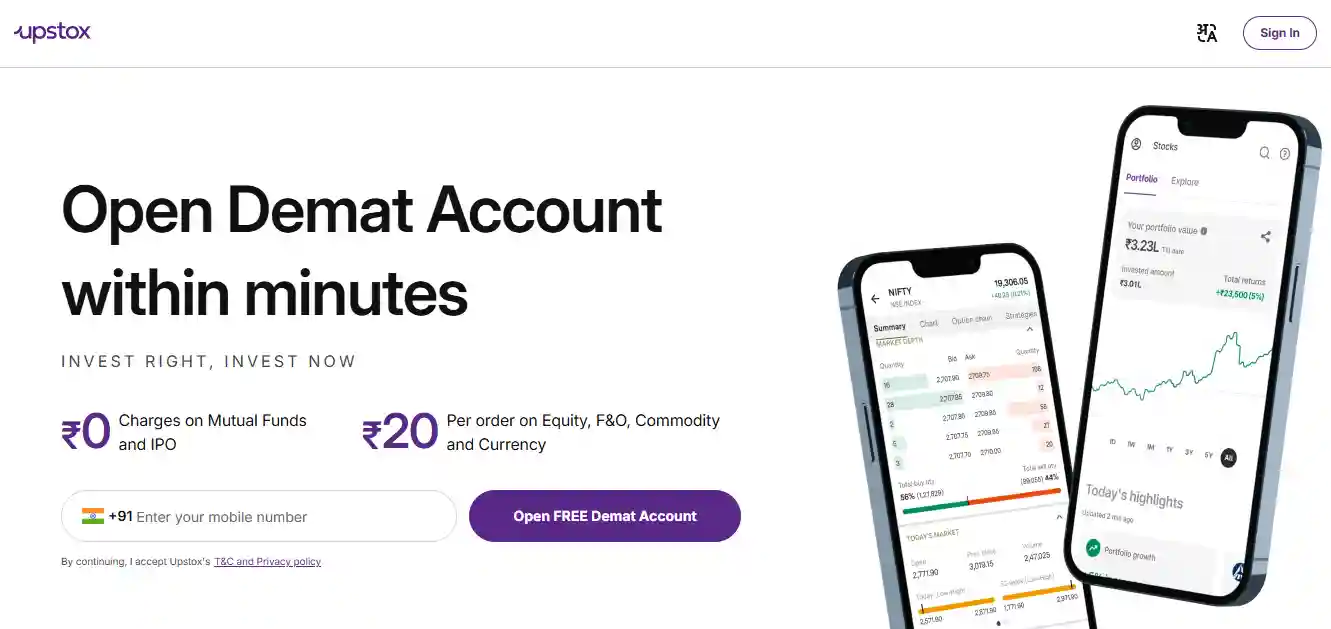
Upstox is one of the top money saving apps in India that helps you grow your money by investing in stocks, mutual funds, and other financial instruments. By investing wisely, you can save money and build wealth over time, even with small amounts.
With Upstox, you can:
-
Buy and sell stocks, ETFs, and mutual funds easily from your smartphone
-
Track your portfolio and investments in real-time
-
Set long-term financial goals and invest regularly in small amounts
-
Save on brokerage fees with affordable trading plans
Upstox is perfect for beginners, young professionals, and anyone who wants to start investing smartly. It makes investing simple, transparent, and easy to understand, helping you save, grow, and manage your money more effectively over the long term.
Pros:
-
Easy to buy and sell stocks, ETFs, and mutual funds on your phone
-
Real-time tracking of your investments and portfolio
-
Affordable brokerage plans save money on trading
-
Helps beginners and young professionals start investing
-
Great for building long-term wealth with small regular investments
Cons:
-
Can be a bit confusing for complete beginners in investing
-
Advanced features may take time to learn
-
Requires basic knowledge of stock market and mutual funds
Market Share
As of December 2024, Upstox had about 2.89 million active users, making it one of India’s most popular discount broker apps. It holds around 5.8% of the retail broking market, showing its strong presence among investors. The app has millions of registered users, many from smaller cities and towns, not just big metros. In FY24, Upstox earned ₹1,311 crore in revenue and a net profit of ₹190 crore, showing steady growth and a strong, stable business.
2. Goodbudget – Simple Envelope Budgeting App
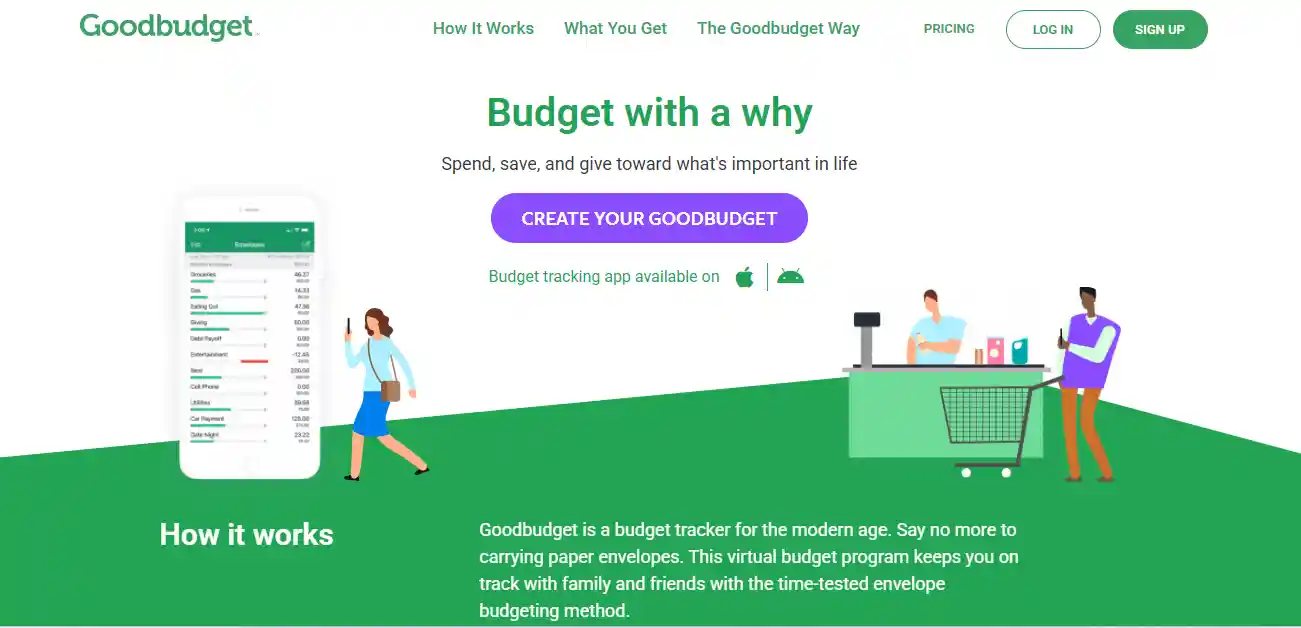
Goodbudget is a smart app that uses the classic envelope budgeting method in a simple digital format. You can set aside fixed amounts of money for categories like food, rent, shopping, transport, and savings.
When an “envelope” runs out of money, you immediately know that you’ve reached your spending limit. This makes it easier to control overspending and stick to your budget.
The app is perfect for couples and families because it syncs across multiple devices. Everyone in the household can see how much money is left in each category, which helps avoid confusion and arguments about money.
Pros:
-
Simple and easy-to-use digital envelope budgeting system
-
Helps control overspending by setting clear limits for each category
-
Syncs across multiple devices—great for couples and families
-
Encourages disciplined saving and better financial planning
-
Shows exactly how much money is left in each category
Cons:
-
Requires manual entry of expenses (no automatic tracking)
-
Limited features in the free version
-
Not ideal if you prefer fully automated finance apps
Market Share
Goodbudget has recorded several million global downloads and remains a trusted budgeting tool among individuals, couples, and families who prefer a simple envelope‑style budgeting system. While exact user counts in India aren’t publicly available, its long-term presence and simplicity make it a go-to choice for people who want hands‑on control over their monthly budget
3. Money Manager – Clean and Detailed Expense Control
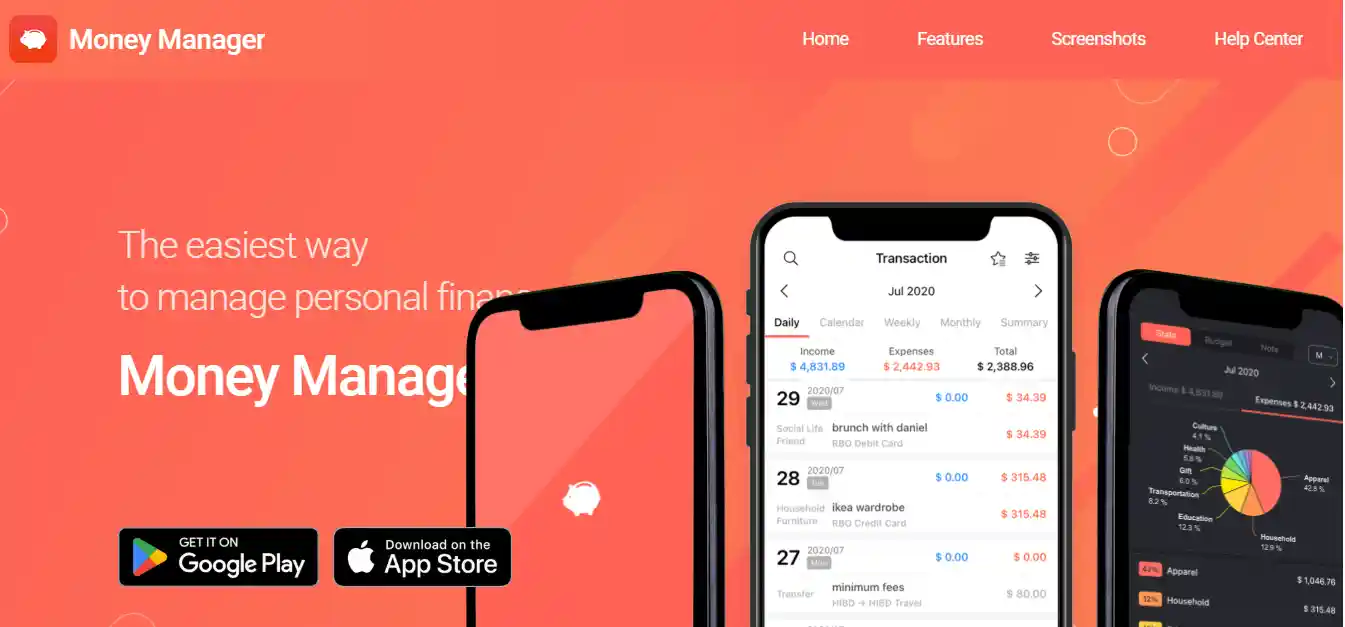
Money Manager is a popular app because of its simple design and clear reports. You can record daily income and expenses manually and see them in easy-to-understand graphs and charts.
This app is great for people who like full control over their spending instead of automatic tracking. By entering each expense yourself, you become more aware of where every rupee goes.
You can also attach receipts, categorize spending, and export data for future reference. This makes it especially useful for freelancers and small business owners who want to track their money carefully.
Pros:
-
Simple and clean design makes it easy to use
-
Manual entry helps you become aware of every expense
-
Clear graphs and charts show income and spending trends
-
Attach receipts and categorize expenses for better tracking
-
Useful for freelancers, small business owners, and personal budgeting
Cons:
-
Manual entry can be time-consuming for some users
-
No automatic bank or UPI syncing in the basic version
-
Might feel a bit complicated for beginners who prefer automated apps
Market Share
Money Manager is one of the most popular expense‑tracking apps worldwide, with 20 million+ downloads and a high user rating — showing it’s trusted by many people looking to manage money and expenses carefully.
It’s especially well-liked by users in India and other countries who want a simple, no-frills tool to log income and spending manually.
Because of its clean interface, offline use option, and detailed charts/reports, Money Manager remains a go‑to choice for freelancers, small‑business owners, and anyone who prefers hands‑on control over daily expenses rather than automatic bank syncing.
4. Groww – Save and Invest Without Stress
Groww is mainly an investment app, but it’s also one of the best finance apps in India to help you save money regularly. You can invest small amounts in mutual funds, stocks, and digital gold.
Instead of leaving your money idle in a savings account, Groww helps your spare cash grow with minimal effort. You can start with just ₹500 and build a habit of monthly investing.
The app is beginner-friendly and gives simple explanations of different investment options, making it easy for anyone—even first-time investors—to start saving and investing wisely.
Pros:
-
Easy and beginner-friendly interface for investing and saving
-
Start investing with small amounts (as low as ₹500)
-
Invest in stocks, mutual funds, and digital gold all in one app
-
Helps your money grow instead of sitting idle in a bank account
-
Provides clear explanations for first-time investors
Cons:
-
Investment risk exists depending on the option chosen
-
Some advanced features may be confusing for beginners
-
No automatic expense tracking or budgeting features
Market Share
Groww has become India’s leading investing app in 2026 — it recently crossed 100 million downloads on Play Store, becoming the first Indian investing platform to hit this milestone. As of December 2024, Groww had around 13.16 million active users, giving it about a 26–27% share of the retail broking market — more than any other competitor. The user base is spread widely across India, including Tier‑2 and Tier‑3 cities, not just metros. This widespread reach, large user base, and strong brand recall make Groww a top‑choice app for people who want to save, invest, and manage their money easily.
5. ET Money – All-in-One Personal Finance App

ET Money is one of the top finance apps in India that combines saving, investing, insurance, and expense tracking all in one place. It gives you a clear picture of your financial health based on your income, spending, and investments.
One of the best features is personalized saving advice. The app analyzes your financial data and suggests how much to save, where to invest, and how to optimize taxes legally.
It also offers goal-based investing. You can set goals like buying a bike, planning a trip, or building an emergency fund, and the app helps you invest smartly to reach them.
Pros:
-
All-in-one app for saving, investing, insurance, and expense tracking
-
Provides personalized saving advice based on your financial data
-
Goal-based investing makes it easy to plan for trips, gadgets, or emergencies
-
Helps optimize taxes legally and smartly
-
Gives a clear view of your overall financial health
Cons:
-
Some features may require linking bank accounts or KYC verification
-
Can be overwhelming for beginners with many options
-
Free version may have limited access to certain advanced features
Market Share
ET Money has grown into one of India’s most trusted all‑in‑one finance apps. As of 2024, the platform was managing over ₹63,000 crore in user investments and assets under management (AUM). It serves users from more than 1,300 cities across India, showing its reach well beyond just major metros. Every month, the app processes hundreds of thousands of transactions — including SIPs, mutual funds investments, and financial management tasks — indicating high and consistent user activity. For many Indians, ET Money is not just an investment tool but a full-fledged personal finance companion: helping with expense tracking, savings, mutual funds, insurance, and more.
6. Cred – Save on Credit Card Bills Smartly

Cred is a smart app designed for credit card users. It helps you save money on late fees, interest, and missed payments if used correctly.
The app sends automatic reminders before your bill due dates and lets you pay instantly. You also earn reward points that can be redeemed for vouchers, offers, and discounts.
One of the biggest benefits is that Cred helps improve your credit score over time. A better credit score can save you money on future loans, making it a great tool for long-term financial health.
Pros:
-
Helps pay credit card bills on time and avoid late fees
-
Earn reward points that can be redeemed for discounts and vouchers
-
Sends reminders before bill due dates for hassle-free payments
-
Can improve your credit score over time
-
Simple and clean interface, easy for beginners
Cons:
-
Only useful for credit card users (not for general banking or expenses)
-
Some rewards may have limited availability or high redemption criteria
-
Free features may be limited compared to premium options
Market Share
CRED is used by many Indians — as of early 2024, the app had around 13 million monthly active users (MAUs). In the financial year 2024, the company’s revenue climbed to ₹2,473 crore, a big jump compared with earlier years. Their monthly transacting user base (users who are actively making payments or transactions) reportedly grew by 34% that year.
This shows that CRED is not just popular among credit‑card users, but also active — people genuinely use it for payments, bills, and other services. Its user base is mostly in urban and semi‑urban India, which makes it a strong player among finance and payment apps for middle‑class and upward‑mobile Indians.
7. Paytm – Cashback + Expense Control
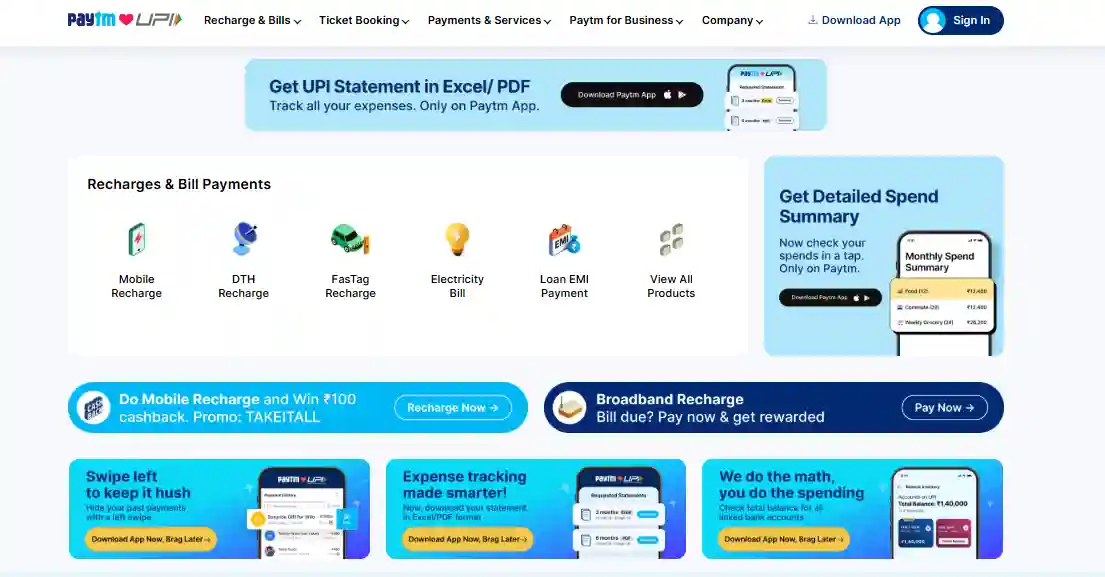
Paytm is more than just a payment app. When used smartly, it can help you save money. You get cashback on mobile recharges, bill payments, travel bookings, and shopping.
The app also lets you track your spending through your transaction history. This way, you know exactly how much you spend digitally every month.
On top of that, Paytm Money allows you to invest, making it a complete finance app for India that combines saving, spending, and investing all in one place.
Pros:
-
Get cashback on mobile recharges, bill payments, travel bookings, and shopping
-
Track your digital spending easily through transaction history
-
Paytm Money allows you to invest in stocks and mutual funds
-
Combines saving, spending, and investing in one app
-
Widely accepted and trusted across India
Cons:
-
Some features, like investing, may require KYC verification
-
Cashback offers may vary and have expiry dates
-
Can be overwhelming for users who only want basic payments or savings
Market Share
Paytm remains one of India’s largest digital‑payment and finance apps. As of early 2024 it had crossed 100 million monthly active users (MAUs), underlining its wide reach across the country.
Even in 2026, Paytm’s ecosystem stays strong — the platform reported a financial‑services revenue jump, and its merchant subscription base reached over 1.24 crore merchants by March 2026.
This mix of a large user base, broad merchant network, and growing financial services presence keeps Paytm a top choice for people who use UPI, digital wallet, bill payments, and online shopping — helping many Indians save and manage money smartly.
8. Google Pay – Simple, Fast & Reward-Based Savings
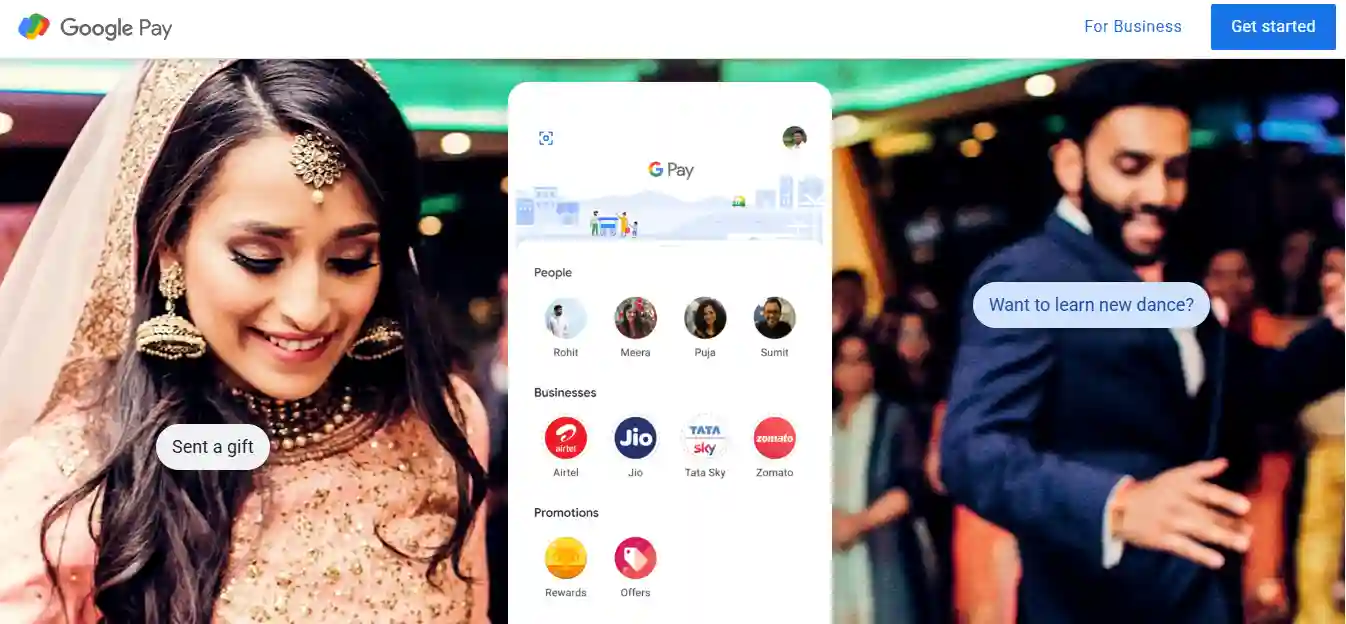
Google Pay makes UPI payments very easy and fast. You also get rewards like scratch cards and cashback. Over time, these small rewards can add up to good savings.
The app is lightweight, secure, and widely accepted across India, even in small shops.
It also shows your spending history clearly, so you can easily keep track of your digital expenses and save money smartly.
Pros:
-
Fast and easy UPI payments for all kinds of transactions
-
Earn rewards like scratch cards and cashback on payments
-
Clear spending history to track digital expenses easily
-
Lightweight, secure, and widely accepted across India
-
Helps develop small saving habits through rewards
Cons:
-
Rewards and scratch cards are small and not guaranteed
-
Only useful for digital payments, not full finance management
-
Some advanced features may require linking bank accounts
Market Share
Google Pay remains one of the biggest UPI apps in India. As of 2026, it processes roughly 35–37% of all UPI transactions — second only to PhonePe. Its large user base spans metros as well as Tier‑2 and Tier‑3 cities, showing its deep reach across India. With billions of transactions handled every month, Google Pay continues to be a go‑to choice for everyday payments, recharges, bill payments, and online shopping — making it a major player in India’s digital payments and saving ecosystem.
9. PhonePe – Daily Use Cashback App
PhonePe is one of the most popular UPI apps in India. It gives cashback on recharges, bill payments, and UPI transactions.
The app also offers insurance, mutual funds, and gold investments, helping you move from just spending to saving and investing.
If you make multiple transactions daily, PhonePe can help you save small amounts consistently through offers and discounts.
Pros:
-
Get cashback on recharges, bill payments, and UPI transactions
-
Offers additional services like insurance, mutual funds, and gold investments
-
Helps save small amounts consistently through daily offers and discounts
-
Easy-to-use interface suitable for beginners
-
Widely accepted across India for payments
Cons:
-
Cashback offers may have terms and limited validity
-
Advanced features like investments require KYC verification
-
Mainly focused on payments, not full financial management
Market Share
PhonePe remains the #1 UPI payment app in India. As of mid‑2026, it processes nearly half of all UPI transactions — about 47 % of the total volume. The app reportedly has around 600 million registered users, making it one of the most widely used finance platforms in the country. PhonePe’s wide network — including millions of merchants — and its mix of cashback, UPI, bill‑payment and wallet features make it a go‑to app for everyday payments, recharges, and savings for millions of Indians from cities and towns alike.
10. Fi Money – Smart Digital Banking App
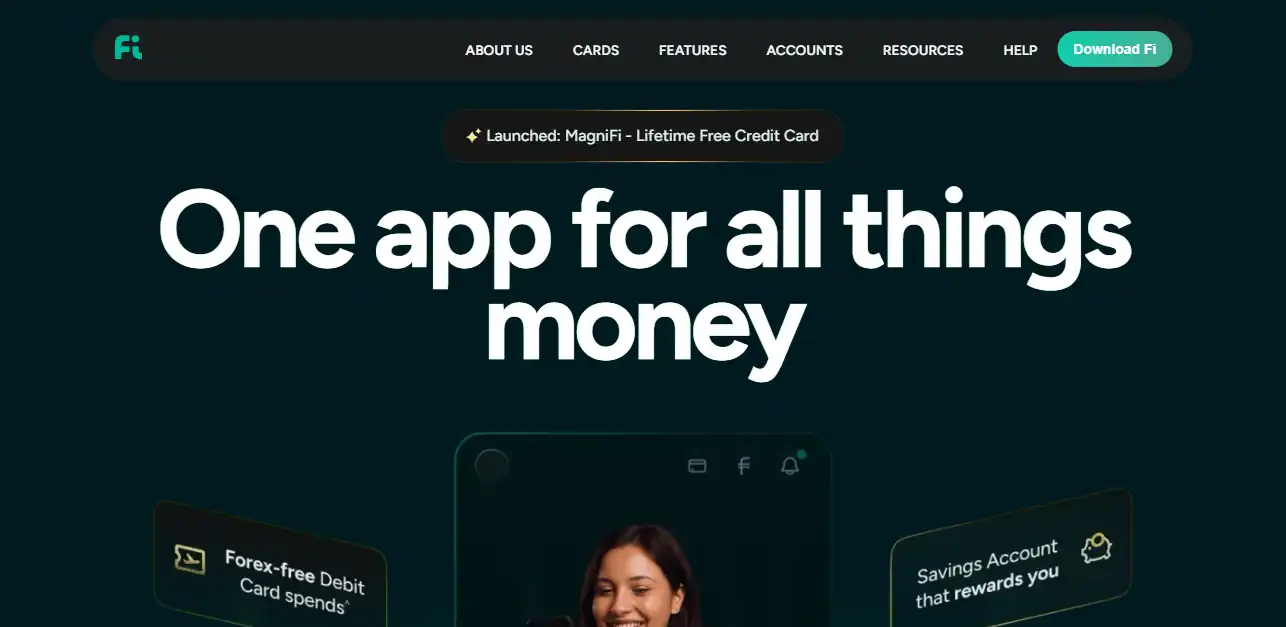
Fi Money is a digital banking app perfect for young professionals. It helps you track spending, set saving rules, and automate deposits easily.
A standout feature is goal-based saving. You can set a target, like saving ₹1 lakh in a year, and the app calculates how much to save each month automatically.
Fi Money also offers zero-balance accounts, smart debit cards, and automatic expense tracking, so managing your money becomes simple and stress-free.
Pros:
-
Helps track spending and set automatic saving rules
-
Goal-based saving feature calculates how much to save each month
-
Zero-balance account with smart debit card for easy banking
-
Automatic expense tracking simplifies money management
-
Perfect for young professionals and beginners
Cons:
-
Some features may require KYC verification
-
Limited options compared to full-service banks
-
Goal-based saving may not suit users who prefer manual control
Market Share
Fi Money is a growing digital banking and finance app in India, with over 3.5 million users across 19,000+ PIN‑codes in the country. The app tracks more than ₹10,000 crore in assets under management for its users, demonstrating a meaningful scale of transactions and savings. In recent years, it has stood out by adding modern features like AI‑powered money‑management tools — appealing especially to younger professionals and digital‑first users.
11. Jupiter – Smart Savings with Real-Time Insights

Jupiter is a digital savings app that helps you manage money and control spending easily. It gives instant insights on where your money is going and how much you can save each month.
The app automatically sorts your spending into categories like food, shopping, bills, travel, and entertainment. This makes it simple to see which areas are costing you the most.
A special feature is “Spend Tracker”, which alerts you when your spending is getting out of control. You can take action immediately instead of worrying at the end of the month.
Pros:
-
Provides real-time insights on spending and savings
-
Automatically categorizes expenses for easy tracking
-
“Spend Tracker” alerts help control overspending
-
Easy-to-use interface suitable for beginners
-
Helps build smart saving habits without stress
Cons:
-
Some advanced features may require KYC verification
-
Limited investment options compared to full investment apps
-
Notifications may feel frequent for some users
Market Share
Jupiter Money has crossed 3 million customers as of late 2026, and about 60% of them actively use the app — showing a strong engaged user‑base. Over a quarter of those active users (≈ 25%) use two or more financial services from Jupiter — such as savings, credit card, account aggregator, etc. — indicating that many users rely on it as a multi‑tool financial app, not just for a single function.
In FY25, Jupiter’s revenue more than doubled compared to the previous year, which reflects growing adoption and increasing financial activity via the app. With its mix of savings, spending, credit card, and money‑management features — and a steadily expanding customer base — Jupiter is rapidly emerging as a popular choice among young professionals and digital‑savvy users across India.
12. Niyo – Best App for Travelers & Smart Spenders
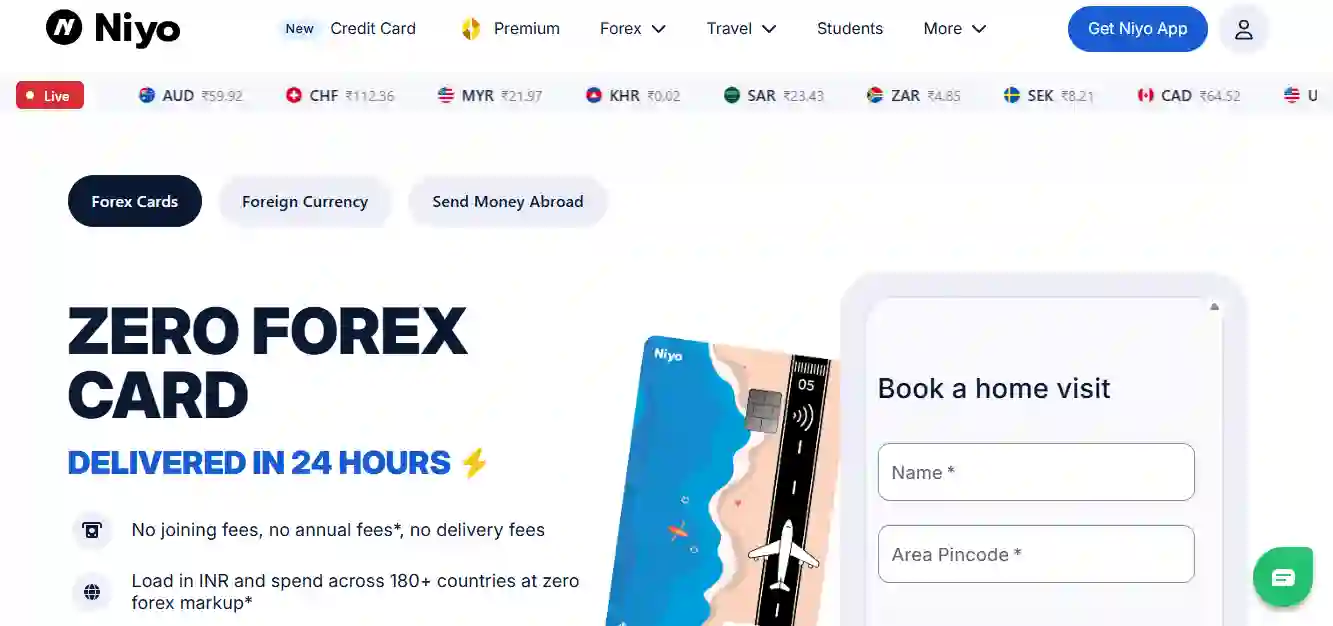
Niyo is a digital banking app perfect for people who travel often or spend in foreign currency. It offers zero-forex markup cards and smart insights on your spending.
For Indian users, Niyo is one of the top finance apps in India, helping you track both international and domestic expenses in one place. You get clear daily and monthly breakdowns of where your money goes.
The app also lets you invest in mutual funds and fixed deposits directly, making it a complete tool for spending, saving, and investing.
Pros:
-
Zero-balance account with no forex markup for international spending
-
Tracks both domestic and international expenses clearly
-
Lets you invest in mutual funds and fixed deposits
-
Provides smart insights to manage and save money better
-
Ideal for frequent travelers and digital-savvy users
Cons:
-
Some features require KYC verification
-
Limited advanced investment options compared to dedicated investment apps
-
May not be necessary for users who rarely travel abroad
Market Share
Niyo is now among India’s well-known neobank apps — by 2022 it had crossed 4 million customers across its banking and wealth‑management services. Its digital savings/wealth account product NiyoX saw rapid adoption when launched: the app onboarded 500,000 users in the first 150 days and opened a fresh account roughly every 30 seconds during that period. As of 2026, Niyo has also reported a 30% year‑on‑year surge in usage of its zero‑forex card among students heading abroad — showing strong growth among younger, travel‑oriented users.
Because of this user growth, zero‑balance accounts, global‑ready forex cards, and a young‑user focus, Niyo is now considered a trusted choice for smart spenders, travellers, and young professionals across India — not just in big cities, but also increasingly in smaller towns.
13. YNAB (You Need A Budget) – Advanced Budget Discipline
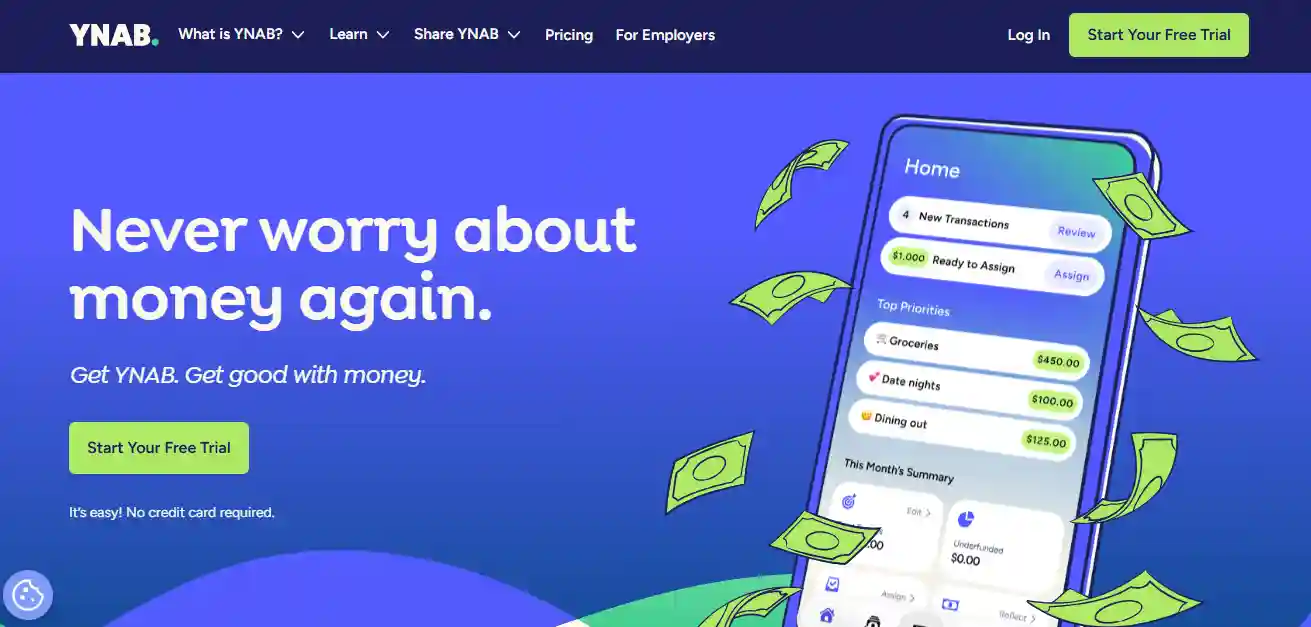
YNAB is a global budgeting app for people who want full control over their money. It’s great for anyone who struggles with impulsive spending.
The app works by giving every rupee a job. You decide the purpose of your money before you spend it, which helps stop unnecessary expenses.
YNAB may take a little time to learn, but it’s one of the best tools for building strong money habits and becoming a disciplined saver.
Pros:
-
Helps you plan every rupee and stop unnecessary spending
-
Builds strong budgeting and money management habits
-
Great for people who struggle with impulsive expenses
-
Encourages disciplined saving over time
-
Provides clear insights into where your money goes
Cons:
-
Can take time to learn and set up initially
-
Manual entry may feel time-consuming for some users
-
Not focused on investments or earning cashback
Market Share
YNAB remains a highly rated budgeting app worldwide — it holds a 4.8 / 5 rating on the Apple App Store and 4.7 / 5 on Google Play. While the app’s Google Play listing shows at least 1 million+ downloads, its real strength lies in its dedicated community and high user satisfaction. According to YNAB’s own data, many users report savings of about US $6,000 in their first year of budgeting with the app. Because of its strong feedback, proven results, and reputation for discipline and control, YNAB continues to be a trusted choice for people around the globe — and for budget‑conscious users in India too (even though India‑specific download numbers are not publicly available).
14. Spendee – Visual Expense Tracking App
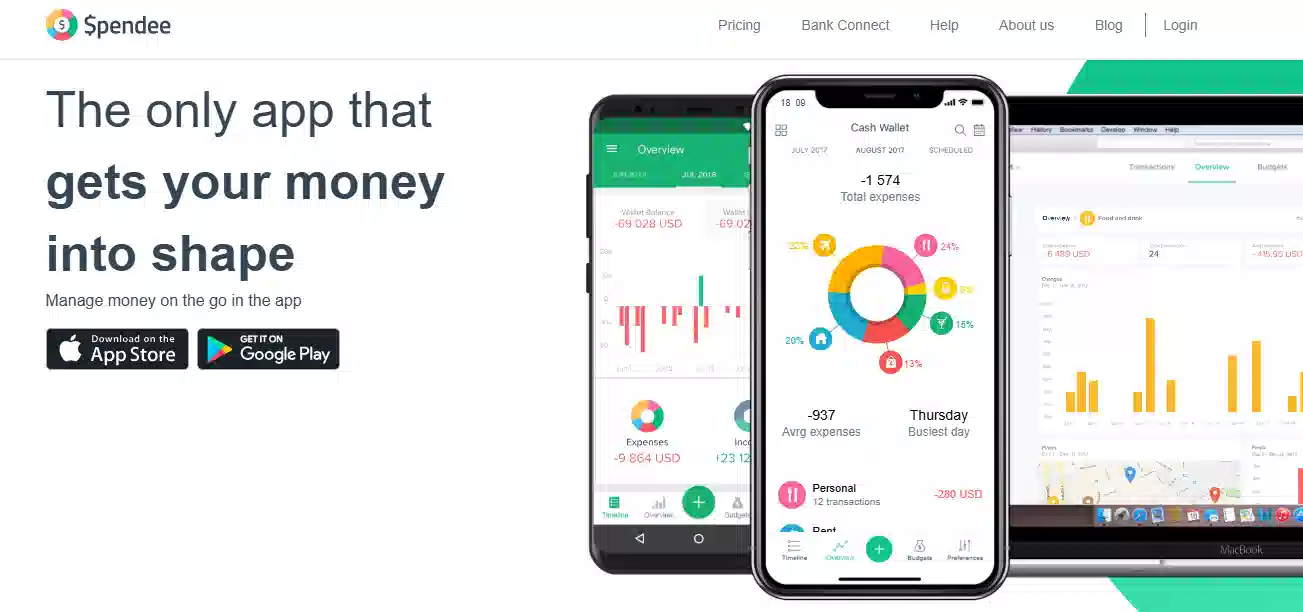
Spendee is a colorful and easy-to-use app that helps you track your spending with graphs, charts, and daily summaries.
It’s perfect for beginners who want to manage money without confusing finance terms. Everything is simple and clear.
Spendee also supports shared wallets, making it great for couples, friends, and families to track expenses together.
This is one of the best finance apps in India for managing daily expenses and staying on top of your budget.
Pros:
-
Colorful, easy-to-use interface makes tracking fun and simple
-
Visual graphs, charts, and daily summaries help understand spending
-
Supports shared wallets for families, couples, and friends
-
Helps set and track savings goals easily
-
Perfect for beginners who want clear, simple money management
Cons:
-
Some advanced features require a premium subscription
-
Manual entry may be needed for certain transactions
-
Limited investment or banking features compared to other finance apps
Market Share
Spendee is a well‑used global budgeting and expense‑tracking app, with over 1 million+ installs on Android alone and a total user base in the millions worldwide. It has received nearly 59,000+ user ratings, reflecting a moderately strong and stable user community. Spendee’s ease-of-use, visual graphs, and multi‑device support make it popular among people who prefer a clear, manual budgeting tool rather than automatic bank‑linked finance apps.
15. Mobikwik – Cashback + Digital Wallet Savings
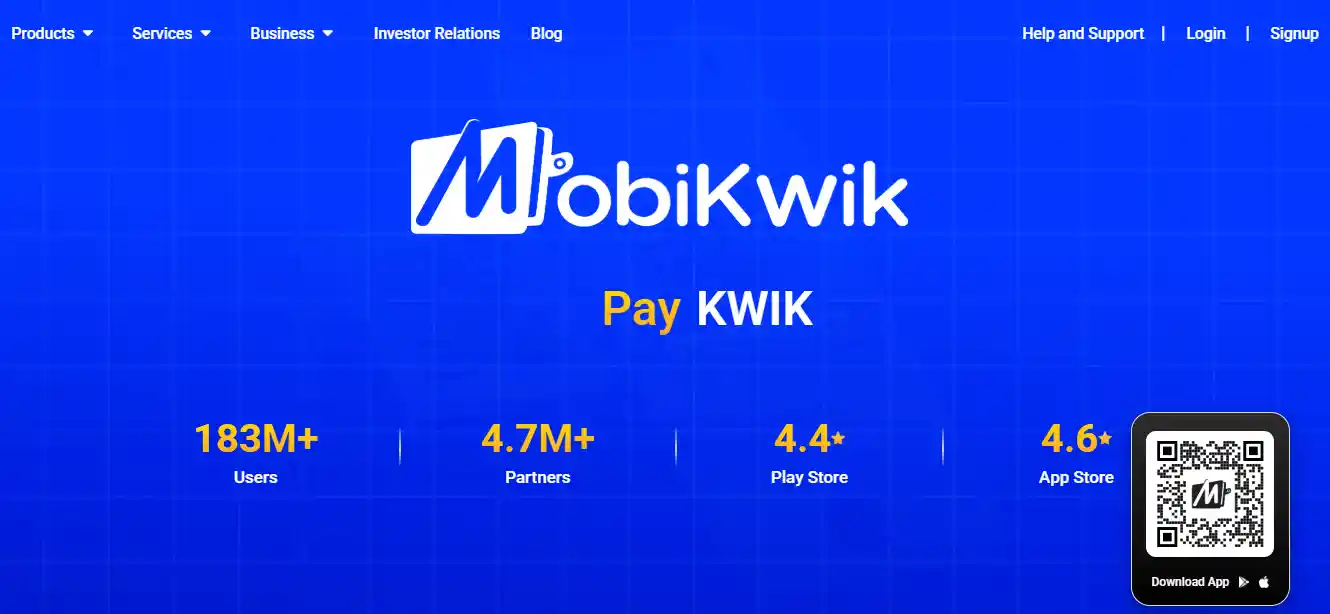
Mobikwik is a popular app for recharges, bill payments, shopping, and wallet transactions. It helps you manage daily spending easily.
The app’s biggest feature is SuperCash. This is real money you can use for future payments, unlike fake reward points. It actually helps you save while you spend.
Mobikwik also offers digital loans and investment options, making it a complete money management app for everyday use.
Pros:
-
Earn SuperCash, which can be used for future payments
-
Easy for recharges, bill payments, shopping, and wallet transactions
-
Offers digital loans and investment options
-
Helps track daily spending and manage money efficiently
-
Widely accepted and trusted across India
Cons:
-
Cashback and SuperCash may have expiry dates or usage limits
-
Some features require KYC verification
-
Not ideal for full financial planning or advanced investments
Market Share
MobiKwik remains one of India’s largest digital‑wallet and payment platforms. As of mid‑2026, it reports a user base of around 180 million registered users and serves over 4.6 million merchants. In the world of digital wallets, MobiKwik holds roughly a 20–23% share of PPI wallet gross transaction value (GTV), making it a major player in the digital payments ecosystem.
With a wide reach across cities and towns, and a blend of services — wallet payments, UPI, bill payments, digital‑wallet‑based savings or investment options — MobiKwik remains a go‑to app for users looking for convenience, cashback, and everyday digital savings in India.
16. Gullak – Build a Small Daily Saving Habit

Gullak is one of the best money saving apps in India for beginners and students. It helps you save small amounts of money every day, instead of waiting until the end of the month.
You can set tiny daily goals, like saving ₹30–₹50 per day. Over a month, these small savings can add up to ₹1,000–₹1,500, helping you develop a strong saving habit without stress or pressure.
Gullak is perfect for:
-
Students
-
First-job holders
-
Anyone who finds it hard to save regularly
The app makes saving simple, automatic, and enjoyable, gradually training you to save every day and achieve bigger financial goals. With Gullak, small steps every day can lead to significant savings over time, building a secure and consistent financial habit.
Pros:
-
Helps build a consistent daily saving habit easily
-
Set small goals like ₹30–₹50 per day, perfect for beginners
-
Automatic saving without stress or extra effort
-
Ideal for students, first-job holders, and anyone new to saving
-
Makes saving enjoyable and rewarding over time
Cons:
-
Limited to small daily savings; not suitable for large investments
-
No investment or cashback features
-
Advanced financial planning features are not available
Market Share
Gullak, launched in 2022, has grown quickly — as of late 2026 it reports around 300,000 active users and a monthly recurring revenue (ARR) of about US $2.5 million.
It recently raised US $7.5 million in Series A funding to expand its reach into Tier‑2 & Tier‑3 cities, signaling investor confidence and growth ambition. The app’s Google Play listing shows more than 1 million downloads, reflecting decent traction among Indian users interested in micro‑savings and digital gold investments.
Because of this growth, user base, and funding, Gullak stands out in 2026 as a promising option for people who want to build small‑amount saving habits or accumulate gold digitally — especially beginners and everyday savers.
17. CashKaro – Earn Cashback and Save Money
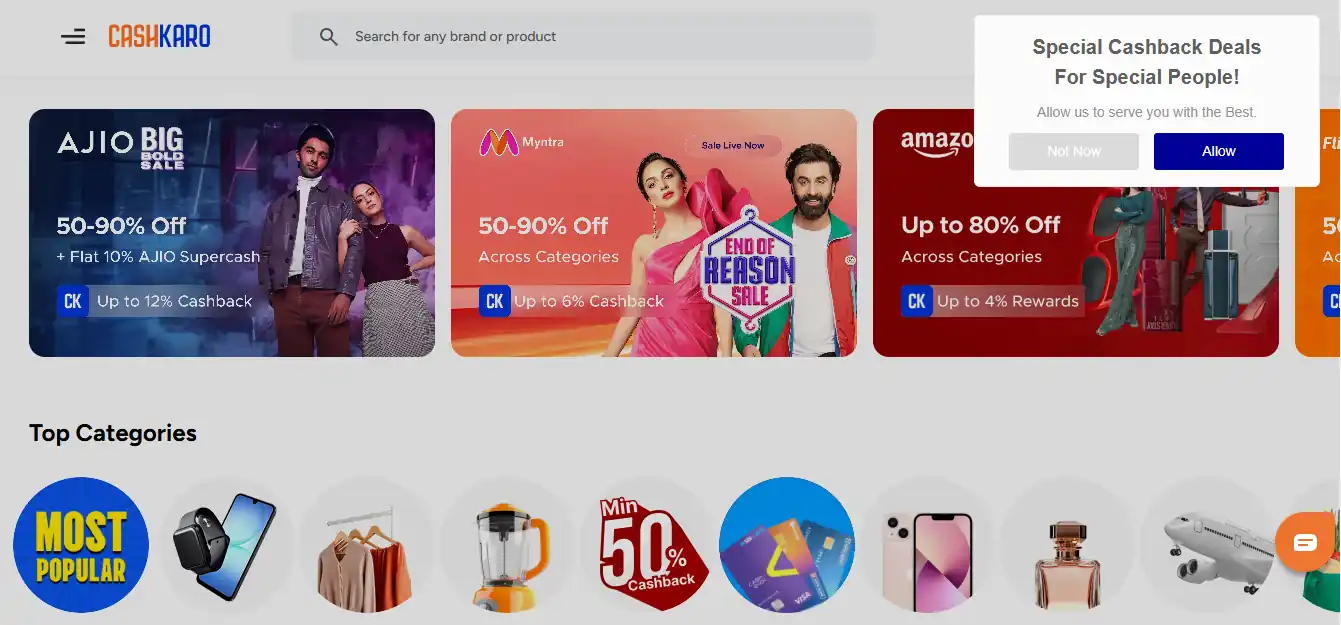
CashKaro is one of the best money saving apps in India, designed to help you save money while shopping online. It gives you cashback, coupons, and discounts from over 1,500 partner stores, including Amazon, Flipkart, Myntra, and more.
With CashKaro, you can:
-
Earn real cashback on your online purchases
-
Use coupons and promo codes to get extra discounts
-
Track your cashback easily in the app or website and withdraw it directly to your bank account
CashKaro is perfect for students, working professionals, and anyone who shops online regularly. It makes saving money effortless, helping you get rewards and discounts every time you shop, so you can enjoy more while spending less.
Pros:
-
Earn real cashback on online purchases from 1,500+ partner stores
-
Use coupons and promo codes for extra discounts
-
Easy tracking of cashback and direct withdrawal to your bank account
-
Helps students and professionals save money while shopping online
-
Simple and user-friendly interface
Cons:
-
Only useful for online shopping, not for general money management
-
Cashback offers may have terms and limited validity
-
Does not provide investment or budgeting features
Market Share
In fiscal year 2026, CashKaro generated ₹350 crore in revenue — thanks to over ₹6,000 crore in sales through its 1,500+ retail partners and 36 million+ transactions. The platform has paid out more than ₹1,000 crore as cashback to users, showing real value delivered. With tens of millions of registered users (the company reported having around 25 million users in recent years) and major backing from big investors, CashKaro remains one of India’s most widely used cashback and discount‑deal apps.
18. Bachatt – Smart Savings for Daily Goals
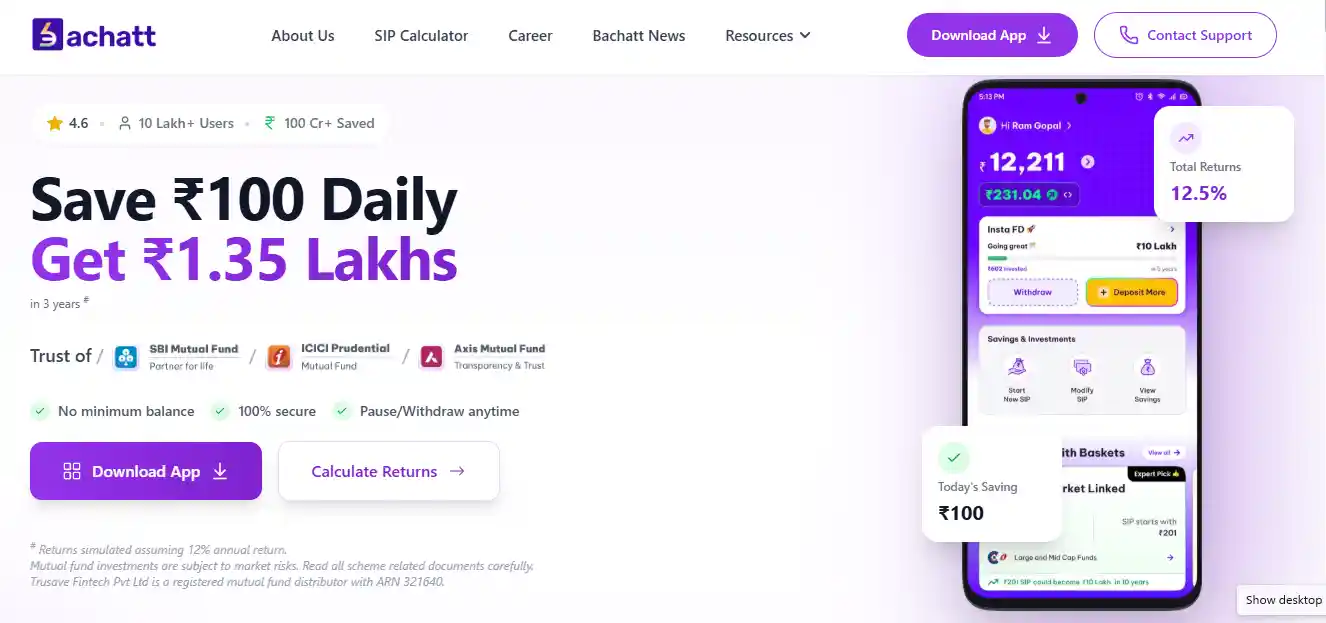
Bachatt is a rising money saving app in India that makes saving money simple and stress-free. It helps you save small amounts automatically every day, so you don’t have to worry about forgetting or skipping.
With Bachatt, you can:
-
Set daily, weekly, or monthly savings goals based on your budget
-
Track your progress easily with visual charts and reminders
-
Save for specific purposes like travel, emergencies, gadgets, or fun activities
-
Build a consistent habit of saving without feeling pressured
This app is perfect for students, young professionals, and anyone new to saving money. Bachatt makes saving simple, automatic, and rewarding, helping you reach your goals step by step while enjoying the process.
Pros:
-
Helps save small amounts automatically every day
-
Set daily, weekly, or monthly saving goals easily
-
Track progress with simple charts and reminders
-
Great for students, young professionals, and beginners
-
Encourages consistent saving without stress
Cons:
-
Limited to small daily savings; not for large investments
-
No cashback or investment features
-
Advanced financial planning tools are not included
Market Share
Bachatt is a newly launched savings‑app (launched in late 2024) that’s growing fast. It already claims over 10 lakh users across India. The app lets people start saving with as little as ₹51 per day using UPI, making it accessible even for those with irregular or modest incomes. Backed by a $4 million seed funding round from big investors, Bachatt aims to expand rapidly into Tier‑2 and Tier‑3 cities and reach many self-employed or gig‑economy earners.
19. PiggyVest – Goal-Based Smart Saving
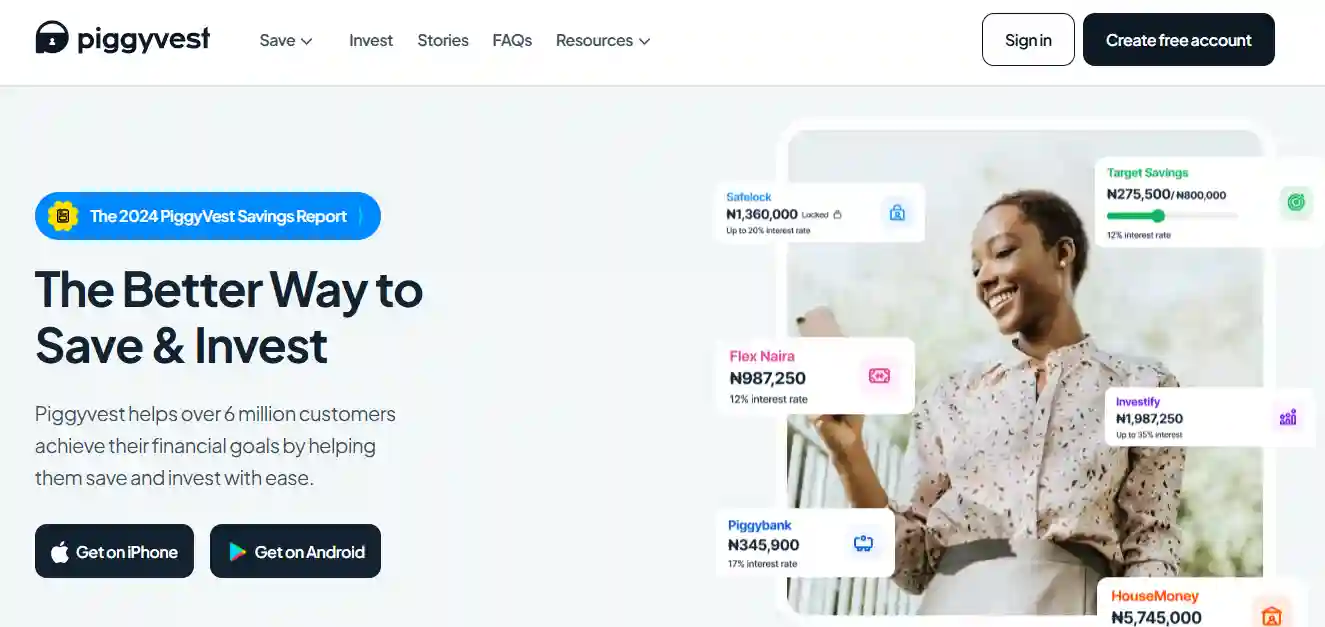
PiggyVest is a popular app globally and is now gaining attention in India for structured and disciplined saving. It helps you set clear saving goals, such as for a vacation, gadgets, education, or an emergency fund.
The app locks your savings and prevents impulsive withdrawals, which helps you stay disciplined and reach your targets faster. You can plan your savings in a simple, organized way without feeling stressed or overwhelmed.
PiggyVest is perfect for anyone who wants full control over their money and wants to build long-term saving habits that truly work.
Pros:
-
Helps set clear, goal-based savings for vacations, gadgets, education, or emergencies
-
Locks savings to prevent impulsive withdrawals, encouraging discipline
-
Simple and organized interface for easy planning
-
Perfect for building long-term saving habits
-
Suitable for beginners and experienced savers alike
Cons:
-
Some features require a premium subscription
-
Limited investment options compared to dedicated investment apps
-
May not be ideal for users who want complete financial management
Market Share
PiggyVest is Nigeria’s largest savings and investment platform, with over 6 million users and more than $547 million paid out in 2024. It focuses on helping users save and manage money while building a strong community. Despite competition from other fintech apps like Kuda and CowryWise, PiggyVest remains a top choice for young, tech-savvy Nigerians looking for simple and effective digital finance solutions.
20. CashBook – For Small Business & Daily Expense Control
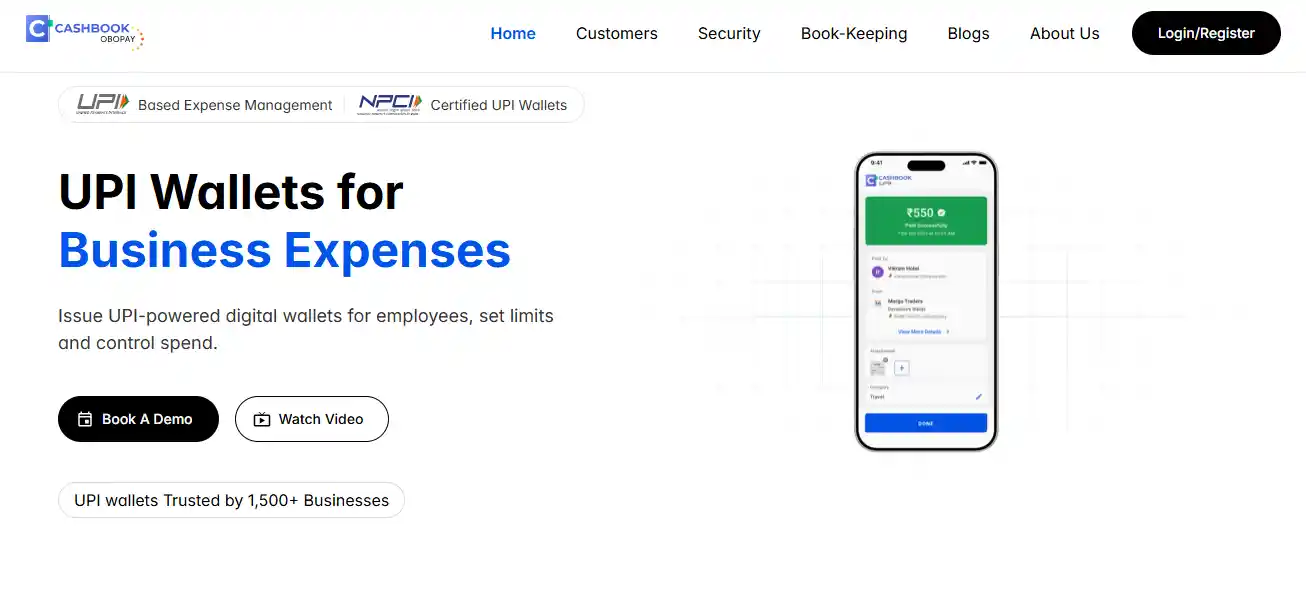
CashBook is an ideal app for shop owners, small business owners, freelancers, and self-employed people. It helps you easily track daily income and expenses with simple entries, replacing messy physical notebooks.
With CashBook, you get clear, real-time insights into your business finances. Tracking daily inflow and outflow helps you naturally spot unnecessary spending and save more money over time.
The app also assists with tax planning, profit calculation, and overall financial management. This makes it easier to plan for growth, reduce mistakes, and save a significant amount of money each year.
Pros:
-
Easy tracking of daily income and expenses for small businesses and freelancers
-
Replaces messy physical notebooks with simple digital entries
-
Provides clear, real-time insights into finances
-
Helps with tax planning, profit calculation, and overall financial management
-
Helps identify unnecessary spending and save more money over time
Cons:
-
Mainly useful for business owners; less relevant for regular personal savings
-
Some advanced features may require premium access
-
Not designed for investment or cashback rewards
Market Share
CashBook has crossed around 7.9 million downloads on Android, showing broad adoption among individuals and small businesses tracking daily expenses. It maintains a strong rating — roughly 4.7 out of 5 stars based on nearly 100,000 reviews — which suggests users appreciate its simplicity and reliability for money‑management.
Many micro‑business owners, freelancers, and small shopkeepers in India rely on CashBook’s ledger‑style features to record sales, expenses, and cash flow instead of using paper ledgers or spreadsheets — making it a trusted, easy‑to‑use tool for daily financial control.
How These Apps Actually Help You Save Money
Money saving apps help you save by showing exactly where your money goes. Many people spend without realizing it, and small daily expenses on food, shopping, travel, or entertainment quickly add up. When you track every expense—automatically or manually—you can see clearly how much you’re spending and where you can cut back. This simple awareness often stops unnecessary spending because your brain starts questioning every purchase.
These apps also make saving easier by creating automatic saving systems. Some apps move small amounts into savings or investments every day or month. Others send alerts when you’re spending too much in a category. Over time, these small, consistent habits build strong financial discipline. You don’t feel pressured, but your savings grow steadily and safely.
The biggest benefit of Money Saving Apps in India is that they make your spending transparent. When you clearly see where your money goes each month, it becomes much easier to save, plan, and manage your finances better.
Common Mistakes People Make While Using Saving Apps
One of the common mistakes is installing a saving app and then never checking it. If you don’t review your daily or weekly reports, it’s hard to understand your real spending habits.
Another common mistake is relying only on cashback and rewards while still overspending. Saving apps work best when combined with self-control, not mindless spending.
Many people also quit after a month because they don’t see instant results. Real savings take time. Some enter wrong data, ignore reminders, or never set clear financial goals in the app. Without goals, even the best saving app cannot help you build long-term wealth.
By tracking expenses every day, Money Saving Apps in India help you cut unnecessary spending on food delivery, shopping, and other impulsive purchases.
Summary
Saving money is easier today thanks to smart financial tools. With Money Saving Apps in India, you can track daily expenses, earn cashback, save automatically, and even start small investments without stress.
Whether you are a student, a salaried worker, a freelancer, or a business owner, the right app helps you take better control of your money and spending.
The biggest benefit of these apps is that they show exactly where your money goes. Once you see your spending clearly, it’s easier to cut unnecessary expenses. If you use these apps regularly and with discipline, they not only help with short-term savings but also build long-term financial stability and smart money habits.
Frequently Asked Questions (FAQs):
1. Which app is safe to save money?
Apps like Groww, ET Money, Fi Money, Google Pay, PhonePe, Paytm, Cred, and Jupiter are considered safe in India. These apps use bank-level security, encryption, and RBI-guided payment systems. Always download apps only from the Google Play Store or Apple App Store, and never share your OTP, PIN, or card details with anyone.
2. What is the best app to save money?
There is no single “best” app for everyone because saving depends on your goal.
-
For expense tracking – Walnut, Money Manager
-
For investing & saving together – Groww, ET Money
-
For daily cashback savings – PhonePe, Google Pay, Paytm
-
For digital banking & smart saving – Fi Money, Jupiter
The best app is the one that matches your lifestyle and saving habit.
3. Which is the No. 1 money earning app?
There is no guaranteed No. 1 money earning app, but some reliable apps for earning include:
-
Freelancing apps (for skills)
-
Content creation platforms
-
Referral & cashback apps for side income
-
Investment apps like Groww for long-term earning
Be careful of “get rich quick” apps. Real money is earned through skills, patience, and smart investing, not fake reward promises.
4. Which investment is 100% safe in India?
No investment is 100% risk-free, but the safest options in India are:
-
Fixed Deposits (FDs)
-
Public Provident Fund (PPF)
-
National Savings Certificate (NSC)
-
Post Office Saving Schemes
-
Government Bonds
These are backed by the Government of India and are considered low-risk and stable for long-term safety.
5. Can students really save money using saving apps?
Yes, students can easily save money using these apps. By tracking daily expenses, avoiding unnecessary food orders, using cashback on recharges, and saving small amounts daily, students can easily save ₹1,000–₹3,000 per month without pressure.
6. Do money saving apps really work?
Yes, money saving apps work if you use them consistently. They help by:
-
Showing where your money is going
-
Sending bill reminders
-
Giving cashback and discounts
-
Helping you build saving habits
Apps don’t save money for you—you save money by changing your habits using the app.
7. Is online saving better than traditional saving?
Online saving is faster, easier, and more flexible than traditional saving. You get:
-
Instant tracking
-
Automatic savings
-
Quick investments
-
Real-time spending alerts
However, traditional saving methods like post-office schemes and FDs are still good for people who prefer zero risk.
8. How much money can I save in one year using saving apps?
On average:
-
Students can save ₹12,000–₹30,000 per year
-
Salaried people can save ₹40,000–₹1,20,000 per year
-
Families can save ₹1,00,000+ per year
This depends on income, lifestyle, and discipline.
9. Are money saving apps free to use?
Most money saving apps are 100% free to use. Some apps offer premium features, but basic expense tracking, cashback, UPI payments, and saving tools are usually free for all users.
10. What is better – saving in bank or through apps?
Saving in a bank is the safest option, while apps are tools to help you manage, track, and grow your money. The smartest approach is:
✅ Use apps to manage money
✅ Use banks to store money
✅ Use investment apps to grow money
All three together make a complete money system.
