Physical Address
Bankura, West Bengal 722142
Physical Address
Bankura, West Bengal 722142


When I visited Mousuni Island in January 2026, I quickly learned that it is not your normal luxury beach trip. It is a fragile island in the Sunderbans where the river meets the Bay of Bengal. Planning a trip here isn’t about booking a 5-star hotel. It is about understanding ferry timings, walking through mud at low tide, and finding the cleanest beach camp.
Most travel blogs won’t tell you that high tide can change the beach overnight. Between the rising water and the shifting sand, a bad plan can ruin your weekend. I am writing this guide to share exactly how to reach Mousuni Island easily. I have included exact transport costs, top camp reviews, and tide warnings so you can have a perfect, stress-free trip.
Before we jump into the details, here is a quick look at what you need to know:
Mousuni Island is in Namkhana, at the bottom of West Bengal. It is about 120 km away from Kolkata. It sits between the Chinai River and the Bay of Bengal. Because it takes some effort to get there, you will not find large crowds.
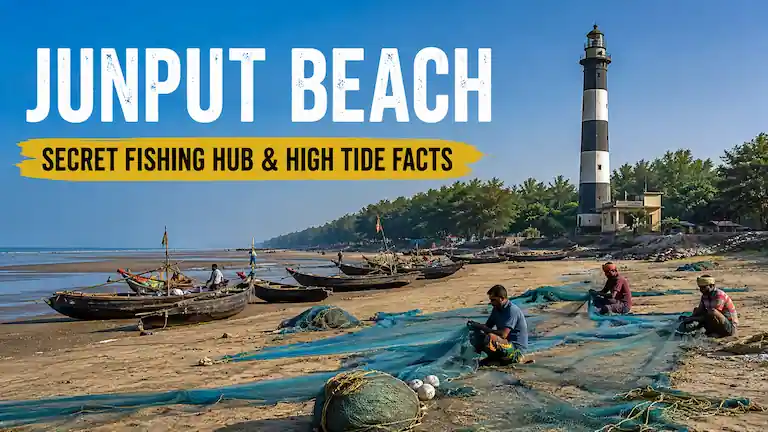
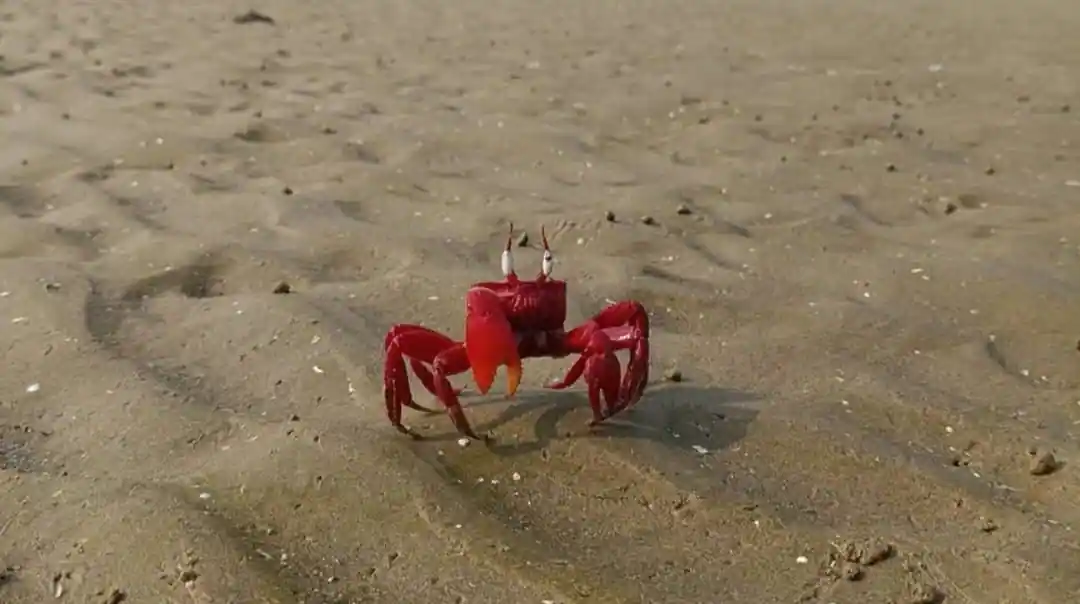
The most important thing to know is that the island itself is completely cut off from the mainland. While the new Namkhana Bridge allows cars and buses to drive straight over the first river (Hatania-Doania River), train passengers should just take the quick 2-minute foot ferry. However, there is still no bridge over the final Chinai River to the island itself. You must cross this last river on a local boat and then take a “Toto” (an electric rickshaw) through narrow village dirt roads. It is a quiet, natural place with salt pans, fishing boats, and red crabs on empty sand.
Mousuni is a very delicate island. The river and the sea are always pulling at the land. The waves are strong, and the beach shape changes every year.
Because the soft sand is always moving, people cannot build big concrete hotels here. Everyone must adapt to nature. The tides control everything, from fishing to tourism.
Mousuni Island is on the front lines of climate change. During Cyclone Amphan (2020) and Cyclone Yaas (2021), the island was heavily flooded. The island actually loses about 2.5 percent of its land every ten years because of river erosion.
But the local people are incredibly strong. After a cyclone washes away their mud huts and tents, they quickly rebuild them. As Sanjit, my Toto driver, told me, “The sea takes our homes, but it also gives us our living. We always rebuild.” This is why all the camps are made of bamboo and canvas. They are easy to pack up before a big storm hits.
Getting to Mousuni Island is a fun mini-adventure. There are no direct roads that go all the way, so you will use different transports. It takes about 4 to 5 hours from Kolkata.
Taking the train is the best and cheapest choice because it helps you skip heavy city traffic. Here is the step-by-step route to reach the island:
Here is a simple breakdown of the costs and time:
| Route Segment | Transport Mode | Time Taken | Estimated Cost (Per Person) |
| Sealdah to Namkhana | Local Train | 3 Hours | ₹25 |
| Namkhana Station to Ferry | Toto (Rickshaw) | 10 Mins | ₹15 – ₹20 |
| River Crossing 1 | Passenger Ferry | 5 Mins | ₹5 |
| Ferry Ghat to Boat Ghat | Toto (Rickshaw) | 30 Mins | ₹30 – ₹40 |
| Boat Ghat to Island | Local Boat (Bhut-Bhuti) | 10 Mins | ₹10 – ₹15 |
| Total One-Way Journey | Mixed | ~4 Hours | ~₹95 |
Many travelers love riding their motorcycles from Kolkata, but almost no blogs explain how to actually get a bike onto the island. Yes, you can bring your bike! But it takes a little extra effort.
You have to load your motorcycle onto the final wooden bhut-bhuti boat. This will cost you an extra ₹50 to cross the final river. These boats are small, so only 5 to 6 bikes can safely fit on a single boat alongside the regular passengers.
Pro tip for bikers: Always bring small cash notes (₹10, ₹20, and ₹50 bills). You will need these for the Toto rides and ferry fees, and the local operators rarely have change for large ₹500 notes.
When you reach Namkhana, you must cross the river. You can walk onto the 2-minute passenger ferry to cross quickly.
On the other side, take a Toto. You must tell the driver exactly which ghat you need. Most people go to Baliara Beach, so they use Bagdanga Ghat or Durgapur Ghat. However, if your camp is on the southern or eastern tip of the island, the camp owner might ask you to land at Hujut Ghat (7-Mile) or Patibunia Ghat (10-Mile). Always check with your camp before you start your trip so you know exactly which ghat to ask for.
The last step is a short ride on a motorized wooden boat called a “bhut-bhuti.” This boat takes you across the Chinai River to Mousuni Island.
Huge Warning: Do not arrive in the middle of the day! Most blogs miss this, but the boat operators take a massive afternoon break. The local ferry service at Bagdanga Ghat drops its frequency after 12:00 PM and completely stops for a long gap. They do not restart until around 2:45 PM. If you arrive at the ghat at 1:00 PM, you will be stranded on the mainland for hours just waiting for the boat. Start your trip early from Kolkata to avoid this trap!
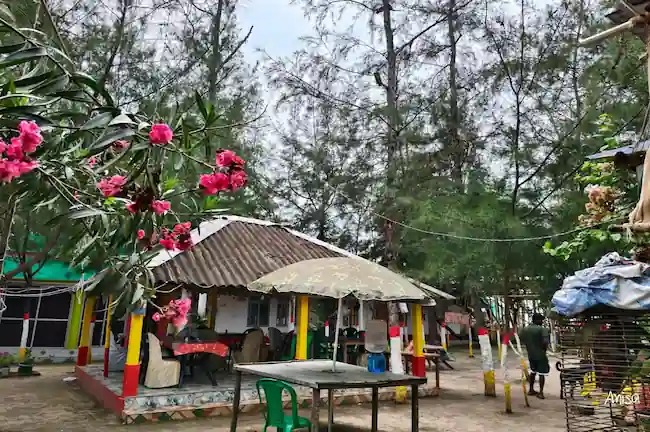
Everything on the island is built to be moved quickly. Baliara Beach is the main area for camps.
When it comes to staying here, you basically have two choices:
Finding a good camp with clean washrooms is very important. Based on my trip, here are three of the best options:
(Note: Prices include your stay and 4 meals a day. Always book via WhatsApp before arriving!)
Because Mousuni is an off-grid island controlled by tides and boat schedules, having a good plan keeps your trip smooth and stress-free. Here is the exact schedule I recommend:
The food is amazing. It is cooked fresh by local villagers. Most camps give you four full meals a day.
Lunch is usually rice and fresh fish curry (like Parshe or Tilapia caught that morning). In the evening, everyone sits by a bonfire to eat hot chicken pakoras and drink tea. Dinner is a simple chicken curry. Because everything is local, it tastes much better than city food.
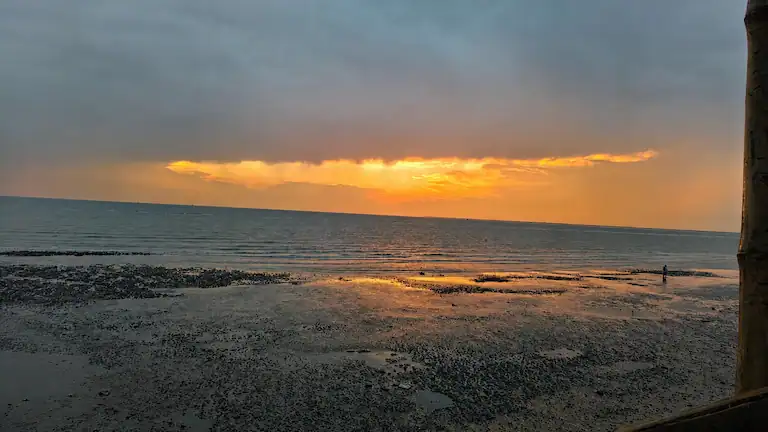
You must understand the tides before you visit. The water does not stay in one place.
During high tide, the sea crashes right against the camp walls. But during low tide, the water goes back almost a full kilometer! It leaves behind a giant, muddy seabed.
Important Safety Rule: Check the lunar calendar before you book. During a full moon or new moon, the island experiences Bhora Kotal (extreme high tides). The water gets very rough and can enter the camps. Always ask the camp owner about the tide schedule.
You don’t come to Mousuni for a busy sightseeing tour. It is a place to slow down and relax.
Winter (November to February) is the best time to visit. The weather is cool (15°C to 25°C), the sea is calm, and sleeping outside is comfortable. However, it gets very crowded.
Monsoon (July to September) is beautiful and green, but it is dangerous. The storms and high tides can wash away camps. Always call ahead.
Summer (March to June) is very hot. You will have to hide in the shade until 4:00 PM. But once the evening breeze starts, it is very peaceful.
You must be prepared before you go.
You cannot drive your car onto the island. You must leave your car at the designated paid parking lot near Durgapur Kheya Ghat. It is safe, and parking usually costs around ₹50 to ₹100 per day. I highly recommend making a Custom Google Map on your phone with pins dropped for Durgapur Ghat, Huddut Ghat, and the parking lot before you leave, as the network drops right before you arrive.
Most camp owners do not use websites. All bookings and advance payments are done over WhatsApp. Important Warning: Because you are booking on WhatsApp, please be careful! Scammers sometimes create fake Google Maps listings for Sunderban camps. Always double-check the camp’s phone number on their official Facebook or Instagram page, or ask a local for a recommendation, before you send any money.
Power Limits: As mentioned earlier, the island relies heavily on solar panels and generators. Use electricity carefully and expect a few dark hours.
Mousuni Island asks you to give up luxury for a weekend. There is no central air conditioning, no room service, and no paved roads. You trade those things for the chance to sleep on a wild beach under the stars.
If you need a fancy hotel, you will not like it here. But if you want to enjoy nature, eat fresh local food, and relax by the sea, you will love it.
Mousuni Island is a rare place where you can watch nature change right in front of you. The sea often damages the island during storms, but the locals always rebuild it with a smile. It is the raw, real Sunderbans.
If you don’t mind a little sand in your bags and traveling on small boats, pack your bags. It is a long journey to get there, but the peaceful beach makes it 100% worth it.
It is famous for off-grid beach camping. It is a raw island in the Sunderbans where you live in tents or mud huts right on the sand. People love it for the red crabs, fresh seafood, and the wild, shifting tides.
Catch the 5:12 AM Namkhana Local train from Sealdah (takes 3 Hours). From Namkhana, take a Toto to the ferry. Cross the river, then take a 30-minute Toto ride to Bagdanga or Huddut Ghat. Finally, take a short local boat ride to the island.
Namkhana (NMKA) is the nearest station. You cannot drive all the way to the island. You must park your car at Durgapur Kheya Ghat and cross the final river by boat.
A 2-day trip costs between ₹1,800 and ₹2,500 per person. Camp packages usually cost ₹1,100 to ₹1,400 (this includes your stay and 4 meals). Keep ₹400 to ₹500 in cash for train tickets, ferries, and Toto rides. UPI mostly does not work, so bring physical cash!
Author Bio: Hi, I’m Bijoy Pal, a passionate traveler and West Bengal local who loves exploring hidden coastal gems. I spend my weekends discovering offbeat spots across the Sunderbans and sharing practical, first-hand West Bengal Tourism guides to help you plan the perfect trip.