Physical Address
Bankura, West Bengal 722142
Physical Address
Bankura, West Bengal 722142

Talasari (also spelled Talsari) Beach is in the Balasore district of Odisha. It is just 8 to 10 km from New Digha. While Digha is loud and crowded, Talasari is totally different. It is a very quiet place where the Subarnarekha River meets the sea. It is famous for its long rows of palm trees and millions of red crabs. The beach is officially open for visitors from 5:00 AM to 8:00 PM every day.
Most travel websites just repeat the same basic facts. But this Talasari travel guide gives you real tips from our own trip. We will show you how to check the water tides so you do not walk in deep mud. We will also show you a “Hidden Route” to avoid heavy border traffic, and a “Statue Trick” to see the shy red crabs.
| Feature | Details |
| State / District | Odisha / Baleswar (Balasore) |
| Also Known As | Talasari Sea Beach |
| Distance from Digha | 8 to 10 km (about 20-25 mins by Toto) |
| Nearest Railway | Digha Station (10 km) & Jaleswar Station (36 km) |
| Nearest Airport | Kolkata (190 km) & Bhubaneswar (290 km) |
| Famous For | Red ghost crabs, Casuarina forests, Subarnarekha river |
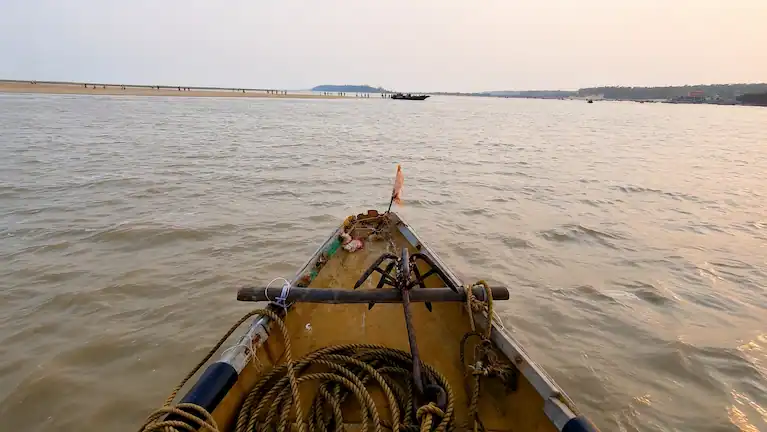
Talasari Beach is the last beach in northern Odisha. It sits exactly where the Subarnarekha River joins the Bay of Bengal. This creates a natural water body (an estuary) between the land and the ocean. To reach the actual beach waves, you first have to cross the river.
When you reach the riverbank, you will see thick Casuarina forests and many palm and cashew trees. If you visit in February, you will see beautiful red and orange cashew flowers blooming. But the sea waves are still far away. Your path depends entirely on the sea tide.
During low tide, the water goes away, leaving a hard, sandy path. You can just walk across. If you do not want to walk in the mud, there is a fun and helpful alternative. Local youths from nearby villages run a makeshift “bike ferry” service. For about ₹100 per bike, they will drive you across the dried riverbed straight to the sand islands and red crab spots. This is a great way to save energy and experience a unique local transport system.
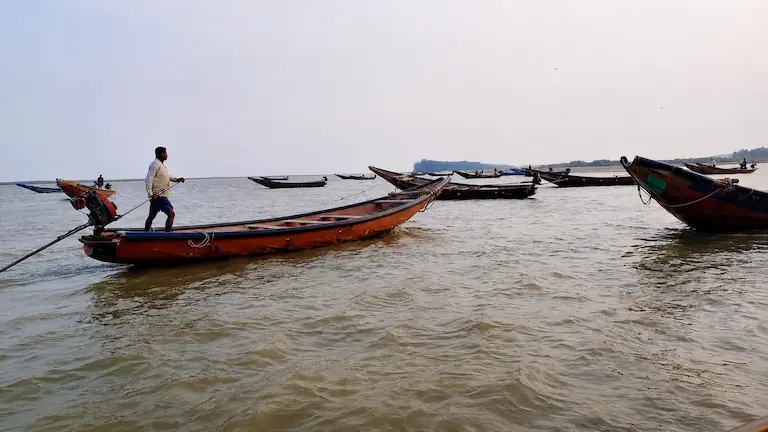
But during high tide, the water fills up fast and turns the beach into an island. You will need to take a small local boat to cross. The boat ride usually costs about ₹20 to ₹50 per person.
Did You Know? The Heritage of Patia Boats
When tourists take that ₹20 boat ride across the water, most do not realize they are riding in a piece of living history. These traditional wooden fishing boats are called “Patia” boats. They are built using an ancient “reverse clinker” technique. They are made entirely of strong Sal wood and are heavily coated in black tar to keep them waterproof. This is a very rare boat-making method that survives in only a few places globally.
The name perfectly describes what you see. In the local Odia language, “Tala” means Palm tree and “Sari” means Row.
Standing on the bank, you will see thousands of tall palm trees lined up like a huge green wall. It is the total opposite of the loud, concrete buildings and crowds you will find just a few kilometers away in New Digha.
Many tourists follow Google Maps blindly and get stuck in Old Digha’s heavy traffic. If you want to reach Talasari easily, use this quick guide.
Because traveling from New Digha to Talasari involves crossing the state border from West Bengal into Odisha, some local Toto and auto-rickshaw drivers try to trick tourists. They might stop near the border and demand an extra ₹20 to ₹50, calling it an “interstate border tax.” This is a scam and not a real tax for passengers. To avoid this, agree on the final total price before you get in the vehicle, and make it very clear that the price includes the border crossing.
If you want bright city lights and street food every few steps, this place is not for you. Talasari is a very quiet “Nature Detox” zone. Before you book a room, here is a realistic look at the place.
You will love Talasari if:
Skip Talasari if:
If you want real, fresh food, you are in the right place. You can buy fresh Pomfret or Tiger Prawns directly from the local fishermen at the morning fish market. As of 2026, fresh Pomfret costs around ₹600 to ₹800 per kilo, depending on the size.
Then, you can take the fish to the small food shacks near the beach. Look for specific local places like Raju’s Fish Shack right near the Panthanivas entrance. They will cook it for you in authentic Odia or Bengali style for a small cooking fee of just ₹50 to ₹100. It is not a fancy restaurant, but the simple village cooking tastes amazing.
Read Google Reviews and you will see people complaining: “The sea was 3 km away” or “It is just a muddy field.” This happens because they did not check the tide. Talasari is very flat. When the ocean water pulls back during low tide, the sea literally goes away for miles.
The “50-Minute Rule” & Live Tides
The tide time changes by about 50 minutes every day. This happens because of the moon’s movement. If the water was full at 10:00 AM yesterday, it will be full around 11:00 AM today. Also, during a New Moon or Full Moon, the water is pulled much higher and pushed much farther back than normal.
Most of the time, high tide comes in the morning. That is when you can take a boat. By 3:00 or 4:00 PM, the water usually vanishes. If you arrive when the water is gone, do not leave! Low tide is the only time you can see the red crabs walking on the sand.
Most travel blogs forget to tell you the most important rule: follow the tide. If you visit at noon, you will just see mud. The best weather is from October to February (winter). The temperature stays comfortably cool, between 15°C and 25°C.
But you must visit during low tide to see the crabs. During high tide, the crabs hide. The early morning low tide is the best time.
What to Pack for the Mud Walk
Because you have to cross a muddy riverbed during low tide, your packing list matters:
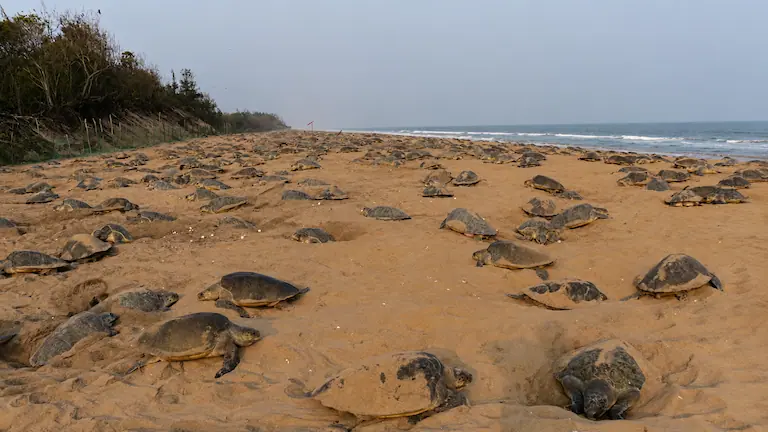
The real stars of Talasari are the red ghost crabs. Scientists call them Ocypode macrocera. These crabs are very important for keeping the beach clean and healthy. But sadly, their numbers are dropping. Tourists drive bikes and cars on the sand, which crushes the deep burrows the crabs build for safety. Never drive any vehicle on the beach.
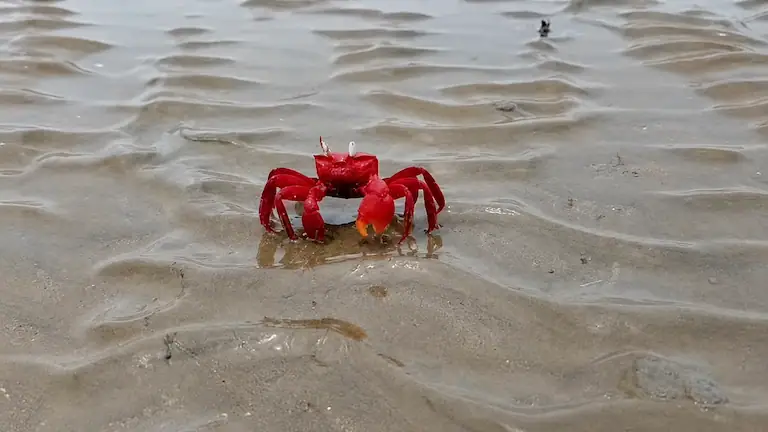
Most tourists never see the crabs because they make too much noise. Crabs feel vibrations in the sand. If you jump or shout, they hide inside their holes quickly.
To see them, walk 1.5 km away from the noisy boat area, towards Udaypur or Bichitrapur. Look for thousands of small holes in the sand.
The Statue Trick: Sit down near the holes and do not move. Be totally quiet for 10 to 15 minutes. Soon, the sand will look like it is moving. Thousands of red crabs will come out, making the beach look like a red carpet. But if you make a sound, they will all disappear in one second.
Hotels here are basic and simple. You are paying for the peace and the sea breeze, not for luxury.
Talasari Beach Hotels:
If you just sit on the beach, you will miss out. The best places are only a short ride away. Note: If you have extra time, you can also explore broader attractions like Chandipur Beach or the famous Khirachora Gopinath Temple in Remuna, which are about 80-90 km away. But for quick trips, stay close:
If you want to experience the best of the beach, the tides, and the local culture, follow this exact schedule.
| Feature | Digha | Mandarmani | Talasari |
| Noise Level | Very High | Medium | Zero (Very Quiet) |
| Red Crabs | Low | Medium | High (Millions) |
| Vibe | Crowded City | Expensive Resorts | Nature & Peace |
| Best For | Big Families | Couples | Nature Explorers |
Talasari is not for everyone. If you want loud parties, water sports, or fancy hotels, you will hate it here. When the tide goes out, the water disappears for miles, leaving just a big mudflat. It is a slow, quiet place that will test your patience.
But, if you are tired of loud city beaches like Digha and want to see pure nature, it is perfect. You will only see tall palm trees, small traditional boats, and beautiful red crabs. If you do not mind getting your feet a little muddy to find a truly quiet place, Talasari is totally worth the trip. Looking for more quiet escapes? Explore our full collection of hidden gems and coastal guides in our Travel section.
Yes, the water is shallow and calm during low tide, making it very safe to walk. However, there are no official lifeguards. You should be extremely careful during high tide because the river water comes back very fast. Always ask the local fishermen before going deep into the water.
Digha in West Bengal is a very busy, loud, commercial city beach with many hotels and big crowds. Talasari in Odisha is a quiet, natural river mouth (estuary) surrounded by Casuarina and palm trees, perfect for peace and nature.
The best months to visit are from October to February during the winter season. The weather is comfortably cool (15°C to 25°C). You should also try to visit the beach during early morning low tide to see the red crabs clearly.
The easiest and cheapest way is to take a 3-hour train from Kolkata to Digha Railway Station. From Digha, you can hire an electric rickshaw (Toto) for a 20-minute ride across the border to Talasari. If you are driving your own car, the distance is about 171 km. Remember to discuss the total fare before riding to avoid paying an extra “border tax.”
The OTDC Panthanivas is safely run by the Odisha Government. You can check availability and book rooms online directly through the official Odisha Tourism Development Corporation (OTDC) booking portal.
About the Author: I am Bijoy Pal, a digital publisher and travel writer. I personally visit and verify quiet weekend escapes and coastal getaways near Kolkata and Bhubaneswar to ensure you get accurate, stress-free travel logistics. Discover more guides in the Buz Business Travel section.