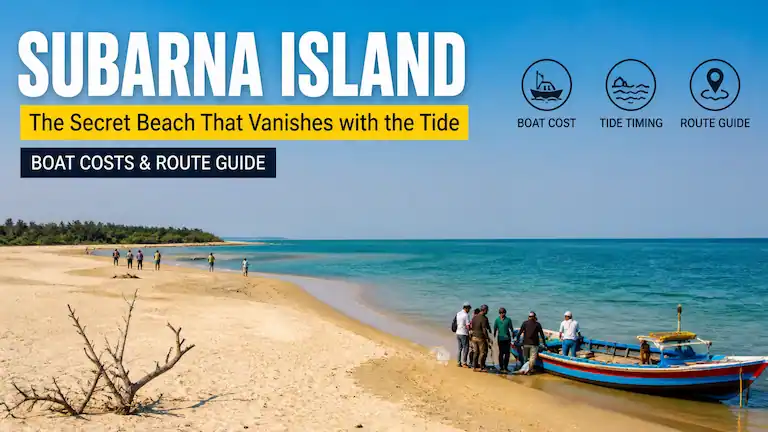
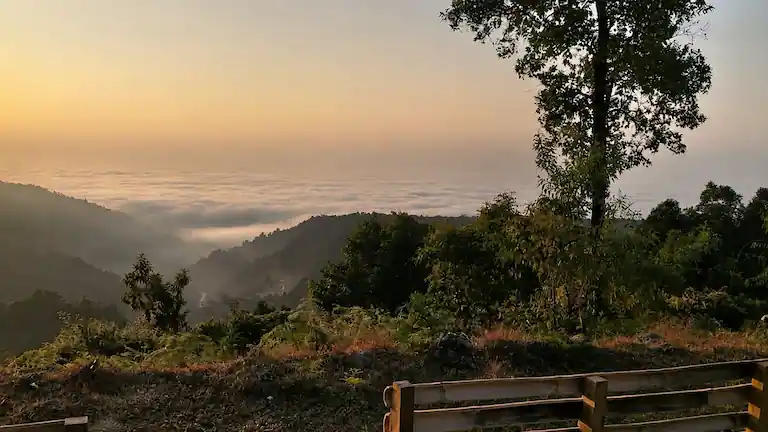
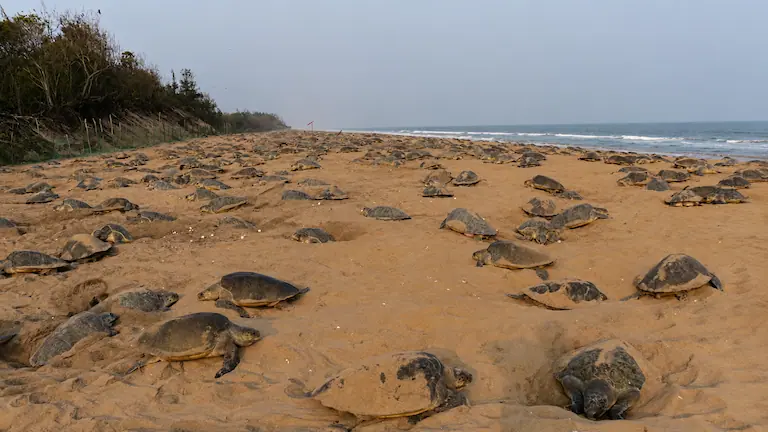
Most people on the crowded beaches of New Digha don’t know about a hidden place called Subarna Island. It is waiting just 13km away, right across the Odisha border. This “ghost island” is not a normal beach. It is a secret piece of land that only appears when the sea water is low. Just a few hours later, the ocean hides it completely underwater.
Visiting this island is a race against time. If you are late, the beach will be gone, and you will only see deep water. During my visit in May 2026, I went there to see it for myself. From the best boat routes to spotting ancient “dinosaur” crabs, here is everything you need to know before the island disappears again.
What is Subarna Island?
Subarna Island is a temporary sand island located where the Subarnarekha River meets the sea on the Odisha–West Bengal border. It appears during low tide and goes completely underwater within a few hours. This makes it one of the rare “vanishing islands” in India.
Quick Trip Planner
To make your trip easy, here is a quick look at the most important details:
Subarna Island Travel Guide (via Bichitrapur Mangrove Sanctuary)
I spent some time talking to the Odisha Forest Department staff at the gate. Honestly, their rules change more often than travel websites tell you. According to the officials at the Bichitrapur Mangrove Sanctuary and what I saw during my trip, here is the real situation right now:
The Main Attraction: Most people come for the mangrove forest, but the real star is Subarna Island. It is a sand beach that literally vanishes. You are also there to see the famous Horseshoe Crabs—they look like animals from a dinosaur movie.
Trip Duration: The whole boat trip takes about 40 to 50 minutes.
Booking Reality: You cannot book these boats online. Even if you already booked a room at the Nature Camp, you still have to stand in line at the Khadibil Jetty gate to get your boat ticket.
Subarna Island Boat Booking & Cost
Boat booking for Subarna Island is strictly controlled by the government at the Bichitrapur Mangrove Sanctuary. The prices are fixed, so you do not need to bargain.
Boat Rates: It is ₹1,200 for the small boat (holds 6 people) and ₹1,400 for the bigger one (holds 8 people).
No Online Booking: You can only buy tickets at the Khadibil Jetty ticket counter in person.
CASH ONLY: Bring real paper cash. The card machines at the ticket counter rarely work because the mobile network signal is very weak.
Official Phone Numbers: Even though you cannot book the boats online, tourists love to call ahead to ask if the sanctuary is open. You can contact the official Bichitrapur Nature Camp at +91-70325-37785 or +91-84802-76500. This is the best way to check if the boats are running before you drive there.
Cost-Saving Tip (Solo Travelers): If you are traveling alone, do not worry about the ₹1,200 price. Just stand near the Khadibil Jetty ticket window. The guards are very helpful. They will usually help you join other small groups so you can share the cost. I have seen people pay just ₹200 each by doing this.
Best Time to Visit Subarna Island
Forget your watch—Subarna Island follows the sea tide, not the clock. If you go at the wrong time, you will either be stuck in deep mud or looking at an island that is fully underwater.
The “Sweet Spot”: The best time to go is exactly one hour after the high tide starts. This is when the water is deep enough for the boat to easily move through the forest, but the island is still dry enough for you to get off the boat and walk around.
How to Check the Tide: How does a tourist know when high tide is? It is very easy. Before you sleep, check a live tide chart website on your phone. Just go to tideschart.com and search for Digha or Balasore. Look for the time when “High Tide” starts, and plan your boat ride for exactly one hour after that.
The Afternoon Trap: Do not wait until the afternoon. Even if the water level looks perfect at 3:00 PM, the ticket counter guys often close early without telling anyone.
My advice? Just reach the gate by 9:00 AM. You will get your ticket, avoid the hot afternoon sun, and you will not have to worry about the ocean swallowing the island before you get there.
Why Subarna Island Disappears (Tide Explained)
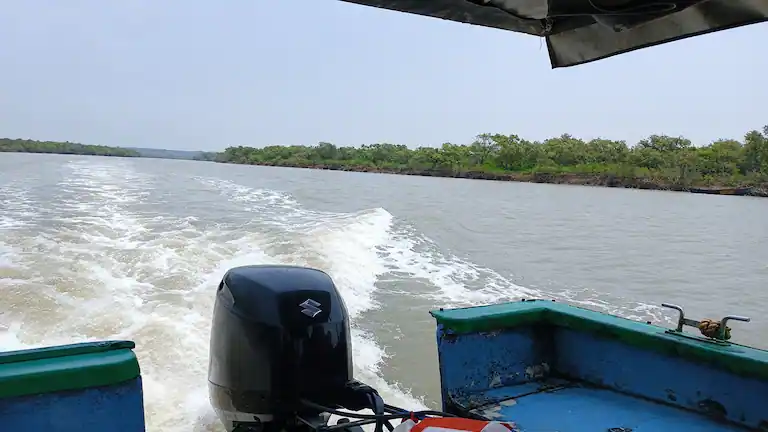
Many people call the Bichitrapur Mangrove Sanctuary the “Mini-Sundarbans.” It is a wild and beautiful place where the Subarnarekha River finally meets the Bay of Bengal. To get there, you take a boat ride through narrow, salty water paths inside the forest. It feels like you have gone back in time.
The 1.5-hour boat ride from Khadibil Jetty takes you through the beautiful estuary to reach the island.
The biggest reward is Subarna Island. Most of the coast nearby is full of dark mud, but this island has beautiful, clean golden sand. When you stand on it, it feels like a dream.
Why they call it a “Ghost Island”
There is a massive secret about this place: The island is not always there. It does a magic trick every day.
The Disappearing Act: When the sea water comes in (high tide), the island does not just get wet—it completely disappears under the waves. I saw tourists arrive at 3:00 PM ready for a beach day, only to find empty water. By that time, the ticket office is closed because there is no island left to visit! If you do not check the tide timings, you are just paying to look at brown water.
The Island that Walks: Travel guides forget to tell you that the island actually moves. During the rainy season (July to September), the river water is very strong. It pushes the sand further out into the sea. If you visit a few months later, the island might have a different shape or be in a new spot. It is a living place that never stays still.
What to look for in the forest
The boat ride is like a fun science class. Keep your eyes on the trees and the mudbanks:
The “Salty” Trees: Look for a white powder on the tree leaves. The trees here actually sweat out extra salt from the sea water so they can stay alive.
Roots that “Breathe”: You will see sharp roots pointing straight up out of the mud. Because the ground is always full of water, these roots grow upward to catch fresh air.
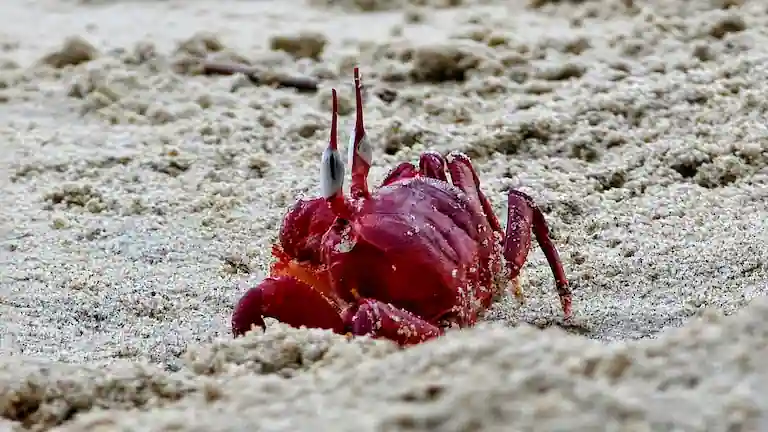
The “Red Carpet” Crabs: Look for thousands of tiny red dots on the mud. These are Red Crabs. They dig holes in the mud, which helps the tree roots get oxygen.
Thousands of these Red Crabs act as the engineers of the Subarna Island mudbanks.
Horseshoe Crabs on Subarna Island
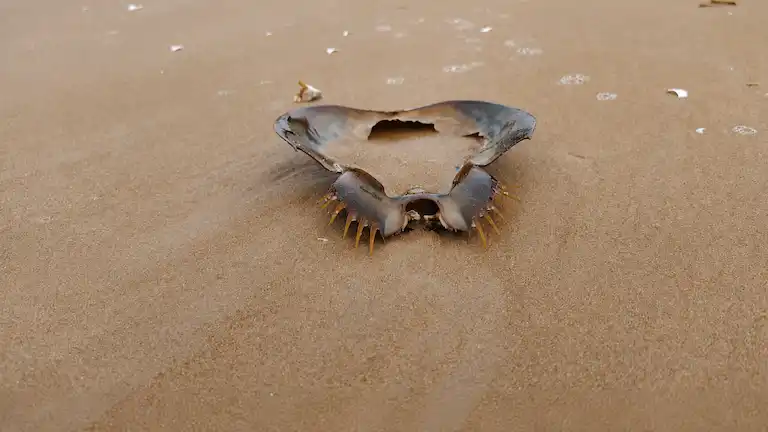
Most people only care about the sand, but they walk right past the best part. Subarna Island is an important research place for the Zoological Survey of India (ZSI). If you look closely at the wet mud near the tree roots, you will find Horseshoe Crabs. These “living fossils” have lived on Earth for 450 million years. That means they were walking here long before dinosaurs were born.
These ancient “living fossils” have been visiting this coast for 450 million years.
The “V-Track” Secret (How to actually find them)
You have to act like a detective. Do not just look at the water. Look at the wet, sticky mud near the roots. Search for V-shaped lines—they look like tiny zigzag paths in the mud. That is the footprint they leave when looking for a place to lay eggs. The crabs look like small, brown army helmets moving in the mud. A strange fact: they are not real crabs. They are actually closer to spiders!
Why Their “Blue Blood” Matters
There is a big scientific reason why scientists study this island. These creatures have bright blue blood. Their blood has a special chemical that doctors use to test almost every vaccine and injection in the world. If you have ever taken medicine from a doctor, you should thank these little crabs.
The Rule: Spotting the Colorful Tags
While walking around, you might see crabs with small, numbered plastic tags on their backs. Scientists put these on them to track where they travel. My biggest advice? If you see a tagged crab, do not touch it. Moving them ruins important scientific work. The forest guards here are very strict about this rule. Spotting a tagged “dinosaur” is amazing because that animal is helping save human lives. Take many photos, but do not touch them.
Verified Travel Note
I personally stood at the ticket counter in May 2026 to check all these details. Everything written here matches the latest rules from the Odisha Forest Department. While you can book the Nature Camp rooms online, boat tickets are still old-fashioned—you must bring cash to the gate.
How to Reach Subarna Island from Digha
Most Google Maps directions will send you through the main highway (NH116B). This road is often blocked by heavy traffic and construction.
Exact GPS Details: Do not search for “Subarna Island” on Google Maps when driving. It will lead you into the water! Instead, search for “Bichitrapur Mangrove Nature Camp Ticket Counter” or “Khadibil Jetty”. This will drop a pin exactly at the boat ticket office.
The New Digha Shortcut: Hire a Toto (e-rickshaw) from New Digha. Ask the driver to go through the Udaypur Beach border road.
Distance: It is about 13 km from New Digha. If you are coming from Talsari Beach, it is a very fast 8 km drive.
Cost: A round-trip in a Toto should cost you around ₹500 to ₹600. This includes the driver waiting for you for 2 hours.
The “Border Tip”: You will cross the state border from West Bengal into Odisha. There is a small police check post. Keep your ID card ready, but they usually only check it if you are staying at the Nature Camp for the night.
How to Reach from Kolkata & Odisha
If you are coming from further away, planning is easy:
From Kolkata: The best way is to take a morning train from Howrah or Santragachi to Digha (takes about 3.5 to 4 hours). From Digha station, just hire a Toto. If you are driving, take the NH16 and NH116B highways (approx. 190 km).
From Odisha (Bhubaneswar/Cuttack): Take a train to Jaleswar Railway Station. From Jaleswar, Bichitrapur is about 45 km away, and you can easily get a local taxi.
Bichitrapur Nature Camp: Is the Stay Worth It?
If you want to be on the island before the big tourist crowds arrive, staying at the Bichitrapur Nature Camp is the best choice. It is the only legal place to sleep near the forest.
Pricing & Perks: Rooms (tents or cottages) cost around ₹4,500 to ₹5,500 per night. This price covers your stay, breakfast, lunch, dinner, and one free boat ride. It is not a huge buffet, but the local food is very tasty.
The 2026 Advantage: The camp recently added better solar power and clean drinking water filters. It is a simple place, but watching the sunrise from the jetty before the crowds arrive is beautiful.
Booking is Hard: You must book weeks in advance on the official EcoTour Odisha website. If you try to book just a few days before your trip, it will be completely sold out.
Day Trip vs. Overnight: Do the day trip from Digha if you want to save money and just take some photos. But if you love photography or are traveling with family, book a room and stay overnight. Reaching the island at 7:00 AM while the water is still going down is a magical experience.
What to Pack (and what will get you fined)
Do not let a heavy fine ruin your trip. The guards at Bichitrapur are extremely strict about the Plastic Ban this year.
The “Must-Haves”
Sun Defense: The boat has a roof, but the island has zero shade. Bring strong sunscreen and a hat with a string. The wind on the island is very strong and will blow your hat away into the sea.
A Real Water Bottle: You will get very thirsty. But you must leave single-use plastic bottles (like cheap water bottles from the shop) in your car. You have to bring a reusable metal or hard plastic bottle to get inside the gate.
Leave These in the Hotel
Do not bring single-use plastic bags or cheap water bottles. The guards at the island gate are actually checking bags now. They increased the fines early in 2026 to protect the Horseshoe Crabs. They will quickly give you a fine if you ignore the “No Plastic” signs.
Final Verdict: Is Subarna Island Worth the Trip?
If you want loud music and beach parties, stay in Digha. Subarna Island is a 10/10 experience, but only for people who want to see raw nature. You get to see ancient “living fossils” and walk on land that completely vanishes under your feet. It is a rare chance to watch the ocean swallow a whole island. Standing there feels like being on a different planet. For more offbeat destinations like this, explore our full Travel guide collection.
Nearby Attractions to Add to Your Trip
If you have extra time after your boat ride, do not just go back to your hotel! Check out these nearby spots:
Talsari & Udaypur Beaches: Just a few kilometers away. These beaches are very quiet, have silver sand, and are surrounded by tall trees.
Bhusandeswar Temple: Located about 10km away. It is a famous temple that has the largest Shiva Lingam in Asia.
Just remember, the island does not wait for anyone. If you are late for the tide, you will just see mud or a “Closed” sign at the ticket gate. Pack your camera, bring paper cash, and be at the gate by 9:00 AM. The island is waiting, but it will not stay above the water for long!
Frequently Asked Questions (FAQs)
Q: Can I visit Subarna Island during the Monsoon (rainy season)?
A: I do not recommend it. The Forest Department usually locks the gates during heavy rain. Even if they are open, the river water from July to September is very rough and dangerous. The small wooden boats shake a lot. It is better to visit in winter.
Q: Are there crocodiles in the water?
A: You are very unlikely to see one. The water here is much saltier than the Sundarbans, and crocodiles do not like it. It is safe, and the tourist boats have never had a problem with them.
Q: Can I buy food on the island?
A: No. There are zero shops, and there is no shade from the sun. You must buy your water and snacks at the Khadibil jetty before you get on the boat. If you forget, you will have no food or water for at least two hours.
About the Author: This guide was crafted by Bijoy Pal for buzbusiness.com. As a specialist in regional trade and sustainable eco-tourism throughout Eastern India, Bijoy closely monitors local travel markets, conservation efforts, and government policies to deliver highly accurate, firsthand insights that help travelers seamlessly navigate the region’s coastal destinations.