Physical Address
Bankura, West Bengal 722142
Physical Address
Bankura, West Bengal 722142

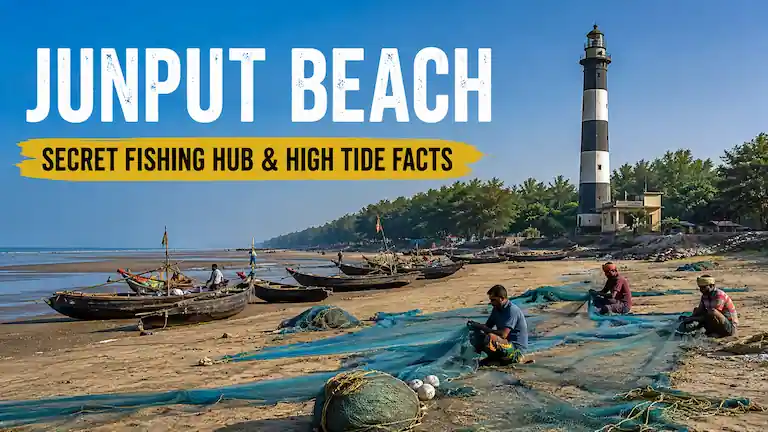
Most people drive right past the turn for Junput Beach on their way to the noisy hotels in Digha or the expensive resorts in Mandarmani. Located in the Deshapran block of the Contai area, Junput sits at the exact end point of State Highway 5. It is a hidden spot that most travelers miss.
When the tide goes out, the water pulls back nearly 2 kilometers! It leaves a huge, flat area of sand where local workers dry their fishing nets. When I visited Junput last September, the sheer size of this empty beach blew me away. Here is my simple guide on how to reach the beach, understand the local economy, and watch the tide so you stay safe.
Do not compare Junput to Digha. Digha has become a busy city by the sea, filled with shops, concrete buildings, and loud noise. That is fine if you like crowds, but Junput Beach is a totally different world. It is a working fishing center first. The beach is just part of that natural business.
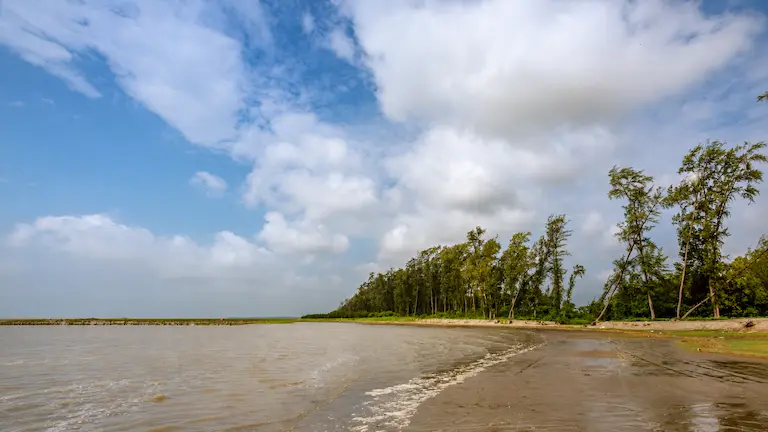
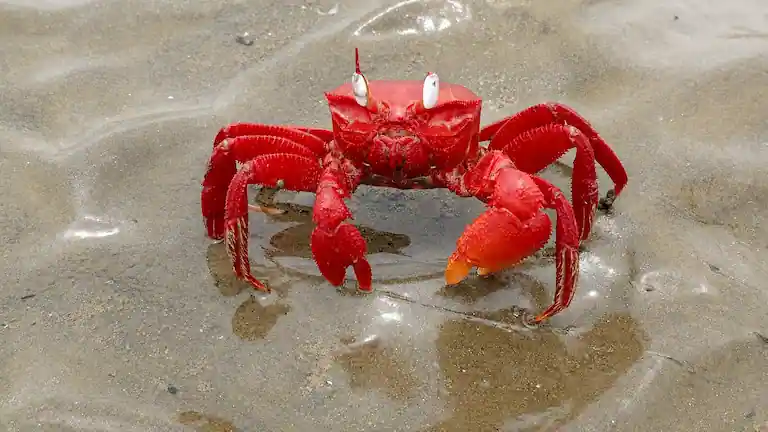
Even though it is about 40 km from Digha, the feeling is night and day. You will not find street food stalls or loud music here. There is only the wind, beautiful Casuarina groves, and red crabs on the sand. If you want a paved walking path, stay in Digha. But if you want to see how the coastal economy works without the tourist mess, Junput is the better choice. If you want another quiet place, check out our Chandpur Beach guide nearby.
If you have your own car, you should avoid the main highway traffic heading into Digha. I highly recommend using the custom Google Map embedded below to follow the exact “Balisai Shortcut.”
If you take a Kolkata-to-Digha bus, tell the conductor to drop you off at the Balisai crossing. From this junction, you have two options to reach Junput Beach:
For out-of-state travelers, the nearest airbase is Netaji Subhas Chandra Bose International Airport in Kolkata, roughly 160 km away.
If you are taking the train from Howrah, the best options are morning trains like the Tamralipta Express or the Kandari Express. Get down at Kanthi (Contai) station. Local drivers will try to take you to Mandarmani because it costs more money. Tell them clearly you want to go directly to Junput Sea Beach Road. The ride should cost between ₹150 and ₹250.
Junput is not just for vacations. It is a very important part of West Bengal’s coastal economy. It is the main base for the State Government Fisheries Department.
Unlike other beaches, Junput focuses on science and farming. There is a Marine Biology Museum run by the State Fisheries Department and the National Council of Science Museums (NCSM). Inside, you can see amazing specimens of rare sea snakes and preserved local fish.
The government also studies brackish water fish cultivation here. This means they research how to grow fish in a mix of fresh and salty water. Right next to the fisheries setup, the state runs an active duck breeding farm. Years ago, this exact area was also famous as a major center for shark oil extraction.
The most important part of Junput is its fishing business. Because the beach is very flat, the water moves back a long way at low tide. Local fishermen use this huge space of dry sand to spread their large nets and fix their boats. Watching the workers gives you a real look at the local economy.
Even though it is a quiet place, there are plenty of affordable and interesting things to do here.
You must be very careful with the water here. The beach is so flat that the tide changes very fast. At low tide, the sea pulls back about 2 kilometers. But when the tide comes back in, the water covers the sand much faster than you think.
Unlike what some travel sites like MakeMyTrip say, swimming here is not safe and requires extreme caution. The flat beach means the fast-returning tide can easily trap you. If you visit during the rainy season in July or August, never go into the water.
Since the receding tide is the main feature of Junput, you should track it. Before you visit, check a tide forecasting website for Sagar Island or Haldia. These are the nearest accurate tide stations. Knowing the high and low tide times will keep you safe.
Also, always watch the fishermen. If you see the local workers pulling their nets up the sand, that is your signal to leave the beach immediately. Do not wait.
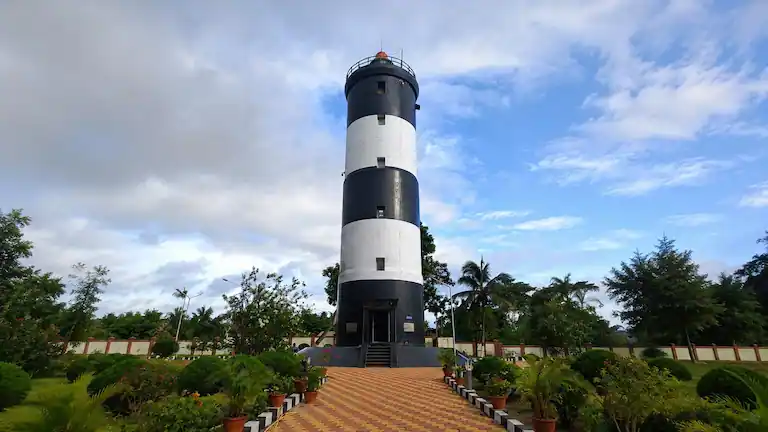
This tall tower is about 7 kilometers from the beach. It still guides ships at sea today. Entry is strictly regulated. Tickets cost ₹10 and visitors are only allowed up the stairs between 3:00 PM and 5:00 PM. The stairs are steep, but the view of the green trees and blue ocean is amazing.
Most people drive past the old Kapalkundala Temple, a quiet shrine for Goddess Kali made famous by writer Bankim Chandra Chattopadhyay. Additionally, you should also visit the beautiful Jagannath Dev Temple nearby, which is highly revered by locals and offers a deeply peaceful atmosphere.
Do not expect luxury hotels here. Junput mostly has basic eco-resorts and government lodges.
If you want standard comfort, look for private places like the Junput Resort. However, for the most authentic and secure stay, choose the Government Fishery Bungalow.
Important Note: You cannot book this property using standard travel apps like MakeMyTrip or Agoda.
The bungalow is managed by the State Fisheries Development Corporation Limited (SFDCL). To book, you must go through the official channels:
wbsfdcltd.com (Look under the Eco-Tourism or Guest House section).Government tariffs are highly affordable compared to the luxury resorts in Mandarmani.
The fresh food is the best reason to stay overnight. Because Junput is a fishing hub, cooks do not use frozen fish. They buy the daily catch straight from the boats. Here is what you can expect to pay at local shacks:
| Fresh Seafood Item | Average Local Price |
| Prawn Malai Curry | ₹150 – ₹200 per plate |
| Crispy Fried Pomfret | ₹120 – ₹180 per piece |
| Standard Fish Thali | ₹80 – ₹120 per plate |
Ask the cook to make it “village style” for the best local flavor. The fish was swimming in the sea just an hour before it reaches your plate.
If you are planning a weekend trip, here is a simple and easy plan to follow so you do not miss anything important:
The best time to visit is from October to February. The weather is very nice, usually between 15°C and 25°C. It is perfect for sitting outside.
It is also a great time for bird watching. Because Junput has fresh ponds and the salty sea, birds fly here from very far away. If you want true peace, visit in late September just like I did. The heavy rains are over, the trees are bright green, and the winter crowds have not arrived yet.
If you are staying in Junput for a couple of days, it serves as a great, quiet basecamp to explore other offbeat beaches. Unlike aggregator sites that just list nearby names, here is exactly how far they are and what a local Auto (Toto) will charge you to get there:
Pro Tip: Always negotiate the return trip with your driver in advance. Because these beaches are remote, you will not find a return taxi waiting for you on the sand.
Junput Beach is not trying to be a noisy tourist spot. It is a place for people who want to learn about the coastal economy and enjoy total quiet. Your only job is to sit, watch the tide, and eat fresh fish.
Bring a book, follow the tide safety rules, and respect the local workers. With new roads being built, big hotels might arrive soon. If you want to see the real, working Junput Beach, now is the time to go.
Junput is located in Purba Medinipur, right at the end of State Highway 5. It is about 9 km from Contai and 150 km from Kolkata. It sits about 40 km away from the busy Digha area, keeping it very quiet.
Junput is a working fishing hub, not a tourist trap. It is famous for its brackish water fish research, a duck breeding farm, and its history of shark oil extraction. It also features beautiful Casuarina groves and red crabs.
Take morning trains like the Tamralipta Express or the Kandari Express from Howrah station. Get down at Kanthi (Contai) station, and take a local car directly to Junput.
No. You should take out cash from an ATM in Contai before heading to the beach. Mobile network is very weak near the sea, so do not depend on UPI to pay for your food.
About the Author: Bijoy Pal is a West Bengal-based travel writer and the publisher of buzbusiness.com. Specializing in offbeat regional tourism, he uses firsthand, on-the-ground research to personally verify backroad routes, local fares, and coastal facts, creating highly accurate and authentic travel guides.